Liz’s Allotment Life: Navigating the hungry gap
RHS Wisley Edibles Horticulturalist Liz Mooney shares what she’s sowing, growing and harvesting right now and how she’s navigating the hungry gap

RHS Wisley Edibles Horticulturalist Liz Mooney shares what she’s sowing, growing and harvesting right now
This past week was my busiest on the plot so far this year – around seven hours in total, mostly over the weekend. With the weather warming up, there was suddenly plenty to get on with.
This weekend was my biggest seed-sowing moment of the year, finally getting all my tender crops underway. As I don’t have a greenhouse – and can’t start in my flat thanks to an overly inquisitive (but very adorable) cat – I have to wait until I’m confident my lean-to grow hut will stay warm enough, particularly overnight, before starting anything off. In my experience, it’s far better to hold off slightly than rush tender crops into cold, sluggish conditions, which can lead to weak or uneven growth.
Like many allotmenteers, I’ve built up a collection of old pots over the years, mostly 9cm, which I fill with peat-free multi-purpose compost.

For larger seeds such as squash and sweetcorn, I sow two per pot; for smaller seeds like tomatoes, I aim for around four (though it’s often a few more). Once they germinate, I thin them out, but not always down to single plants. Space in my grow hut is limited, so I often leave two seedlings per pot and separate them carefully at planting time. It’s not strictly by the book, but adapting like this is often the only way to make the most of a small growing space.
To protect everything, I covered the pots with horticultural . This helps protect against the occasional cold night, but also acts as a deterrent to mice, which have a habit of investigating freshly sown pots. Fingers crossed it does the trick.

Alongside this, I kept up with in module trays – something I find essential for avoiding gluts later in the season. This week that included swede ‘Marian’, chard ‘Bright Lights’, lettuce ‘Lobjoits Green Cos’ and cabbage ‘Greyhound’, along with leek ‘Musselburgh’ for overwintering.
Finally, I direct sowed my parsnips (‘Tender and True’, ‘Javelin’ and ‘Gladiator’) outside. Root crops like parsnips and carrots are best sown where they’re going to grow, as transplanting can lead to forked roots. I tend to sow a little thicker than needed and thin later – it’s much quicker than having to resow if is patchy.


Asparagus is a brilliant ‘hungry gap’ crop at this time of year. I planted mine back in 2022, and they’re now coming into full production – and well worth the wait. The flavour of freshly picked asparagus is hard to beat.
It’s important not to harvest at all for the first couple of years to allow the plants to establish properly. Even once established, it’s best to stop harvesting after six to eight weeks so the plants can build up energy for the following season.

Next week should be a little quieter, with a focus on watering and keeping a close eye on all my seedlings and pots. I’ll also share more about how I manage the plot in an organic, chemical-free way.
About Liz Mooney
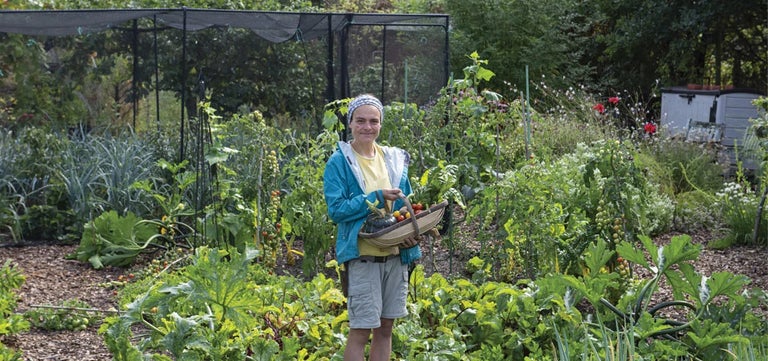
Liz Mooney is a horticulturist on the Edibles Team at RHS Garden Wisley. She grows most of the fresh fruit and vegetables in her diet on her 13 × 18m allotment plot in Surrey, using no-dig, chemical-free methods. Passionate about making the most of any growing space, she shares practical, experience-led advice to help others grow more of their own food.