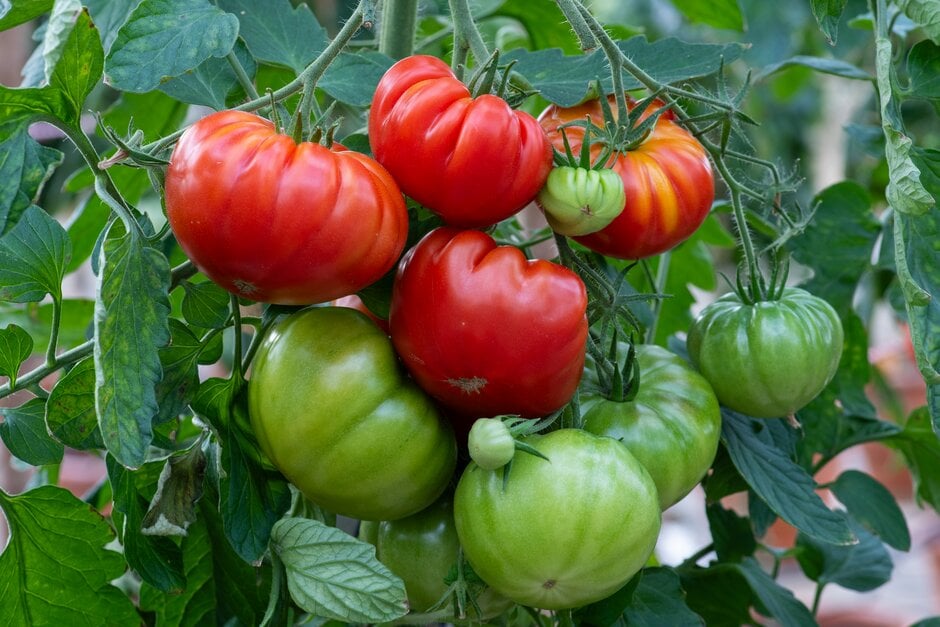
Solanum lycopersicum 'Tomande'
tomato 'Tomande'
A variety producing abundant, fleshy 6 to 6.5 oz tomatoes with exceptional flavour. This vining variety, praised for its good performance and reliability, will start giving juicy and flavoursome results within seventy two days.

Buy this plant
Size
Ultimate height
1–1.5 metresTime to ultimate height
1 yearUltimate spread
0.5–1 metresGrowing conditions
Moisture
Moist but well–drainedpH
AcidColour & scent
| Stem | Flower | Foliage | Fruit | |
| Spring | ||||
|---|---|---|---|---|
| Summer | Green | Red | ||
| Autumn | ||||
| Winter |
Position
- Full sun
Aspect
South–facing or West–facing
Exposure
Sheltered Hardiness
H1CBotanical details
- Family
- Solanaceae
- Native to GB / Ireland
- No
- Foliage
- Deciduous
- Habit
- Columnar upright
- Genus
Solanum can be annuals, perennials, evergreen or deciduous shrubs or twining climbers, with simple or pinnnately lobed leaves and star- or bowl-shaped, 5-lobed flowers with prominent stamens, followed by fleshy fruits
- Name status
Accepted
- Plant range
- South America
How to grow
Cultivation
Prefers well-drained soil, high in organic matter that is consistenly moist to prevent blossom end rot and to provide roots with the ability to better absorb nutrients. Mulching around the plant witll help with moisture retention. Transplant the matured pot-grown plant into the outside ground two weeks after the last frost. Cover the main stem with up to 2 inches of topsoil to promote root development for better support against the wind. Provide 8 hours of full sun for the best flavour. Caging or trellising is recommended to allow the plant to grow vertically which will promote a higher crop yield and give space for a larger number of plants.
Propagation
Propagate by seed. See sowing vegetable seeds or sowing seeds indoors for further advice
Suggested planting locations and garden types
- Patio and container plants
- City and courtyard gardens
- Conservatory and greenhouse
- Flower borders and beds
Pruning
Remove yellowing lower leaves as the plant grows to allow the plant to focus on fruiting.
Pests
May be susceptible to Tomato hornworm.
Diseases
May be susceptible to honey fungus (rarely), potato blight, tomato blight, tomato leaf mould, tomato viruses, magnesium deficiency and blossom end rot. See Tomatoes: leaf problems
Get involved
The Royal Horticultural Society is the UK’s leading gardening charity. We aim to enrich everyone’s life through plants, and make the UK a greener and more beautiful place.