Getting Started
Delicious, juicy asparagus spears are relatively easy to grow, and although you won’t get a crop for the first couple of years, after that you’ll have reliable harvests every spring for up to 20 years.
Asparagus needs a sheltered site with free-draining soil, where it can grow on its own in a dedicated bed. It’s usually planted as dormant one-year-old plants known as crowns, but can also be grown from seed. Planting a new asparagus bed is an investment that will pay off in delicious harvests for years to come, but some initial patience is required – it’s best to let new plants get established for a few years before you cut your first spears.
Asparagus is harvested for about eight weeks in spring and early summer, so is an annual treat to be anticipated and savoured. Asparagus spears are also quite expensive to buy, so are well worth growing if you have the space. An established plant should produce about 10 spears per season. After the harvesting period, shoots should be left to grow into tall ferny stems over the rest of the summer. Then simply cut them down to the ground in autumn, and they will re-sprout in spring, ready for harvesting again.
Jobs to do now
Water in dry spells
Month by Month
Sow
Plant
Harvest


Choosing What To Grow
Asparagus is usually grown from ‘crowns’, or dormant roots – this is the easiest and fastest option, as they settle in more successfully and harvesting can begin sooner, after two years. Asparagus can also be grown from seed, but need more looking after and take longer to get established, so you should wait three years before harvesting. Still, seeds are cheaper than crowns.
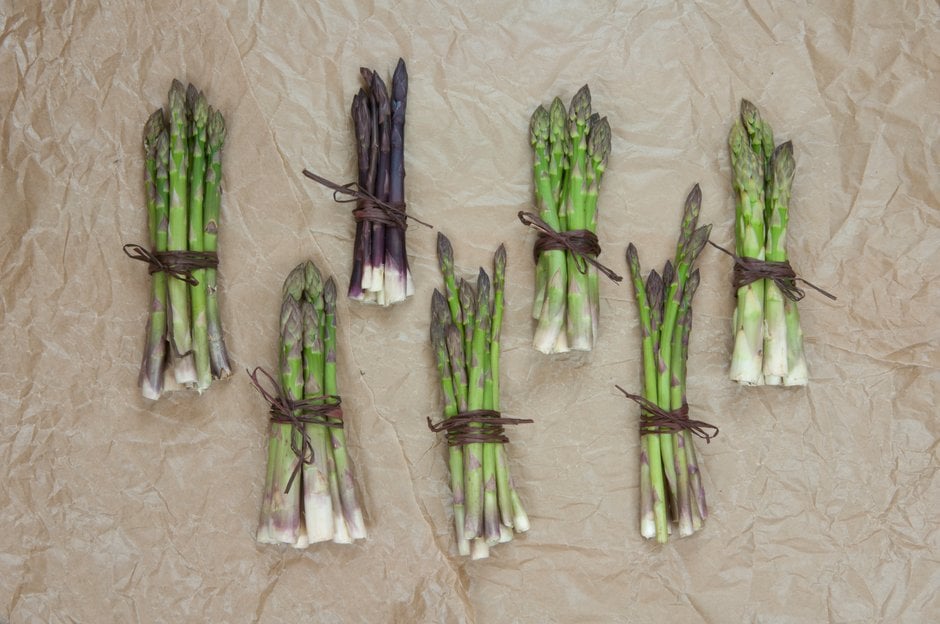
Asparagus plants are either male or female – male plants produce more and better spears, so many modern varieties are all-male. Most crowns offered for sale are all-male F1 hybrids. Older, non- varieties produce both male and (less productive) female plants. The female plants also produce seedlings that need to be weeded out to prevent competition with the existing plants.
When choosing varieties, consider the quality of flavour, colour, spear size and overall harvest size. Some varieties produce early or late harvests, so if you grow several different varieties you can have spears over a longer period. For reliable cropping, look for varieties with an RHS Recommended: Award of Garden Merit (AGM), which shows they performed well in our trials – see our list of AGM Fruit & Veg (135kB pdf) and our Recommended Varieties below. For more veg-growing inspiration, visit the RHS gardens, which all grow a wide range of vegetables, so you can compare varieties and pick up growing tips.
What and where to buy
Asparagus crowns (dormant, usually one-year-old plants) are mainly available from online suppliers and can be ordered in advance for delivery in March or April, ready for immediate planting. Ordering early gives you the widest choice of varieties. Plants are usually supplied as ‘ ’ crowns (not in a pot), in packs of five or ten, rather than singly. You may find crowns for sale in larger garden centres too. Seeds can be bought in garden centres and from online seed retailers.
Recommended Varieties


Preparing The Ground
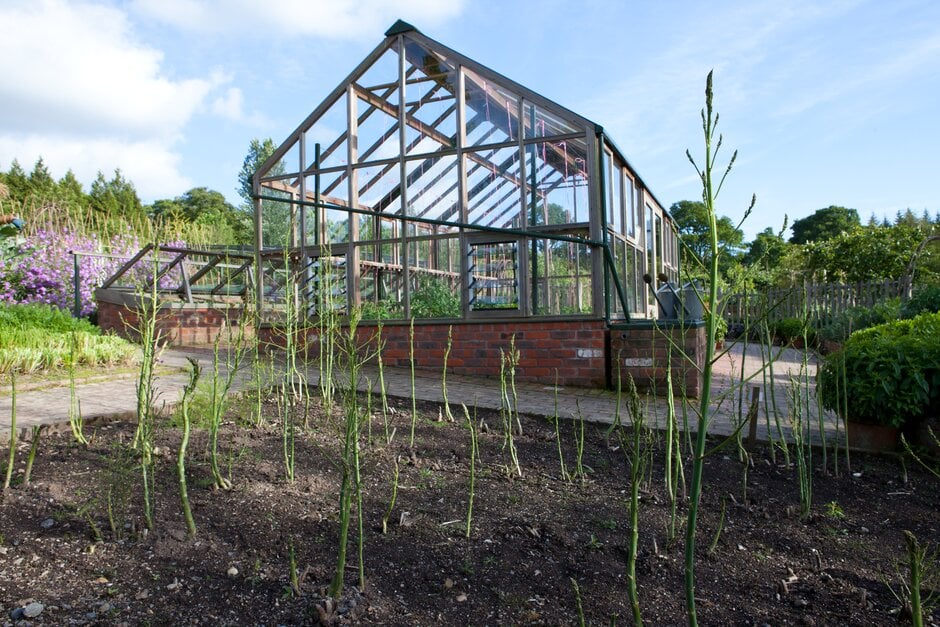
As asparagus plants can crop for about 20 years, it’s worth choosing your planting site carefully and preparing the ground well. This long-term crop needs a dedicated, permanent bed of several square metres/yards, depending on how many plants you want to grow (space them up to 45cm/18in apart). It’s best not to grow other plants or crops among asparagus, and don’t replant an old asparagus bed with new asparagus plants – choose fresh ground, to avoid any build-up of soil-borne problems.
A planting site in full sun is preferable, but asparagus will also tolerate dappled shade. Most soil types are suitable, as long as they’re well drained. If you have heavy soil, make a raised bed to provide better drainage.
Weed the bed thoroughly before planting, then dig in at least a bucketful of organic matter, such as garden compost or well-rotted manure, per square metre/yard. Alternatively, if you're practising no-dig, the soil ahead of sowing or planting directly into the mulch.
Sowing
The quickest and easiest way to start an asparagus bed is to buy crowns (see Planting below), but you can also grow asparagus from seed. Although seeds are a slower option and not quite as easy, they are cheaper to buy, and one packet could give you lots of plants. You can sow asparagus seeds either indoors or outside.
Sowing indoors
Sow seeds indoors in February at 13–16°C (55–61°F). Fill a modular tray or small pots with moist, peat-free and sow one seed into each.
Keep the warm and well watered, in a bright location. Start to harden them off and prepare the ground as outlined above, ready for transplanting in early June.
Sowing outdoors
Sow asparagus seeds outside in March or April. Prepare the ground in advance (see above), then sow the seeds thinly in a 2.5cm (1in) deep. Allow 30–45cm (12–18in) between rows. Thin out the to 15cm (6in) apart and protect from slugs and snails.
Let the young plants get established for a year, then replant, in March, to achieve the correct final spacing – see Planting, below, for full details.
Planting
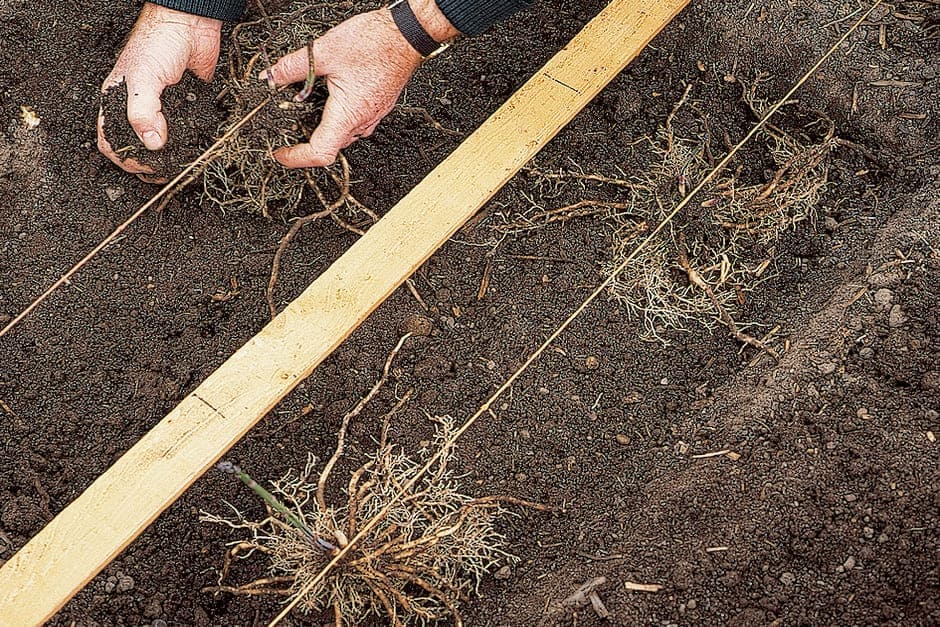
Asparagus crowns should be planted as soon as they arrive, ideally in March. If you’ve grown plants yourself from seed, they can planted in a similar way once they’re one year old.
Plant crowns/young plants 30–45cm (12–18in) apart, in rows 45cm (18in) apart, staggering plants between adjacent rows. Prepare the ground as above, then dig a hole at each planting station that is large enough to accomodate the roots once they are spread out – this is likely to be around 30cm (1ft) wide and 20cm (8in) deep. Make a mound, around 10cm (4in) high, in the centre of each planting hole then place the crown on top, with the growing points or new shoots uppermost. Spread the roots out evenly, but handle carefully as they break easily. Gently cover the roots with the excavated soil leaving just the tips visible. If you are planting a whole bed of asparagus, it is easier to dig a large trench than separate planting holes.
Water the plants well, to settle the soil around their roots, then mulch with a 5cm (2in) layer of well-rotted manure or garden , to hold in moisture and suppress weeds.
Growing asparagus in pots
While asparagus undoubtedly grows better in the ground, it is possible to grow it in large containers if you are short on space or can't justify giving over some of your veg patch for a prolonged period. Choose pots at least 30cm (1ft) wide and deep and fill with a good quality peat-free , planting one crown in the centre of each pot.
In addition to regular watering and supports to prevent toppling over (see Plant Care, below), potted asparagus benefits from a balanced liquid fertiliser during the and annual topdressing in spring. Do be prepared, however, that potted asparagus has a much shorter lifespan than plants grown in the ground, and tends to produce lighter harvests.
Plant Care
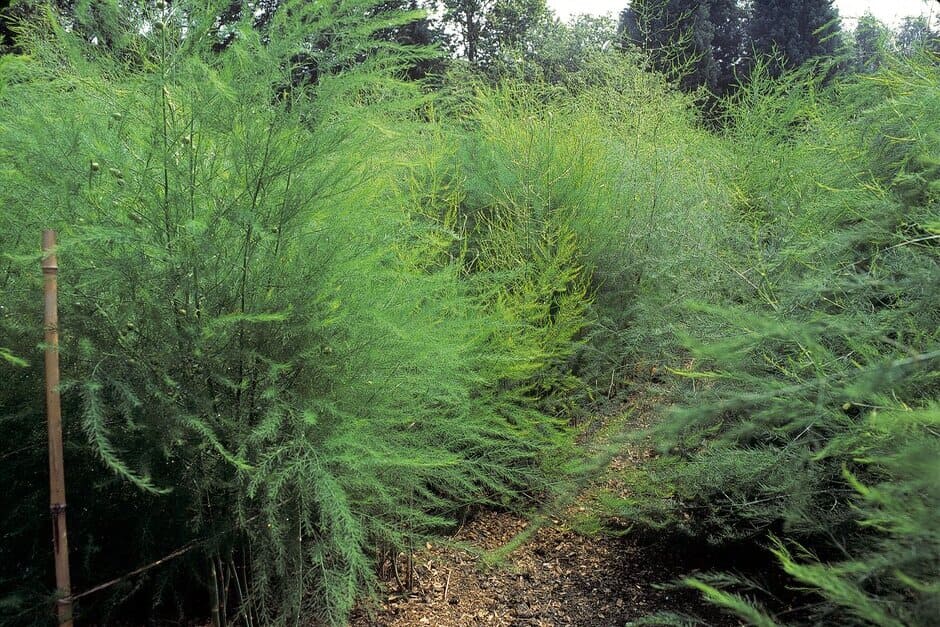
Looking after established asparagus is straightforward – just weed regularly, apply annually and put supports in place to keep these tall plants from being blown over. At the end of the season, when the foliage turns yellow, cut all the stems down to the base.
Watering
Water new asparagus plants regularly throughout their first summer. Once established, asparagus is drought tolerant, so only needs to be watered in long dry spells. For more water-wise advice, see our guides below.
Mulching
Apply a thick layer of to the soil each year in late winter to discourage weed and hold moisture in the soil. You could also consider covering the soil with weed-suppressing membrane from autumn to late winter, while the asparagus is dormant, to prevent annual weeds germinating.
Feeding
In most soils, established asparagus plants should crop reliably without additional feeding, especially if the soil is regularly mulched with organic matter. But, if growth is poor, you could apply a general fertiliser in early spring, before the new spears sprout.
Weeding and removing female plants
It’s important not to let weeds get established in an asparagus bed, as they compete with your crop for light, water and , and removing large or widespread weeds can easily damage the shallow roots of asparagus plants. Weed by hand rather than with a hoe to reduce the risk of damaging the roots of your asparagus plants.
If you have female plants (which produce orange-red berries), weed out any they produce to limit competition.
Supporting plants
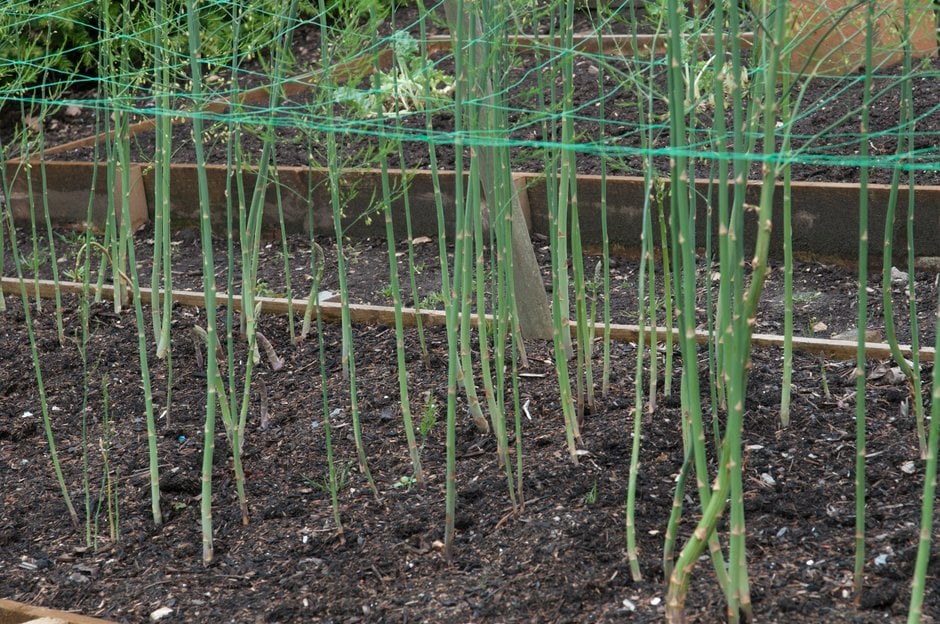
Asparagus grows into a tall, feathery plant over the summer. To prevent the stems breaking in windy weather, which could damage the crown, support plants using stakes and to make a ‘fence’ either side of the row. You could also add netting, secured to the stakes about 50cm (20in) from the ground, for extra support.
Propagating
To fill gaps or extend an asparagus patch, you can divide well-established crowns in late winter or early spring. Do this no more than every three years, as the plants can be slow to settle back in afterwards.
Dig up the crown, handling it carefully. Gently prise it apart into several smaller sections, each with several growing points, taking the strongest parts from the edge of the crown. It may be necessary to cut some roots if they can’t be pulled apart. Discard any old, woody parts. Replant the new sections straight away (see Planting, above), with the growth buds visible at the soil surface.
Harvesting
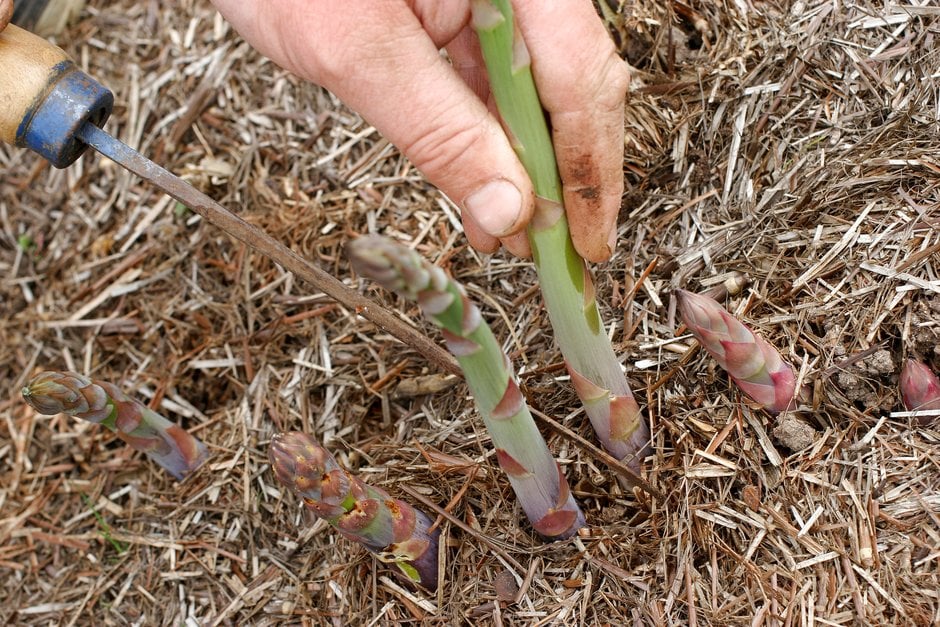
Freshly harvested asparagus spears have far more flavour than anything you can buy in the shops. But resist the temptation to harvest newly planted asparagus for the first two years (three if grown from seed), to let plants get well established. In the third year, harvest spears from mid-April for six weeks, then in subsequent years harvest for eight weeks.
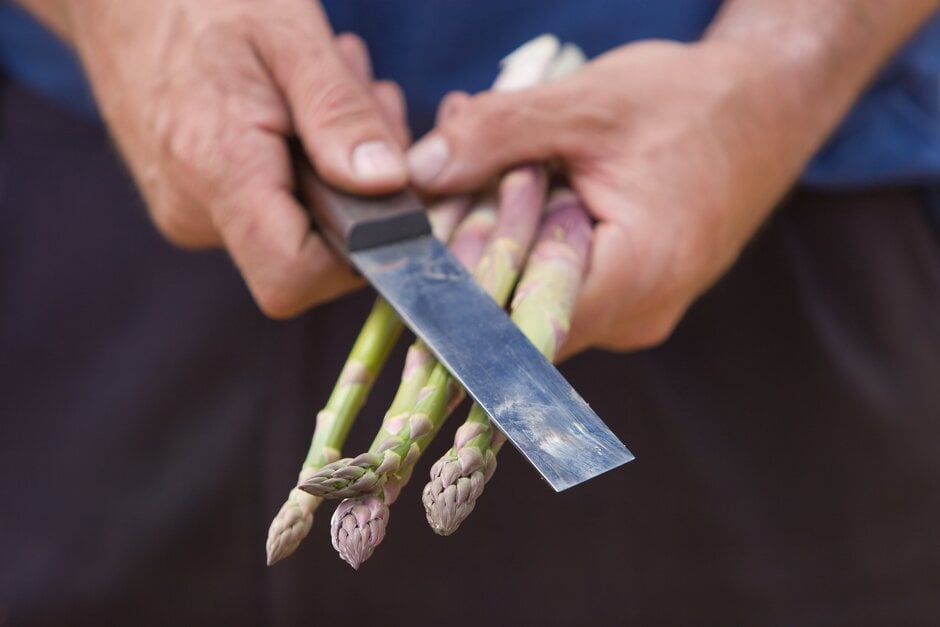
To harvest, cut individual spears with a sharp knife 2.5cm (1in) below the soil surface when they’re no more than 18cm (7in) tall or about finger thickness. In warm weather, harvest every two to three days for the best quality spears – they grow quickly. Regular harvesting also encourages more new shoots to be produced. Expect an established plant to provide about 10 spears over the harvesting period.
Problem Solving
Asparagus is generally trouble free, cropping reliably every spring. However, slugs, snails and asparagus beetles can cause problems, late frosts can damage young shoots in spring, and damp, poorly drained soil can cause the roots to rot. For tips on remedying these issues, see Common problems below.
Common Problems

Frost damage
Frost can affect many plants, and is particularly damaging to tender new growth and blossom in the spring. The risks of frost damage can be reduced by...

Asparagus beetle
Asparagus beetle adults and larvae feed on the stems and foliage of asparagus during the summer months. Extensive defoliation can weaken plants and re...

Slugs and snails
Slugs and snails are common garden animals, and they are well suited to the damp, mild climate of the UK. A few species feed on garden plants, but mos...
