RHS Horticultural Advisor Esther Wolff shares which varieties to grow, whether for Halloween or for a supply of warming dishes through autumn or winter, with top tips and bonus recipe
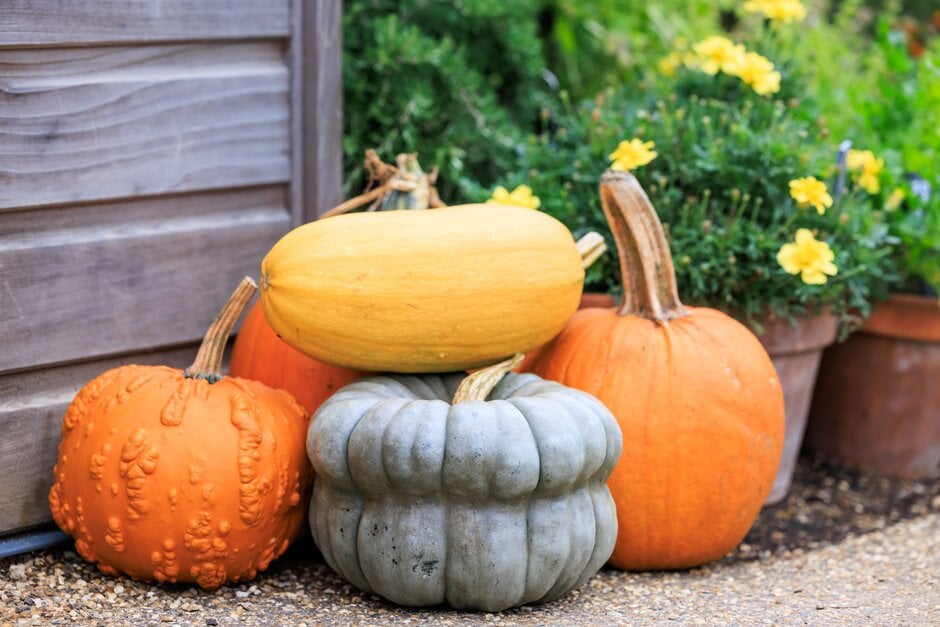
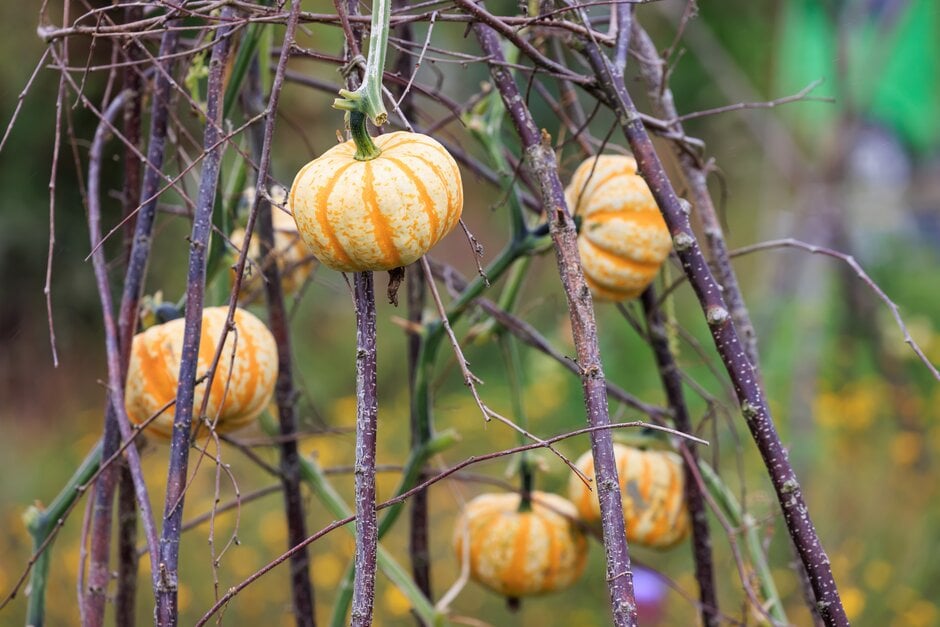
 I grew pumpkins for the first time this year, on my new allotment plot. I didn’t really have the space, but I’d promised my daughter, so we compromised on a dwarf cultivar, ‘Jack be Little’. We grew delightful miniature pumpkins, but I’m afraid my daughter was more impressed with the fifteen giant pumpkins my neighbours grew – ‘Big Max’ – a classic, orange, beast of a squash.
Our efforts, however, were put to shame by the team at RHS Bridgewater this year, who have devoted a whole field to growing pumpkins and squash of all kinds. Amongst the varieties are culinary favourites such as ‘Crown Prince’, ‘Red Kuri’, spaghetti squash and ‘Casperita’.
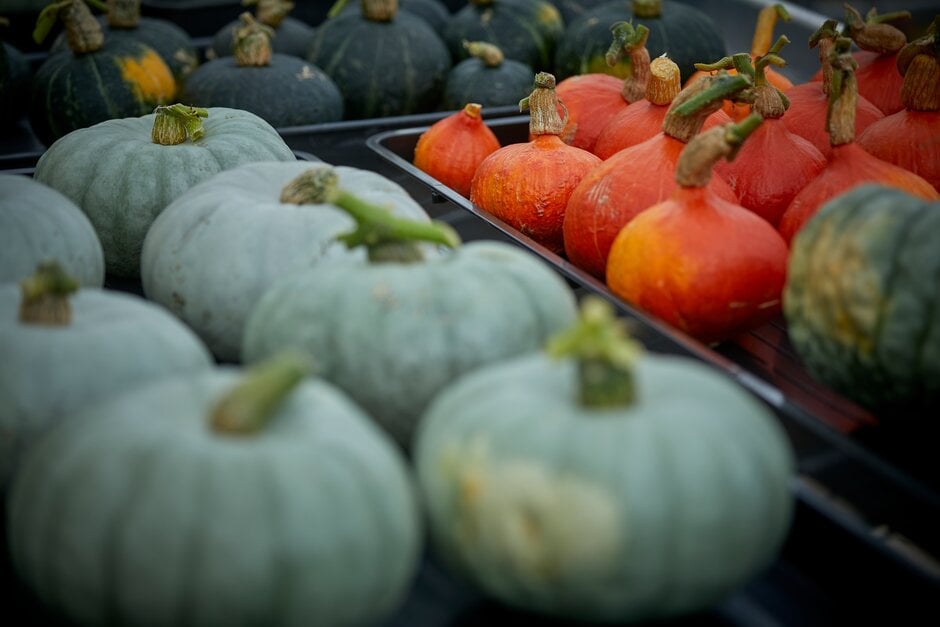 Team leader Caroline Williamson told me, “Half of the field was grown by propagating indoors first, with the other half direct-sown into mounds, and the incredible weather this year has resulted in some whopper pumpkins.”
The direct-sown were a couple of weeks behind the indoor-started ones, but were catching up fast. However sometimes the direct-sown ones are attacked by slugs as they emerge, so if you have a slug issue, then starting off indoors means they’re bigger and more robust when they go out.
She added, “It’s worth noting that we’ve just had two nights of frost here at RHS Bridgewater (near Manchester), which is unusual for September, so we had to do an emergency harvest on Sunday and most of the pumpkins were hit by it. We fleeced the big pumpkins that we couldn’t harvest.” So, do watch out for forecasts of unexpected frosts.
The biggest there this year is ‘Polar Bear’, though the most popular include the warty ‘Zombie’ and the alien-looking ‘Pink Banana Jumbo’. Unfortunately, none of these will satisfy my daughter’s traditional orange ideal.
RHS Harlow Carr in Yorkshire, where I’m based, hasn’t devoted space to squash this year, but RHS Rosemoor in Devon has a whole ‘squash tunnel’. Vertical growing is a great option for these space-hungry plants, as long as the heavy fruits can be supported.
Not to be outdone, RHS Wisley in Surrey is growing over 50 varieties of winter squash. Their top tasting cultivar is ‘Bonbon’, while one of their favourite ornamental varieties is ‘Goosebumps’ which, frankly, is more ghoulish than ornamental!
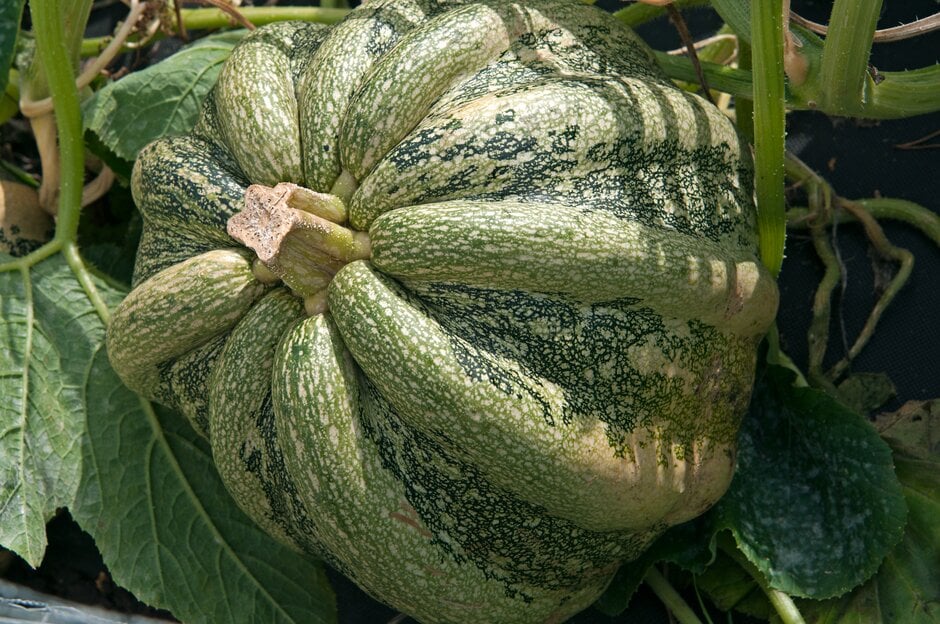
Meanwhile in Essex, RHS Hyde Hall’s Cat Hood has grown the equally unappealing, but surprisingly edible, ‘Galeux d’Eysines’, which develops peanut-like growths on the skin from a build-up of extra sugar in the flesh. Cat also recommends ‘Zucca de Marmellata’ (below) which apparently makes nice jam – find the recipe at the end.
“Size is not everything when it comes to growing squash,” she says. “Quite often, the smaller ones are more tasty.” Take that, ‘Big Max’!
 The horticulturists’ top tips for success
- Err towards sowing later, as earlier sowings are prone to suffering transplant shock
- Give them plenty of space and good soil – in fact, try growing them on the compost heap! (See how Great Dixter garden grow theirs on heaps of garden ‘waste’ below.)
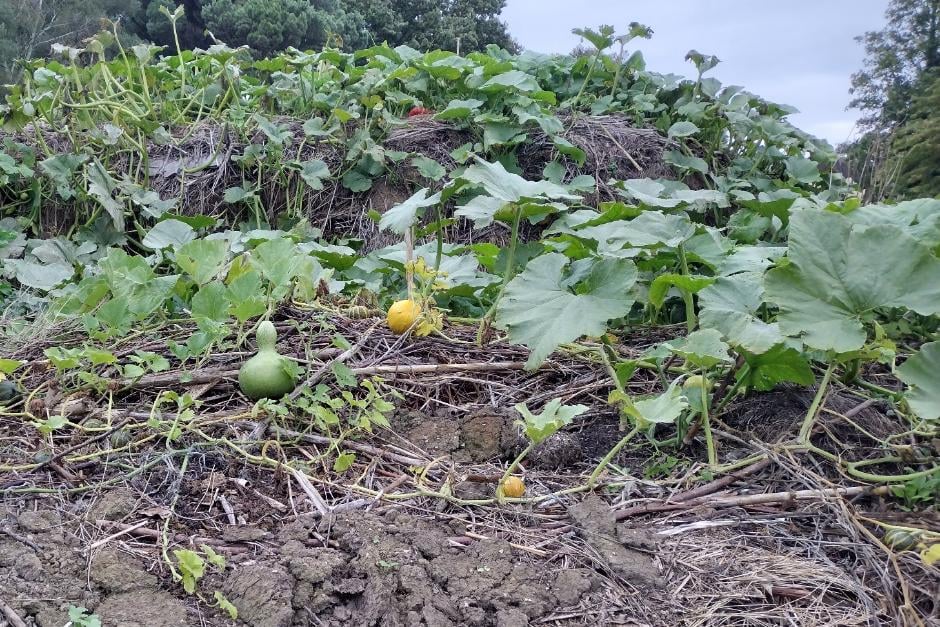
For champion pumpkins:
- Pin down the runners at the leaf joints so they root, giving them better access to the water they need to swell
- Be retired! Massive pumpkins need masses of TLC on a (nearly) daily basis.
If you’re short of space:
- Try growing ‘Gold Speck’, which can even be grown in pots.
Check out our new video for everything you need to know:
No nonsense advice on how to grow pumpkins
Recipe for jam made from ‘Zucca de Marmellata’ squash
Ingredients
- 1kg (approx. 2.2lbs) of squash or pumpkin pulp, peeled and seeded
- Juice and zest of 1 organic lemon
- 350-700g (1lb 9oz) of superfine sugar, depending on the pumpkin’s sweetness
- 1/2 teaspoon cinnamon (optional)
- A dash of nutmeg (optional)
- Amaretto liqueur (optional)
Instructions
Prepare the pumpkin:
Peel and seed the pumpkin, then dice the flesh into small chunks.
Combine and rest:
Place the diced pumpkin in a saucepan and mix it with the sugar. Cover the pot and let it rest overnight, or for at least 12 hours, in a cool place.
Cook the jam:
The next day, put the saucepan on low heat. Add the juice and zest of the lemon, and any optional spices like cinnamon and nutmeg. Cook on low heat for about an hour, stirring occasionally, until the jam has thickened.
Check for set:
The jam is ready when a small spoonful of it will hold its shape and not run back together when pushed with a finger after cooling on a chilled plate.
Finish and jar:
Remove the lemon rind. If you want a very smooth jam, you can sieve it. Stir in the Amaretto liqueur, if using. Immediately transfer the hot jam into sterilised jars and seal them.
Serve with cheese or on toast.
You may also be interested in
 Look for the RHS Recommended: Award of Garden Merit when buying vegetable seed or small plants. You can also download the RHS lists of recommended cultivars.
About the author – Esther Wolff
Esther is a Horticultural Advisor at RHS Harlow Carr, with an allotment and a background in climate science.