Getting Started
Compact and easy to grow from seed, parsley produces tasty fresh-flavoured leaves from late spring through to autumn. It makes an attractive edging to herb and veg beds and grows well in containers, in sun or partial shade. Choose from curly-leaved or flat-leaved types for a wide range of culinary uses.
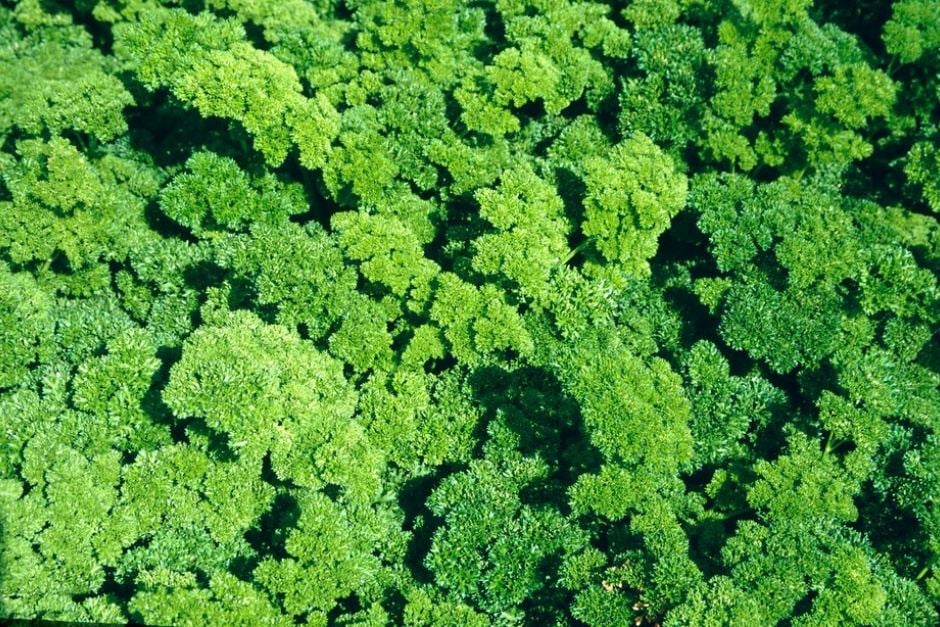
Parsley (Petroselinum crispum) is a herb, meaning it grows leaves in its first year, then flowers and sets seed in its second year. When grown as a culinary herb, it's usually treated as an annual and discarded after its first year. It’s easy to grow from seed, indoors or outside, but can be slow to germinate. Parsley grows 30–60cm (12–30in) tall, depending on the variety, and provides repeated harvests if you just take one or two stems from each plant at a time.
Parsley is not just a decorative garnish, chopped leaves can be mixed into salads or included in cooked dishes, such as casseroles, sauces and pies. It’s frequently teamed with garlic and onions, as it’s said to freshen the breath and cleanse the palate.
Jobs to do now
Harvest
Move plants inside
Month by Month
Sow
Plant
Harvest


Choosing What To Grow
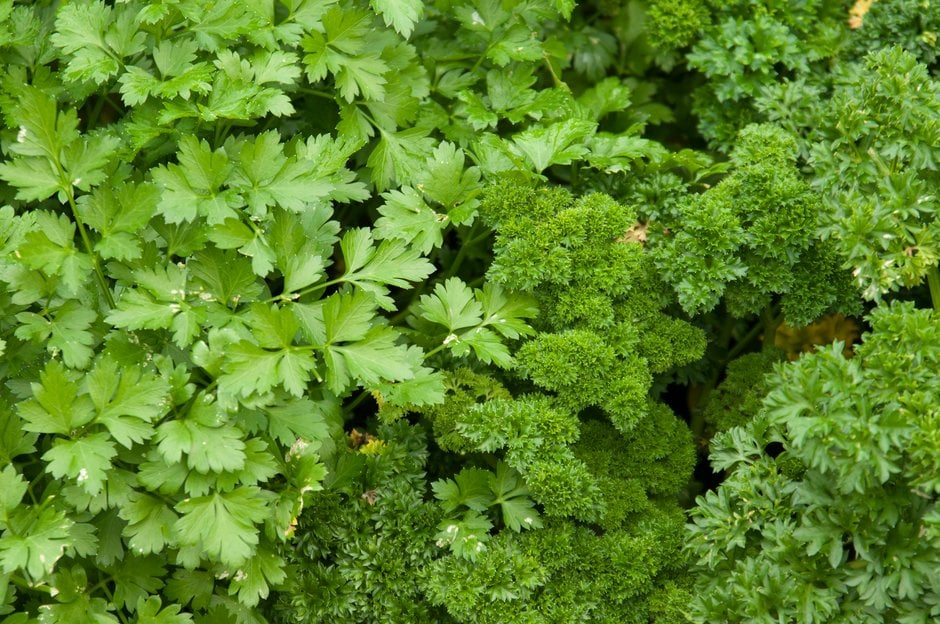
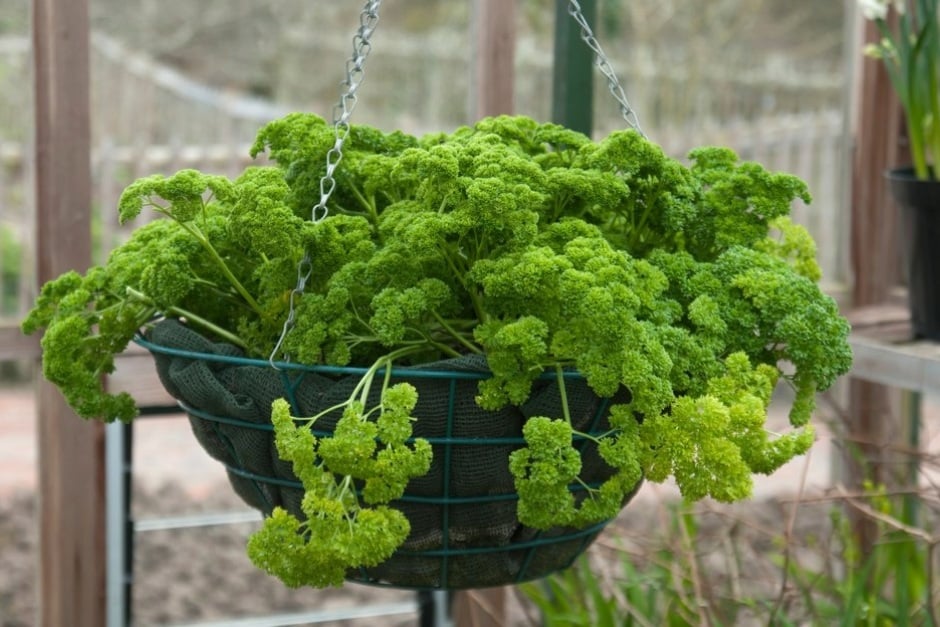
There are two main types of parsley to choose from – flat-leaved varieties, which tend to have a stronger flavour, and curly-leaved varieties, which are more decorative and are still tasty but have a slightly milder flavour. Curly-leaved parsley plants are typically shorter than flat-leaved plants. When choosing varieties to grow, look for those with an RHS Recommended: Award of Garden Merit (AGM), which shows they performed well in our growing trials –see our list of AGM fruit, veg and herbs (135kB pdf) and our Recommended Varieties below. You'll also find a wide range of herbs, including parsley, in the RHS gardens, so do visit to compare varieties and pick up growing tips and inspiration.
What and where to buy
Parsley is widely available as seed in garden centres and from online retailers, both of which may also sell in spring. Slightly larger plants, often in 9cm (3½in) pots, are also available in garden centres in spring and summer.
Many supermarkets also sell pots of parsley plants but these are designed for short-term, indoor harvesting – the pots usually contain lots of thin, overcrowded . There are risks (such as introducing plant diseases) associated with planting herbs bought in supermarkets outside, so this should be avoided.
Recommended Varieties


Preparing The Ground
Parsley grows well in fertile, moisture-retentive soil. Before planting or sowing parsley, weed the ground thoroughly then fork it over to break up any hard lumps. If you have poor or very free-draining soil, mix in some well-rotted organic matter. If sowing directly into the ground, remove any stones and rake the soil until it has a fine, crumbly texture. Alternatively, if you’re practising no-dig, the surface with well-rotted organic matter and sow or plant directly into the mulch.
Sowing
It’s easiest to sow parsley outside directly into its final growing site, either in the ground or in a container. Direct sowing is an effective way to avoid any root disturbance that may be caused by or transplanting. Although you can also sow indoors in early spring if you want earlier harvests. Bear in mind that parsley seeds can be slow to germinate, often taking a month or more, so don’t give up on them too soon.
Sowing indoors
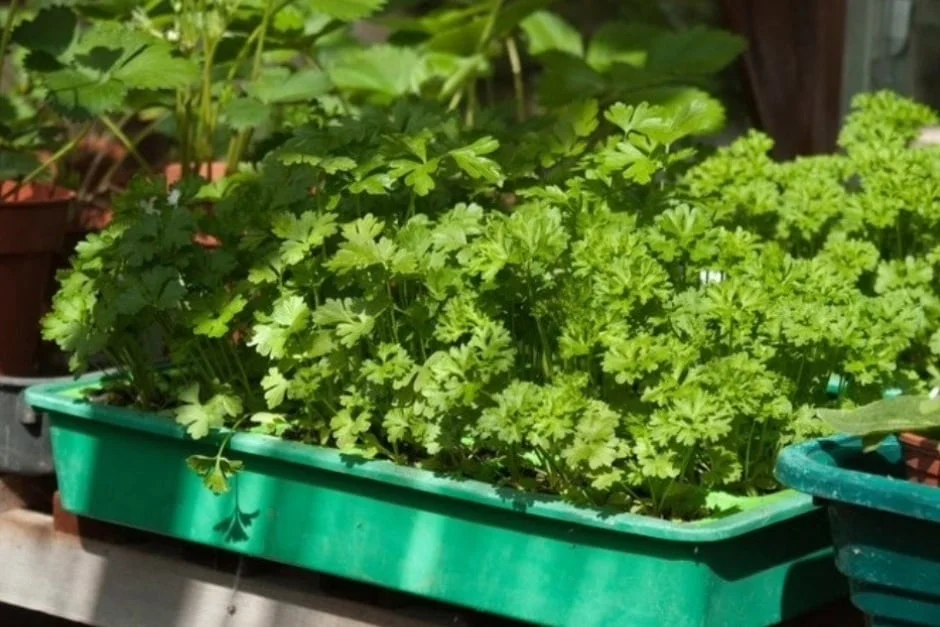
From early spring, you can start parsley seeds off indoors – in a greenhouse or on a sunny windowsill – if you’re keen for an early crop. Sow into modular trays of moist peat-free at a depth of about 1cm (½in). Keep in a warm, bright location, and move into larger or pots as they grow. They can be outside when 10–15cm (4–6in) tall (see Planting below), or you can keep a plant or two indoors to grow on a sunny kitchen windowsill.
Sowing outdoors
Sow parsley seeds outdoors from mid-spring to late summer, directly where they are to grow, either in the ground or in a container, in sun or partial shade. Sowing small batches of seeds every few weeks (successional sowing) will give you a plentiful supply of fresh leaves throughout summer and into autumn.
- When sowing in the ground – choose a site with fertile, moisture-retentive soil. Make a shallow about 1cm (½in) deep, water along the base, then sow the parsley seeds thinly along its length. Cover with soil and water gently. Space any additional rows 20–30cm (8–12in) apart, depending on the size of the variety
- When sowing in a container – choose a pot at least 25cm (10in) wide and deep, and fill with peat-free multi-purpose . Scatter the seeds thinly, then cover with a 1cm (½in) layer of compost and water gently
Make sure the soil or compost doesn’t dry out, and should appear within six weeks. Thin out the seedlings if necessary, allowing 15–30cm (6–12in) between plants, depending on the variety. The thinnings can be added to salads.
Planting
If you don’t have the time or space to grow parsley from seed, you can buy or potted plants from garden centres and online retailers. These can be grown indoors on a well-lit windowsill or planted outside in containers or in the ground (see Preparing the ground above). The best time to plant parsley outside is from mid-spring to early summer. Harden-off young, indoor-raised plants to acclimatise them to outdoor conditions.
Parsley will grow well in full sun or partial shade. Position the plants at the same level they were previously growing, and space them 15–30cm (6–12in) apart. Firm them in, then water well.
Plant Care
Once established, parsley needs little attention. Simply water in dry weather, keep weeds at bay, and snip off any lower leaves that turn yellow, to keep plants looking good and encourage new growth.
Watering
To grow well, parsley needs moist but not soil or , so you may need to water young plants to help them establish, and during hot, dry spells in summer. Plants in containers need particular attention, as the compost can dry out very quickly in warm weather, so check the compost regularly and aim to keep it evenly moist. Move containers into a shaded spot during hot, sunny spells, to reduce the need for watering. For more water-saving tips, see our guides below.
Feeding
When growing in the ground, parsley shouldn’t need feeding, but if plants in containers need a boost, consider applying an organic-based, balanced liquid feed every few weeks during the .
Harvesting
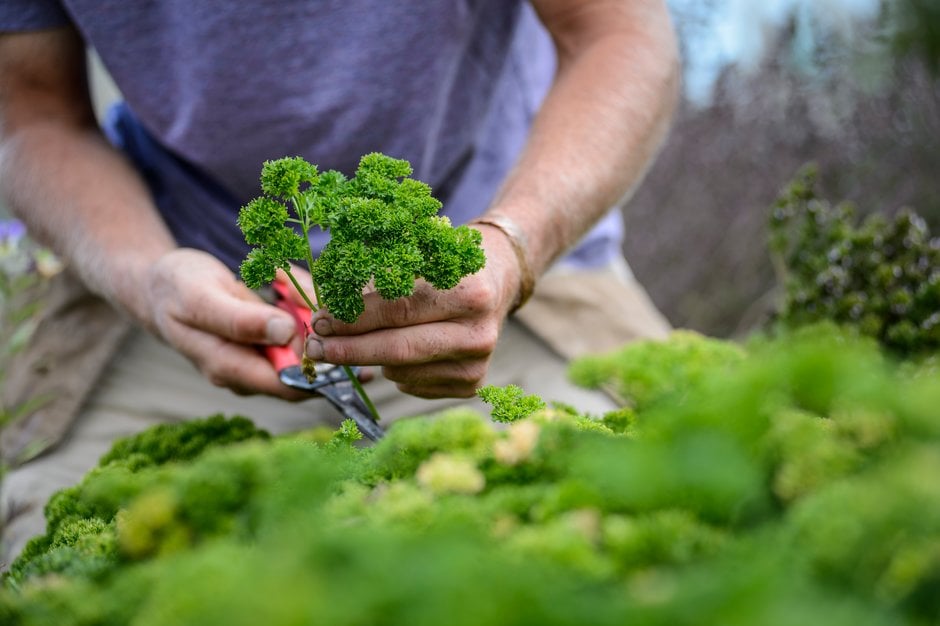
Parsley leaves can be harvested from late spring through to autumn – picking regularly encourages plants to produce more leaves. Take a few leafy stems from the outside of a plant, snipping them near the base with scissors or secateurs.
When grown outdoors, parsley dies down over winter, so to keep plants productive bring them indoors or into a greenhouse or coldframe, or cover plants in the ground with cloches. Given sufficient light and warmth, they should continue producing new leaves. However, it’s not worth keeping parsley plants into their second year for cropping, as these plants will stop producing tasty leaves and concentrate on flowering and setting seed instead. Although you could just keep a couple of plants, if you can spare the space, so you can collect the seeds for sowing.
Storing
Parsley leaves are best used fresh, but can also be frozen or dried for use in winter, after harvesting has stopped. To freeze parsley, chop the leaves and add to an ice-cube tray, then top up with water and freeze. You can then simply add the cubes to your cooking whenever needed.
To dry parsley, hang up a bunch of leafy stems in a warm, dark, well-ventilated place for a few weeks. When fully dried, crush the leaves and store in an air-tight jar. Dried parsley has less flavour than fresh leaves.
Problem Solving
Parsley is closely related to carrots and celery, and can be affected by the same diseases and insects. Slugs and snails like to eat parsley, so growing it in pots is often a good option, as the plants may be harder for them to reach. See Common problems below for more information.
Common Problems


Carrot fly
The larvae of carrot fly can make a large proportion of carrots and allied vegetable crops inedible.

Celery leaf mining fly
The larvae of celery leaf mining fly feed within the leaves of celery, celeriac and related plants. Damaged areas dry up and give the foliage a scorch...

