Rewilding Fairfield brings the community back to the grounds
A wellbeing garden was created to revitalise Fairfield General Hospital’s green spaces, boosting biodiversity and community engagement through volunteering and education
- Type of garden: hospital garden
- Location: Fairfield General Hospital, Lancashire
- Budget: £56,500
- Dimension: 9,174 square metres
- Implementation phase: April 2024 – April 2025
- Key features:
wildflower
How the wellbeing garden began
Over 9,000² of neglected land has been planted in the grounds of Fairfield Hospital
The RHS Community Outreach team came on board to assist at every stage of the process, from early conversations with staff and local residents, through garden design and supplier coordination, to build days, planting and workshop facilitation. The consultation process was central to understanding how to develop a space for hospital patients recovering from illness and staff seeking a moment of calm between shifts, but also for the wider community eager to spend more time outdoors.
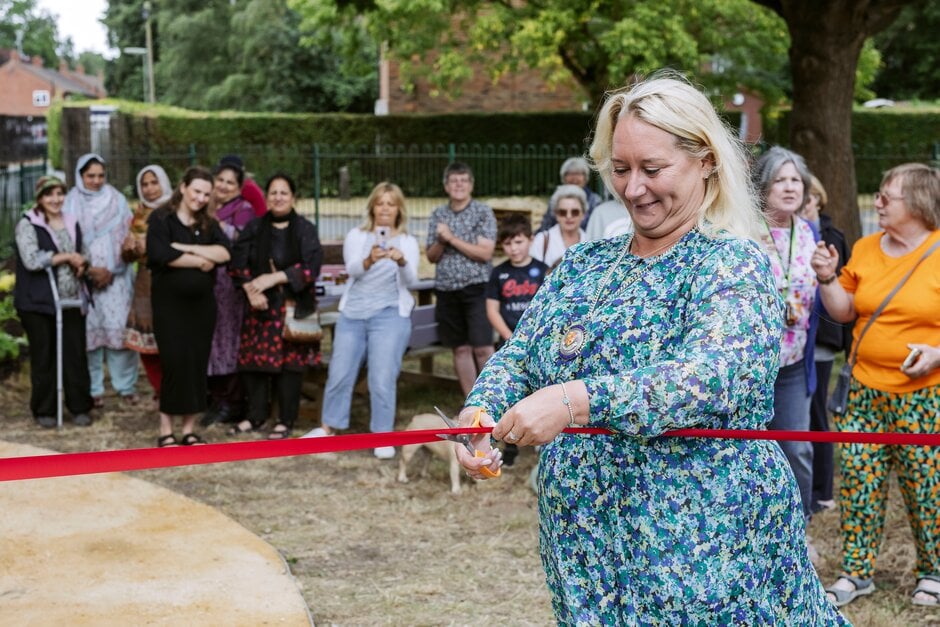
Between April 2024 and April 2025, Rewilding Fairfield transformed 9,174m² of neglected land into thriving green spaces that boost wellbeing and biodiversity. The collaborative project was led by Northern Care Alliance NHS Foundation Trust and NorthCare Charity, with support from the RHS and Lancashire Wildlife Trust, as well as local schools, nurseries and corporate partners.
Budget and process
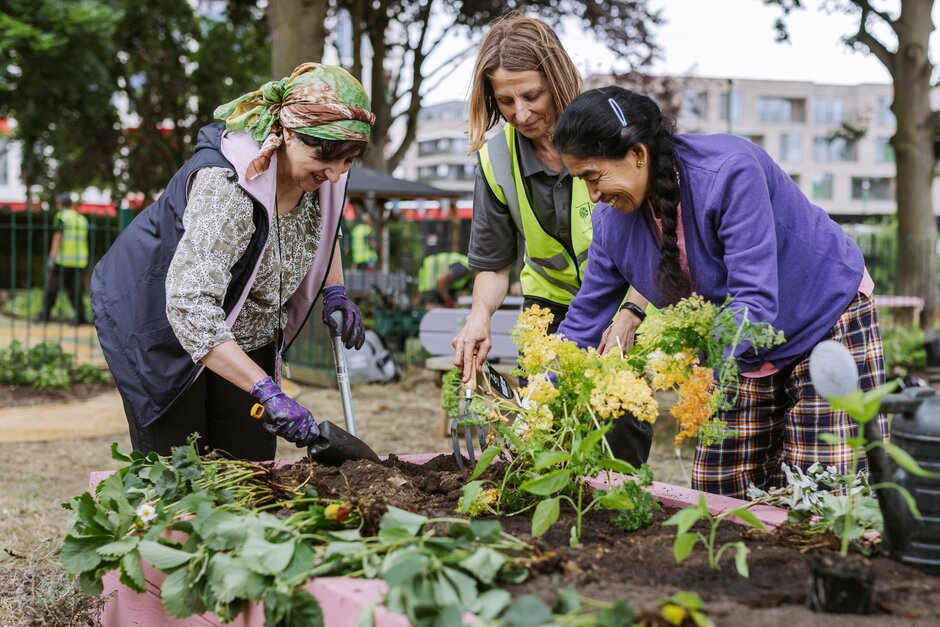
In 2024, 93 volunteer days were recorded as part of Rewilding Fairfield
Corporate volunteers at work planting the Peace Garden
Other significant in-kind contributions included the donation of 190 trees from NHS Forest and 60 herbs from City Build. In 2024 alone, 93 volunteer days were recorded, while RHS staff contributed approximately 100 days over two years. The Green Spaces Fund team planted the trees and more than 13,000 bulbs.
The Education Garden
The area where the Education Garden was created, before its regeneration
Now, children from the local school regularly visit the Education Garden
The Peace Garden
The Peace Garden invites visitors to connect with others or enjoy a quiet moment alone
Planters and benches were crafted from reclaimed wood by local partner Touch Wood
The Bog Garden
The Bog Garden naturally manages water while enhancing biodiversity
The space is regularly used by local schools and nurseries as an outdoor classroom
Learnings: what challenges did you encounter?
Bespoke bug hotels were crafted and installed to support pollinators
Working within an NHS hospital environment added another layer of complexity, requiring careful coordination with estates management, consideration of clinical operations and navigating existing grounds maintenance contracts while introducing new ways of managing the land.
“A project of this scale, spanning multiple garden areas and involving corporate volunteers, local schools and conservation charities, demanded strong communication,” added Emma. “Working closely with the hospital’s facilities team proved essential, adapting our plans as needed and staying responsive to feedback.”
Lessons: what went well?
NorthCare Alliance NHS Fundation Trust staff with a Green Spaces Fund plaque
Lancashire Wildlife Trust were involved from the very beginning, helping turn a simple idea into something far more ambitious. The Conservation Volunteers developed the Bog Garden, while Touch Wood brought creativity and sustainability, designing and crafting bespoke bug hotels, planters and seating all from reclaimed timber.
This kind of cross-sector collaboration amplified impact far beyond what any single organisation could have achieved alone. Local schools, nurseries and corporate partners all played their part and that collective effort created something with real community ownership.
The project also demonstrates the value of thinking long-term and staying ambitious. It shows what’s possible when organisations commit to meaningful green space transformation and trust the process enough to let partnerships evolve along the way.
Impact of the wellbeing garden so far
Many NHS staff now garden at home, carrying the benefits of the project into their lives
More than 100 NHS staff have taken part in gardening activities and 90 corporate volunteers joined them. New relationships have also been formed with local organisations such as The Conservation Volunteers and Touch Wood, extending the project’s reach well beyond the hospital gates. Partnerships with local schools, nurseries and charities have grown and continue to strengthen.