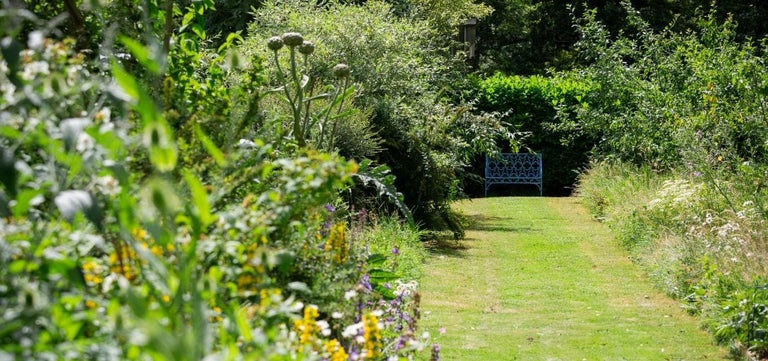
Gardens are frontline in protecting biodiversity in face of climate change
Gardens are the UK’s unsung powerhouses of biodiversity and a valuable habitat that should be included in Biodiversity Net Gain metrics

It’s a word we hear a lot – Net Gain, biodiversity loss, biodiversity crisis, garden biodiversity. But what do we actually mean by biodiversity?
Biodiversity encompasses all life on Earth, and the biodiversity we see today is the product of 4.5 billion years of evolution.
Biodiversity is often used to mean the number of individuals and variety of species within an area. However, there are in fact three levels to biodiversity.
The level most of us are most familiar with is the variety and abundance of species – be that plant, animal, fungus, or microorganism – in an area or ecosystem (species diversity). But number of species and individuals is just one of biodiversity.
Biodiversity includes a smaller scale, too – the variation in makeup within a species, or genetic diversity. It also encompasses an even larger scale – the variety of habitats and ecosystems in which the species live and interact, or ecosystem diversity. These three scales make up overall biodiversity.
Biodiversity is in crisis, both in the UK and globally. Biodiversity loss is accelerating at an unprecedented rate, while the average size of wildlife populations worldwide has fallen by 73% between 1970 and 2020.
The latest UK State of Nature report found that “the UK is one of the most nature-depleted countries in the world”. Butterflies have lost 97% of their habitat, and pollinating insects like bees, hoverflies and moths, which play a critical role in food production, are almost all declining in numbers, and have also suffered an average reduction in distribution of 18% since 1970.
Of the 4 billion or so species that are thought to have ever evolved, 99% are now extinct. Many of these have been lost during previous ‘mass extinction’ events caused by huge enviromental upheaval, such as that which wiped out the dinosaurs. Data tracking extinctions over time has shown that we are currently in another period of vastly accelerated extinctions, with rates 10 to 100 times higher than the natural baseline. This has caused some scientists to suggest that we are entering a sixth mass extinction.

Biodiversity is key to the stability of ecosystems. The higher the biodiversity, with a wide range of species and interactions, the more resilient the ecosystem is, and the more able it is to adapt to and overcome changes, such as changes in climate, outbreaks of disease or pollution, or the arrival of non- species.
A high level of biodiversity forms a complex food web; this is key to resilience as it provides a buffer to knock-on effects of individual extinctions – the more species there are, the more likely that there will be alternative food sources for those higher up the chain should a prey species be lost.
The UN cites biodiversity as being our strongest natural defence against climate change. Healthy ecosystems, and the biodiversity that forms them, are the world’s largest carbon sinks (capture and long-term storage of carbon). Heathy and functional peatlands, seagrass forests, mangrove swamps and terrestrial forests are all critical in limiting climate change.
From a human-centric perspective, biodiversity is crucial to our survival – the species it includes, and the ecosystems and ecosystem processes it creates, provide the basic resources we need to survive, such as food, clean air, rainwater, a stable climate, and medicines.
Beyond survival, biodiversity is important for human wellbeing – it enhances our landscapes, provides recreational and economic opportunities, and contributes to health and wellbeing through interactions with wildlife and ecosystems. It’s also immersed in our cultures, forming the basis of cultural traditions and ways of life, as well as forming the basis of numerous industries worldwide.

There’s a lot more to biodiversity loss than loss of species. It encompasses loss of genes, populations and ecosystems, too. Losing genetic diversity within a species, through its populations shrinking or disappearing, is as much a loss of biodiversity as losing the species as a whole.
In an ecosystem, different species support different functions in different places at different times. Ecosystem processes such as primary productivity (conversion of sunlight and carbon dioxide into biomass that becomes the foundation of the food web), nutrient cycling, and decomposition of dead material rely on biodiversity.
Loss of biodiversity can lead to ecosystem collapse. With that comes loss of the environmental benefits ecosystems provide and on which we rely (ecosystem services), such as providing clean air, regulating water quality and building healthy soils, as well as , on which we depend for food.
Healthy ecosystems provide 75% of global freshwater resources. Scientists highlighted the value of this service in 2008 when they reported that installing a new water plant to treat New York’s water, to replace a service once provided naturally by the ecosystem in the catchment basin, would cost $8-9bn. Restoring the catchment basin would cost only $1bn, higlighting the economic advantage of nature-based solutions.
In the UK alone, insect pollination is estimated to contribute over $600M to food production, and the cost to pollinate our food crops manually in the absence of pollinators would be around $2bn. In total, the World Health Organisation reports that the global economic impact of biodiversity loss amounts to $10 trillion annually.
With 50% of modern medicines derived from natural sources, and research of processes in nature frequently informing the development of treatments, biodiversity is likely to hold compounds for cures and clues to medical breakthroughs that we haven’t yet discovered. For example, scientists were studying how a gastric-brooding frog was able to turn off acid production in its stomach in the hope of applying this in human ulcer treatment, when the frog went extinct, taking with it those medical possibilities. With each new extinction, unknown potential is lost.
"The library of life is burning and we do not even know the titles of the books"
Most of the major causes of biodiversity loss are driven by global human population growth: we are simply consuming, and producing, too much. These are widely accepted by scientists as the top threats to biodiversity worldwide:
The most effective ways to conserve and increase biodiversity on a national and global scale are through 1) enviromental policy such as conventions and treaties, and 2) establishing protected areas, which are effectively policed and managed. The biggest benefit is achieved when protected areas are located to align with hotspots of biodiversity and link up fragmented populations and ecosystems.
However, there are also lots of actions that can be taken on a smaller scale – by all of us – to make a positive difference.
"Never doubt that a small group of thoughtful, committed citizens can change the world; indeed, it’s the only thing that ever has"
Conserving biodiversity really can begin in our own back gardens. With over 2,670 species of plants and animals having been found in one typical UK garden, we know the value they hold for biodiversity – and the potential to make a difference.
In her Leicester garden, over a 30-year period from 1972–2002, Jennifer Owen recorded 2,673 species: 474 plants, 1,997 insects, 138 other invertebrates and 64 vertebrates. This included a quarter of the UK’s wild bees, butterflies and ladybirds. Jennifer also conducted a three-year study on parasitoid wasps and found 533 species, seven of which were new to Britain and four that were new to science. This shows how much biodiversity one garden can support and, if the UK’s 30 million gardeners were to pull together, how much positive impact could be made.
"We can’t afford to just be gardeners any more. We have to think like ecologists now too"
Here are 10 things you can do to nurture biodiversity in your own garden:
Bringing Nature Home is the RHS theme for 2026, highlighting the ways in which looking after biodiversity can – and should – begin on our own doorstep. Find out more about the difference you can make, and how you can get involved, here.
"Enjoy, embrace and enhance the biodiversity your garden supports"
About the author – Olivia Drake
With a background in biology, Olivia is passionate about sustainable horticulture, biodiversity and the role gardening can play in conservation. She is trained as a botanical horticulturist and previously worked in public gardens around the UK and abroad.