How to start a gardening club with limited space and scarce resources
At Ysgol Llanhari in Wales, a gardening club that began with no expectations has evolved into a wellbeing garden to decompress and learn a new hobby
Ysgol Llanhari’s garden at a glance:
- Type of garden: school garden
- Location: Ysgol Llanhari, Wales
- Budget: £20 to get started, about £100 for maintenance per year
- Dimension: 50 square metres
- Implementation phase: launched in summer 2024, ongoing
- Key features: raised planters, edible plants, polytunnel, greenhouse
How the wellbeing garden began

The school garden at Ysgol Llanhari is now part of the educational offer
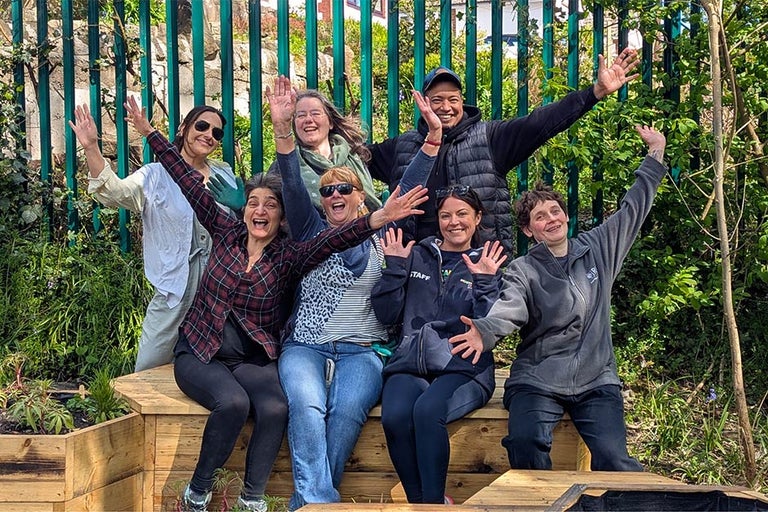
In summer 2024, a gardening club was launched at Ysgol Llanhari, a Welsh school providing education for 3 to 19-year-old pupils. It started as an after-school activity with only four participants, limited space and scarce resources, but it quickly evolved into something far richer: a safe space where pupils use gardening to decompress, discover a new hobby and learn from each other, and where the wider community comes together around the joy of growing.
Budget and process
Initially, the school allocated two large planters to the gardening club. However, the space wasn’t enough, so a disused lab storeroom was transformed into an indoor growing space for colder months, fitted with a pop-up greenhouse.
“We painted the planters and the adjacent bench in bright Pride colours, offering accessible space for pupils of all abilities. We also encouraged creativity by hanging and planting in recycled materials,” said Helen Bevan, Head of Science at Ysgol Llanhari and Leader of the gardening club.
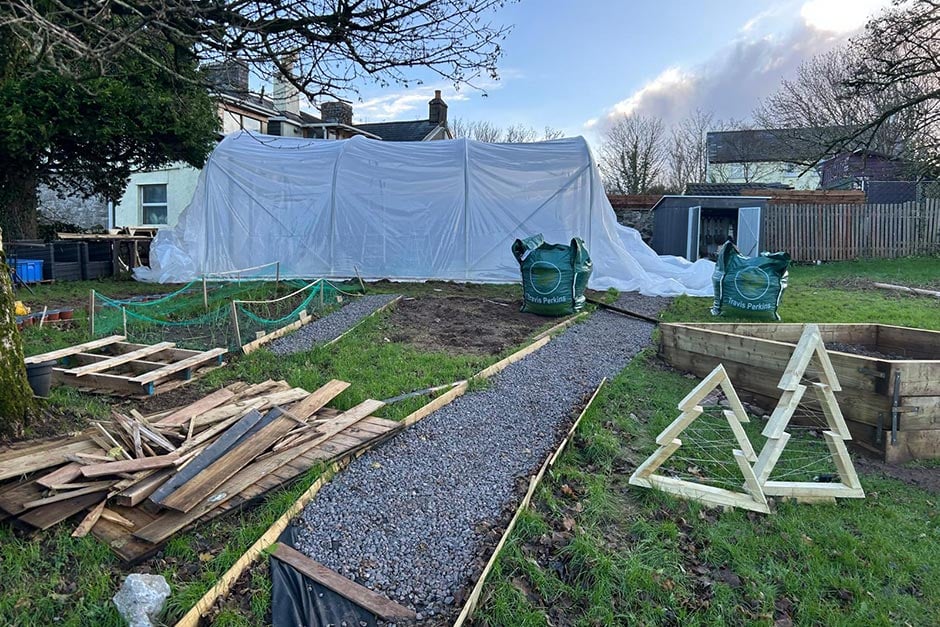
After a year of growing – and seeing the pupils’ continued dedication to the club – the need for a more accessible space became clear, so the school allocated a larger piece of land.
At first, no large budgets were needed to get the gardening club started. When the school reached out to ‘teulu Llanhari’ – the wider school community – the response was overwhelming. Gloves, tools, seeds, , pots, , and paint were donated in large quantities by parents and staff members. At Christmas, pupils made wreaths from plants grown on school grounds and sold them at the school production, raising money for more seeds.
“We have been overwhelmed with the generosity of our community. You don’t know unless you ask!” said Helen. “More recently, we have secured grants that have enabled us to erect a large polytunnel and raised beds.”
"We have been overwhelmed with the generosity of our community. You don’t know unless you ask!"
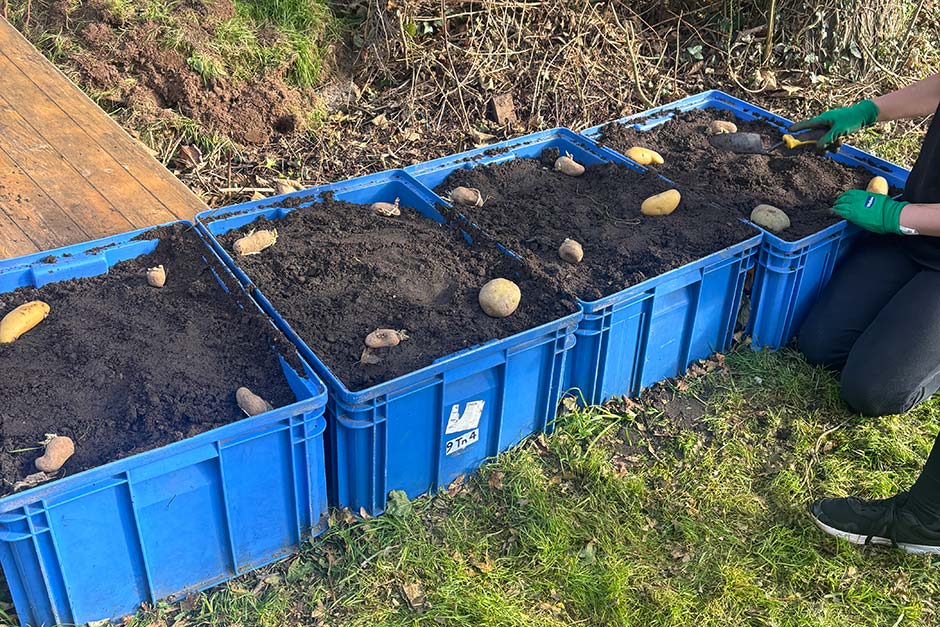
The wellbeing garden is now used every Thursday – and sometimes at lunchtime – by 16 regular gardening club members. These are Year 9 pupils who grow potatoes, onions, garlic, beetroot, carrots and beans for their cookery classes, creating a complete seed-to-table journey. Pupils across the school can also access the green space during dedicated wellbeing hours.
Start-up costs came in under £20 and annual maintenance runs at under £100. A £50 award for achieving Level 2 in the RHS School Gardening Awards was used to purchase fruit plants and herbs.

Learnings: what challenges did you encounter?

Initially, the gardening club at Ysgol Llanhari had access only to raised planters
Helen and her team launched the gardening club with limited horticultural knowledge. However, this wasn’t the biggest challenge they had to overcome. Many planters were available, but once the plants outgrew them, creative solutions became necessary to create more space, like converting a lab storeroom.
“At first, money was also an issue, but thanks to our science technician, Christina Evans, we have secured funding and donations from local companies, who continue to support us whenever we need more compost, gravel or other materials,” said Helen.
"We have secured funding and donations from local companies, who continue to support us whenever we need."
Learnings: what went well?
“The enthusiasm and dedication of the initial participants in the gardening club was by far our biggest achievement, along with their ability to recruit the 16 current regular members,” said Helen.
Day by day, the pupils’ confidence and their pride in the area have grown, allowing a club launched with no expectations to reach a standard where even pupils with additional needs can thrive. Support from many parents, who have offered their time, financial aid and guidance, has also been essential.
Impact of the wellbeing garden so far

The wellbeing garden at Ysgol Llanhari offers a space to decompress and learn a new hobby
The wellbeing garden at Ysgol Llanhari has become the highlight of the school for many pupils and staff, who enjoy the fresh air, open space and time spent with one another. It offers a safe, colourful space for pupils to decompress after a busy day at school, where they can move freely between the indoor and outdoor areas as they please.
The garden is also used daily by SEND pupils, who have found a space where they can be themselves and explore a new hobby.
“Starting the gardening club has been one of the most rewarding things I have done. I would say not to be afraid to give gardening a go. We have learned so much and found something that offers us all the space to grow,” said Helen.