Tender perennials such as verbena, bidens, gazanias and argyranthemums are best propagated each year from cuttings. In this way, you can keep the garden supplied with bushy, vigorous plants full of flowering potential.
By The RHS Advice Team
Quick facts
Suitable for - Fuchsias, pelargoniums, salvias, gazanias, scaevola, marguerites and penstemons and other tender perennials
1
Timing - Late spring to early summer and summer to early autumn
These propagation methods are suitable for tender perennials such as bidens, gazania, heliotrope, marguerites (Argyranthemum) and verbena.
All root quickly and easily, as do other frost tender plants including fuchsias, pelargoniums, penstemons and salvias. Although you can lift or mulch such plants in autumn, cutting them back and keeping them under glass over winter, they can become woody and are best replaced with young plants raised from .
Foliage plants you may wish to bulk up include coleus (Solenostemon), plectranthus and Senecio maritima.
When to propagate tender perennials
Winter is too late to take so you must plan ahead before the season is out.
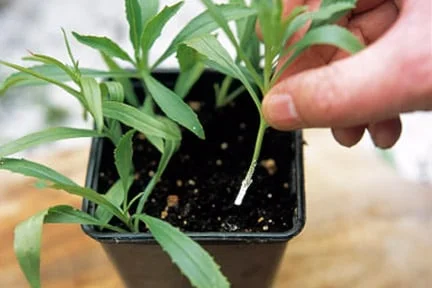
Take softwood cuttings of pelargoniums, petunias, bidens, fuchsias and penstemons in spring and summer from new growth
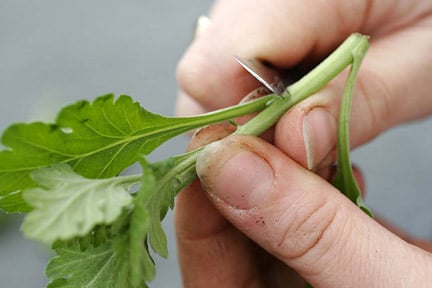
Semi-ripe cuttings of penstemons, salvias, argyranthemum, verbena and heliotrope can be taken from summer to early autumn when the base of the cutting is hardening and the non-flowering tip is still soft
Most cuttings taken in spring will be flowering in their first summer. Those taken in late summer will be overwintering under glass and be ready to harden off during May.
One of the keys to overwintering rooted cuttings under glass is to keep them on the dry side in bright frost-free conditions of around 7°C (45°F).
Problems
It is easy to propagate a wide range of tender plants, but problems such as grey mould and damping off diseases can occur under glass where can often be inadequate. Pelargonium rust can be a problem in damp conditions