Quick Facts
Good for late summer colour
1
Long-lasting flowers from mid to late summer that can also be used for drying and flower arranging
2
Plant in spring or autumn in moist soil that drains well
3
Best in light shade, but tolerates sun if the soil is not too dry
4
Well suited for clay soils
5
The blue flower colour only develops if planted in acid soil
6
Prune Hydrangea macrophylla and Hydrangea serrata in mid-spring, others in early spring
7
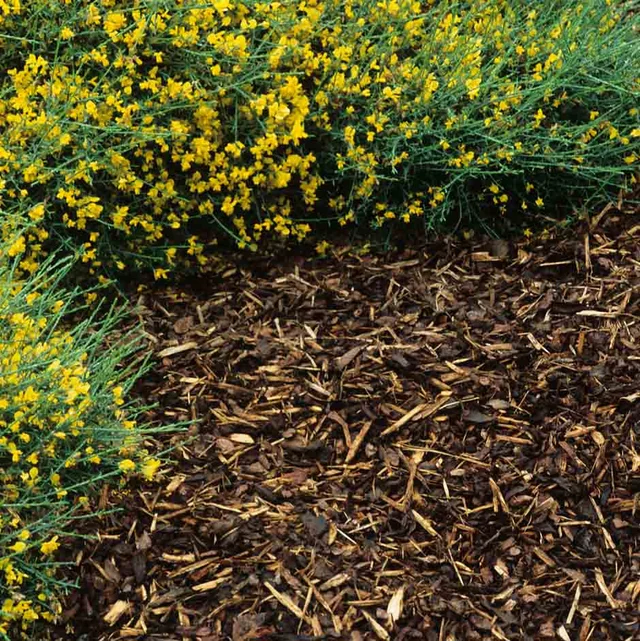
Mulch in spring to improve soil moisture retention
8
Propagate from softwood, semi-ripe or hardwood cuttings
9
Contact with foliage may aggravate skin allergies so wear gloves. All parts may cause mild stomach upset if ingested
10


Before you get started
Choosing a hydrangea
There are a number of different hydrangea types but they all enjoy similar growing conditions. They vary in size from small shrubs to sizeable, almost tree-like specimens so check the plant label when buying to get one that is suitable for your space.
Which hydrangea you choose will likely depend on your preferences for flower colour and/or shape.
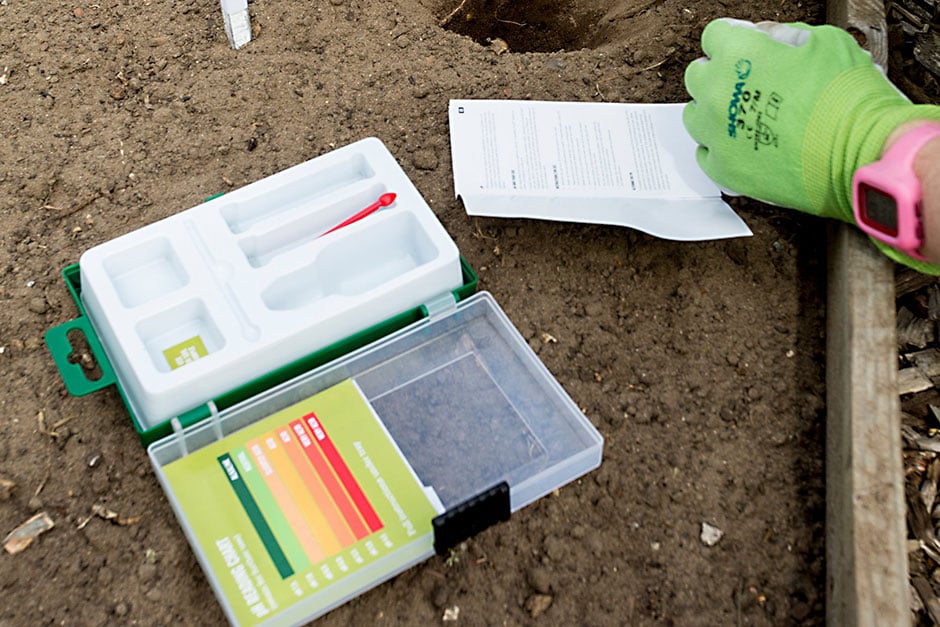
Mophead and lacecap cultivars of Hydrangea macrophylla (and also Hydrangea involucrata and Hydrangea serrata) change colour depending on the acidity or alkalinity of the soil ( ) that affects aluminium availability. Those with blue or pink flowers tend to be blue in acid soils (high available aluminium levels), mauve in lightly acid to conditions, and pink in alkaline conditions. White, red and green-flowered cultivars, remain white or green regardless of soil pH.
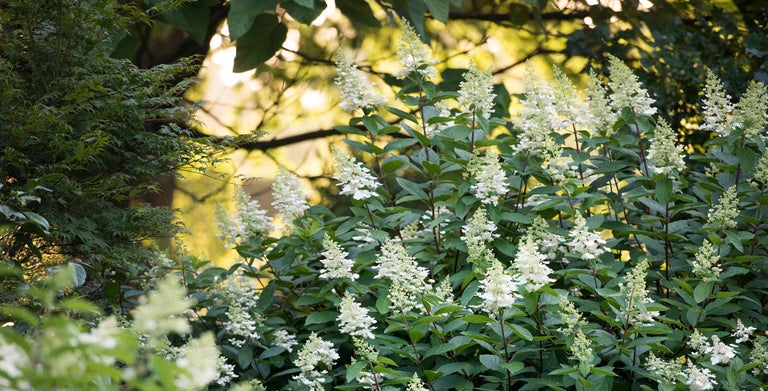
Different hydrangea species also have differently shaped flowers. For round flower heads, choose mophead cultivars of Hydrangea microphylla (hortensia) or Hydrangea arborescens. For flatter flowers select lacecap cultivars of Hydrangea microphylla,Hydrangea serrata, Hydrangea villosa or Hydrangea aspera. And, finally, for cone-shaped flowers go for Hydrangea paniculata or Hydrangea quercifolia.
Did you know?
As hydrangea flowers age, they often change colour change. By late summer (August-September), blue and pink flowers fade to become combinations of green and pink/red. White flowers typically become a vibrant pink.
If you want to see large plants before you buy, why not visit a garden with a hydrangea collection for inspiration.
Hydrangea Derby
Holehird gardens
Buying a shrubby hydrangea
The best choice of hydrangeas in garden centres is available from mid-summer when they are in flower, but containerised plants are available all year round.
Check the height on the label as some will grow into sizeable shrubs.
In garden centres they are usually sold in 3 litre pots at 30cm or more in height. Mail order plants may be sold as young in 9cm or 1 litre pots.
Planting
When to plant
Plant your shrubby hydrangea soon after purchase. The best time to plant is in spring or autumn. Containerised plants can be planted all year round as long as the soil is not frozen, too wet, or excessively dry in summer (but you can water them well if you really want to plant them then).
Soil preparation
Cultivars with blue flowers remain blue if they are growing in acidic soil ( 4.5-5). For more information on soil acidity see our guides on this and on how to acidify your soil.
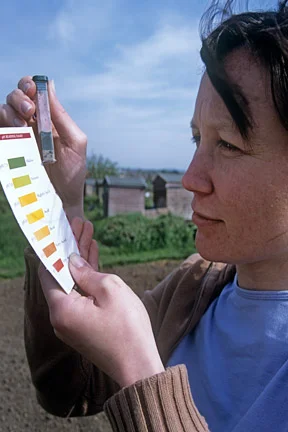
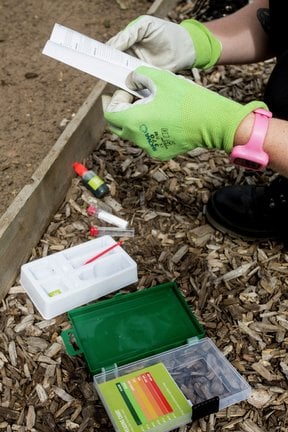
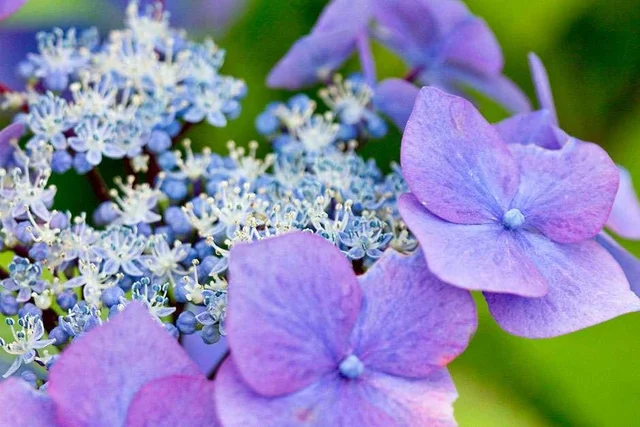
Where the blue colouring proves unreliable (you are getting purple and pink shades), you can use ‘hydrangea blueing compounds’, which contain aluminium sulphate. Always follow the manufacturer’s instructions. If the soil is very alkaline, or if there are obvious pieces of chalk in the soil, this treatment will not work and planting in containers with peat-free is the best option.
If you wish to enhance red or pink flowers, apply a dressing of ground limestone or chalk at a rate of 75-100g per sq m (2-3oz sq yd) in winter.
Hydrangeas thrive in evenly moist soil so after planting improve the planting area by mulching with organic matter, such as garden compost or a manure-based soil conditioner.
How to plant
- Water the plant well before planting
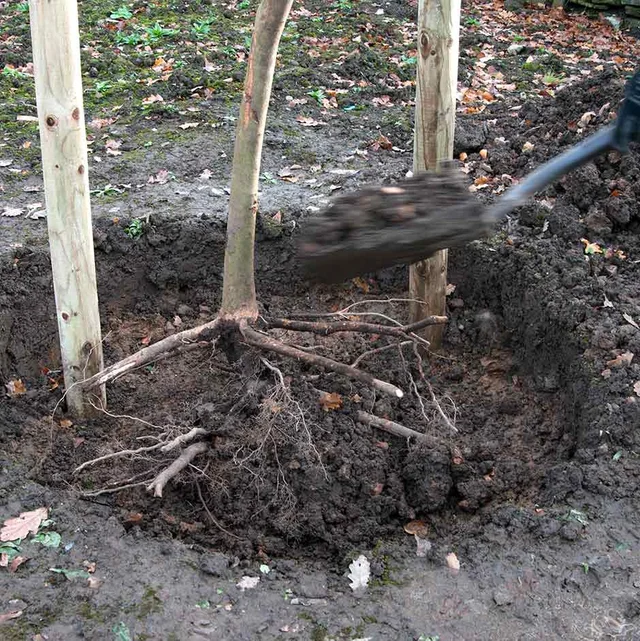
- Make your planting hole as deep as the and three times wider
- Plant your hydrangea so that the surface of the compost in the pot is level with the surrounding soil to avoid planting too deep
- Firm the soil around the rootball well by pressing with the heel of your boot/shoe
- with a leaving, 10-15cm (4-6in) gap around the base, to reduce the drying out of the soil
- Water in to help establishment and aim to keep the soil damp in the coming weeks
Where to plant
- Ideally, plant your shrubby hydrangea in light shade. However, you can plant in a sunnier spot if the soil is not too dry in summer
- Plant away from frost pockets or exposed spots to reduce late frost damage to the new spring growth
- Spacing will depend on the vigour of the chosen plants, ranging 90cm-2.4m (3-8ft). Check the plant label for eventual size
Hydrangeas in containers
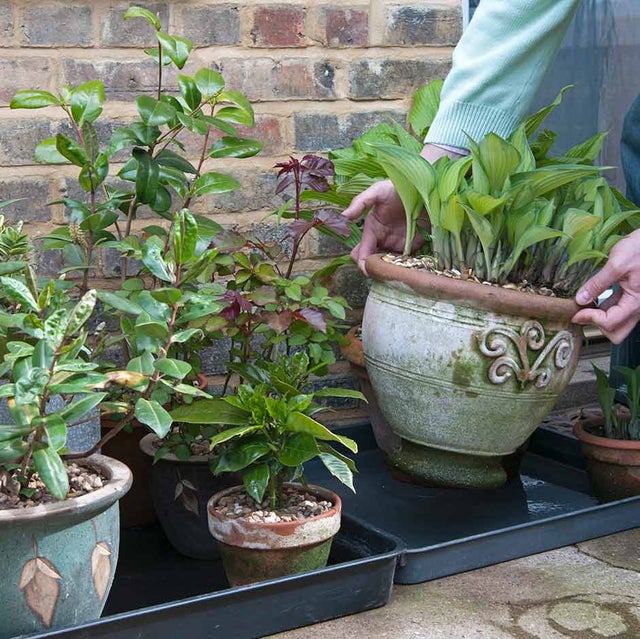
- Grown more compact hydrangea cultivars, such as Hydrangea macrophylla ‘Red Hot Violet’ and ‘Altona’, in containers
- If you are gardening on alkaline soils and want to retain blue flowers, grow your hydrangeas in containers using ericaceous compost
- Otherwise use a mix of two parts of peat-free John Innes No.3 and one-part peat-free multipurpose compost
Ongoing Care
Watering
- Water newly planted hydrangeas as needed during the first from spring to summer when we’ve had no significant rain for 7-10 days
- Even mature plants will benefit from watering during hot dry spells. To reduce moisture stress, regularly with organic matter, such as leafmould, garden or a manure-based soil conditioner, to help the soil retain moisture
- Check the moisture levels of containerised plants regularly and ensure they don’t dry out. Move containers to shadier spot in summer to reduce drying out
- Water blue-flowered cultivars preferably with rainwater to retain the flower colour but, if rainwater is in short supply, use tap water to prevent drought stress
Feeding
Regular feeding of is not generally needed. Too much fertiliser encourages excessive soft, leafy growth, with plants less likely to develop flower buds and more at risk from frost damage.
Struggling shrubs lighter, sandier soils may benefit of spring application of general fertiliser. Drought stress can also cause this problem so mulching may be more helpful.
Overwintering
Most hydrangeas are hardy throughout most of the UK, but the young buds may be susceptible to damage from late frosts. There is the option to move plants in containers to a more sheltered spot such as a cold greenhouse or against a sheltered, sunny wall to provide protection for the buds and new growth.
There is no need to wrap the pot, as this does not provide sufficient insulation to prevent the freezing in an average winter.
You can place the pot on pot feet or a few bricks to improve drainage and so prevent waterlogging. In dry spells in winter, check that the compost does not dry out.
Pruning and Training
Deadheading mophead and lacecap hydrangeas (Hydrangea macrophylla)
- There is no need to immediately remove the faded flowers. The dead blooms can offer interest well into the winter and help protect the new tender growth below from frost damage
- Wait until mid-spring before cutting back the stems to the first or second strong healthy pair of buds down from the faded bloom
- If desired you can deadhead lacecaps after flowering, but mopheads should be deadheaded in milder areas only
Pruning established mopheads and lacecaps (Hydrangea macrophylla), and H. serrata
- Prune in mid-spring
- Prune lightly, but regularly. The flowers are formed on new shoots growing from the previous year’s stems, therefore heavy pruning will result in loss of flowers
- Cut out one or two of the oldest stems at the base to encourage growth of new, more floriferous replacement shoots
- Renovate overgrown or neglected shrubs by cutting off all the stems at the base. The new stems will not bloom until the following year
Pruning Hydrangea paniculata and H. arborescens
- Prune in early spring, before the shrubs start actively growing
- Regular pruning is not essential, but annual pruning of last year’s growth encourages more prolific and larger flowers
- Prune last year’s growth to the lowest pair of healthy buds, creating a low framework of woody branches. This usually results in a pruned framework of no more than 25cm (10in) high but, if more height is required, cut to about 60cm (2ft) tall
- Neglected plants generally respond well to harder pruning to restore the low framework
Pruning other hydrangea species
These include Hydrangea aspera, H. aspera Villosa Group, H. quercifolia and H. sargentiana
- Prune in spring
- Only minimal pruning is needed to remove dead and over-long stems
Propagating
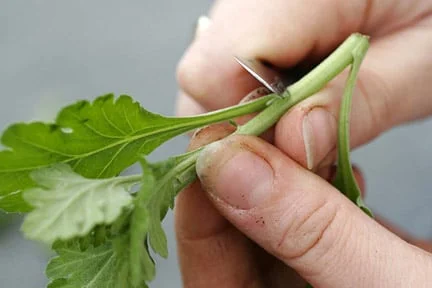
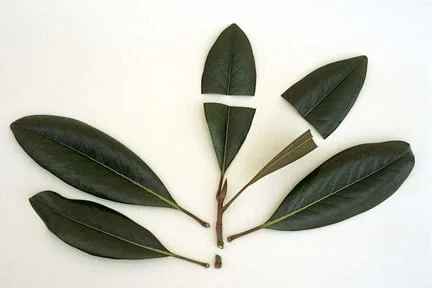
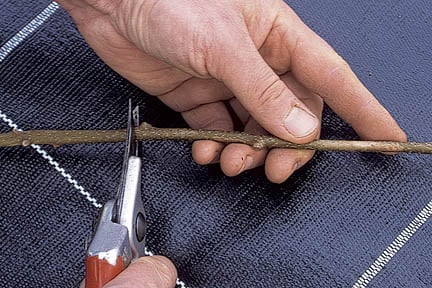
They are easily propagated from . The plants will take two to three years to start flowering.
Take from late spring to mid-summer, semi-ripe cuttings in mid-summer and or hardwood cuttings in winter.
Species hydrangeas can also be propagated from seed in spring.