How to build a green roof for a shed or store
If you have a small shed, bin or bike store or even a rabbit hutch you could install a green roof to boost biodiversity, soak up rainfall and turn something functional into something beautiful and good for the environment
What are green roofs?
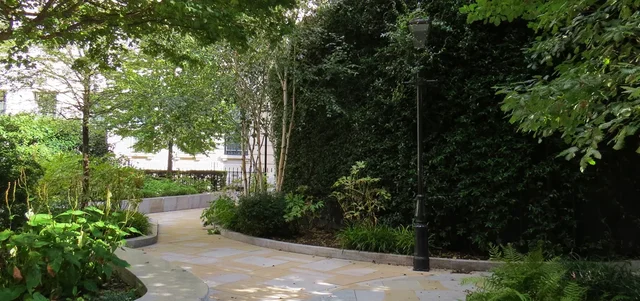
In urban environments where space is at a premium, green roofs present a way not only to maximise growing space, but also to combat challenges to the environment of towns and cities. Green roofs can help keep buildings cool in the summer and warm in the winter. They also provide a wellbeing benefit for people by increasing our access to plants, gardening and nature.
- – Green roofs can attract pollinators and support food networks in areas where available food sources can be scarce.
- Cooling – Plants absorb heat and cool the air via . Green roof temperatures can be 15-10° cooler than conventional roofs.
- Pollution – Plants play an important role in filtering air while also helping to reduce noise pollution.
- Flooding – Green roofs are especially helpful in mitigating the threats posed by flooding in urban areas, by slowing and absorbing rainfall and preventing drains from being overwhelmed.
Types of green roofs
Developers and property owners have various options to mitigate overheating in urban areas. As dark materials absorb rather than reflect heat, a simple and inexpensive choice is a ‘white roof’ – painting or covering a roof in white material. However, not only is this a short-term measure, it also does nothing to help with other issues such as stormwater, air pollution or biodiversity. Green roofs involve more initial investment and maintenance, but can offer far more in terms of long-term savings and increased environmental benefits.

Blue roofs
Use captured rainfall for cooling and insulation and slowly release water into the sewage system to prevent flooding. While blue roofs have much in common with intensive green roofs, their emphasis is on sustainable water management.

Naturally occurring green roofs
Nature often takes over roofs over time without any planning. Lichen and moss can develop on the surface, eventually creating the appropriate environment for more deep-rooted plants. Brown roofs are designed to encourage plants by featuring a substrate such as rubble and soil to encourage plants to settle naturally.

Intensive green roofs
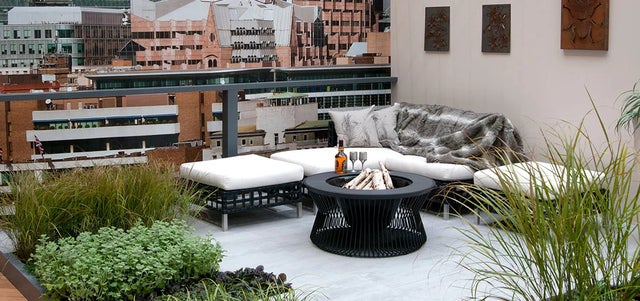
Often called roof gardens, intensive green roofs are flat roofs with sufficient depth of substrate, in beds or containers, to grow a range of plants. These roofs require regular maintenance and often include features such as seating and vegetable beds.

Extensive green roofs
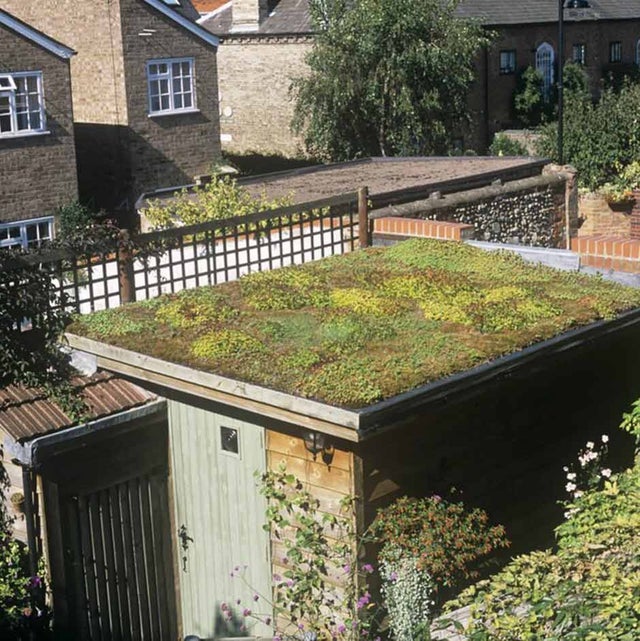
Extensive green roofs are designed to require minimal maintenance. The plant material covers most or all of the space. These are what are often described as ‘green roofs’ and are what can be created in small areas such as on top of a shed or bin store.

DIY green roofs
Adding a green roof to a small outbuilding such as a bin or bike store, is an achievable weekend project to do at home. If you are adapting an existing structure, you will need to check that it is strong enough to carry the increased weight of a green roof.
If you are starting from scratch, there are lots of kits available to buy for self-assembly which are well within the scope of the average DIYer. However, if you are looking to create something more bespoke, want to save money, or use reclaimed materials then it is not too difficult to make the structure yourself.
1. Draw a design

Consider the space you have and what you want from your structure. If you are building bin storage, factor in room to easily take them in and out. Not all bins or bikes are the same size so make sure you take lots of measurements. Accuracy at this stage will save time, effort and money later. The roof will need a gentle slope to allow water to drain away, so decide what you want the roof to have, taller at the front hides drainage, but taller at the back means you get a better view of the green roof. Do you want doors fitted? If the front is open, will you need extra support such as a steel strap which bins or bikes will be able to roll over? Once in place you won’t be able to move the structure, so make sure you have access to anything you may need to get to such as meters or drain covers. Once all these factors have been taken into consideration, draw up a design so that you have an idea of what materials you need.
2. Materials

Building your own storage means you have the freedom to decide what materials to use. Heavy timber, like sleepers, will be more expensive than studwork but may need fewer supporting struts to hold the weight of the roof. For a more durable store, you could use metal, or even brick. You can also consider using reclaimed materials or building in extra features into the structure to support wildlife, such as drilled holes for solitary bees or a bug hotel.
3. Drainage

Whether you are adding a green roof to an existing structure or making the whole thing from scratch, the roof will need a slope, to allow water to drain away. The degree of the slope depends on the size of the roof. Too steep and you risk drying out the plants at the top, too level and water may pool. Where you put your guttering will depend on the angle of the roof. Given the smaller size of the surface area, the slowed down rate of the flow and water absorption from the plants, you could install a rain chain which the water trickles down into a bed or soakaway.
4. Layers

Smaller green roofs require five basic layers:
- Waterproof membrane – to protect the roof
- Root barrier – to prevent roots damaging the waterproof membrane
- Drainage – to prevent water collecting
- Growing medium – a peat-free substrate mix right for your plants
- Plants – dependent on right plant, right place
To this list you can add a water retentive layer (old wool blankets or jumpers can be used) to further slow rain water, a filter layer (a geotextile which can be purchased online), to prevent the substrate clogging drainage and a top dressing (eg decorative shingle) to keep down weeds.
Kits are available which contain all the layers needed in blocks or mats which fit together, complete with pre-sown plants.
5. Plants

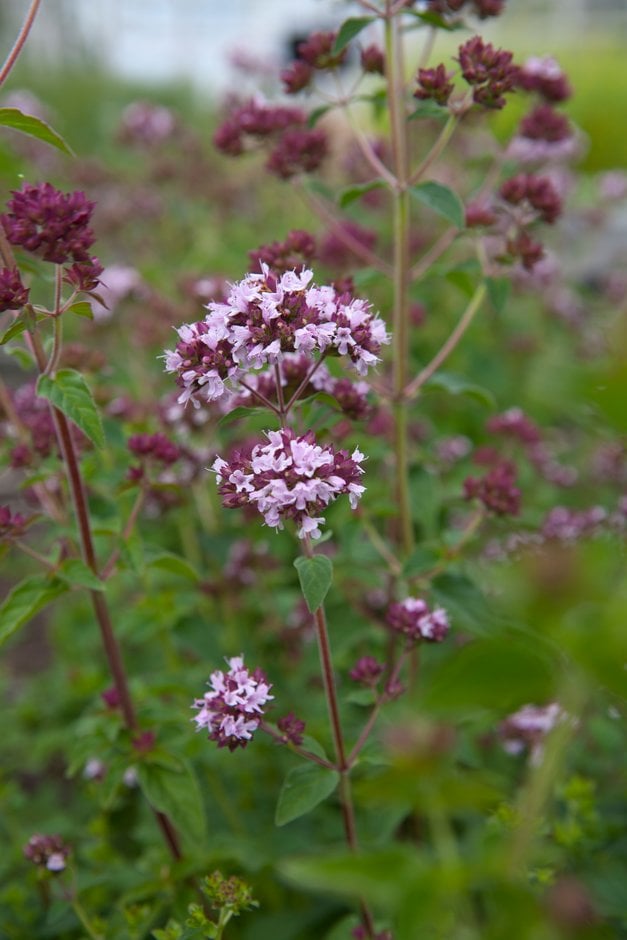
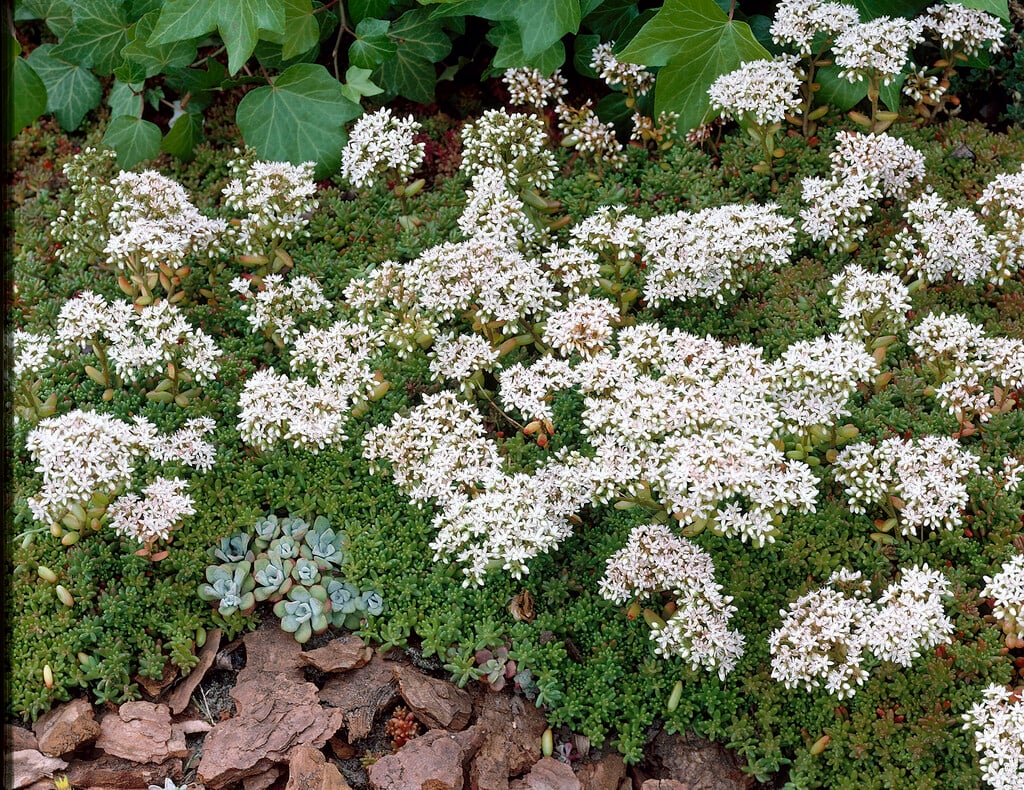
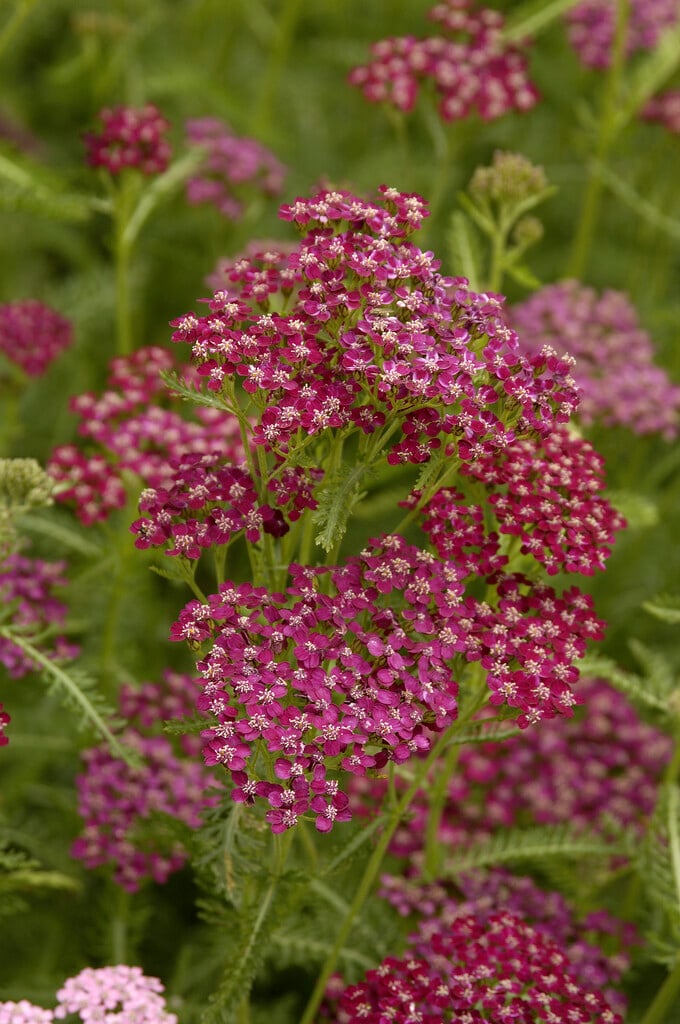
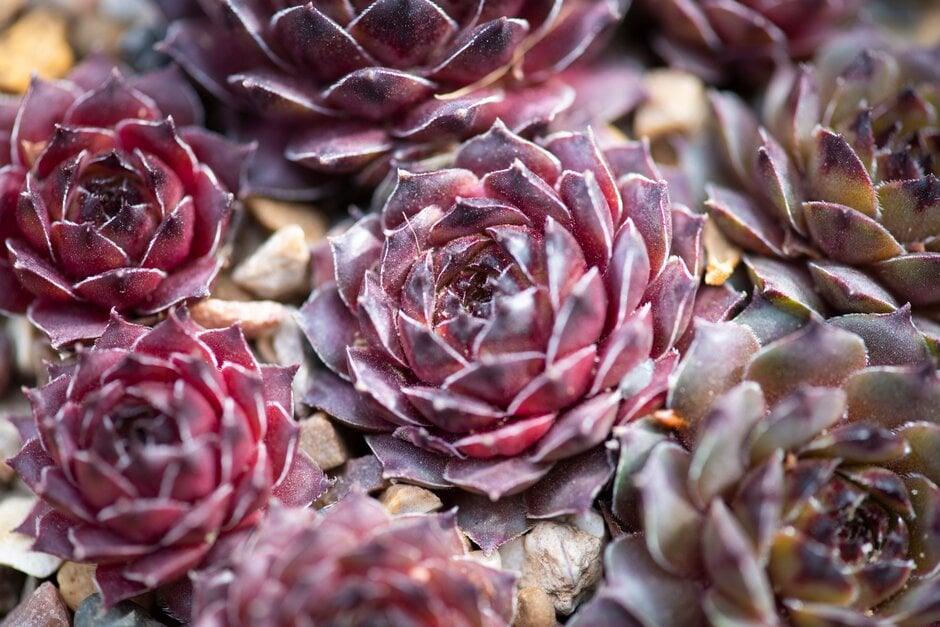
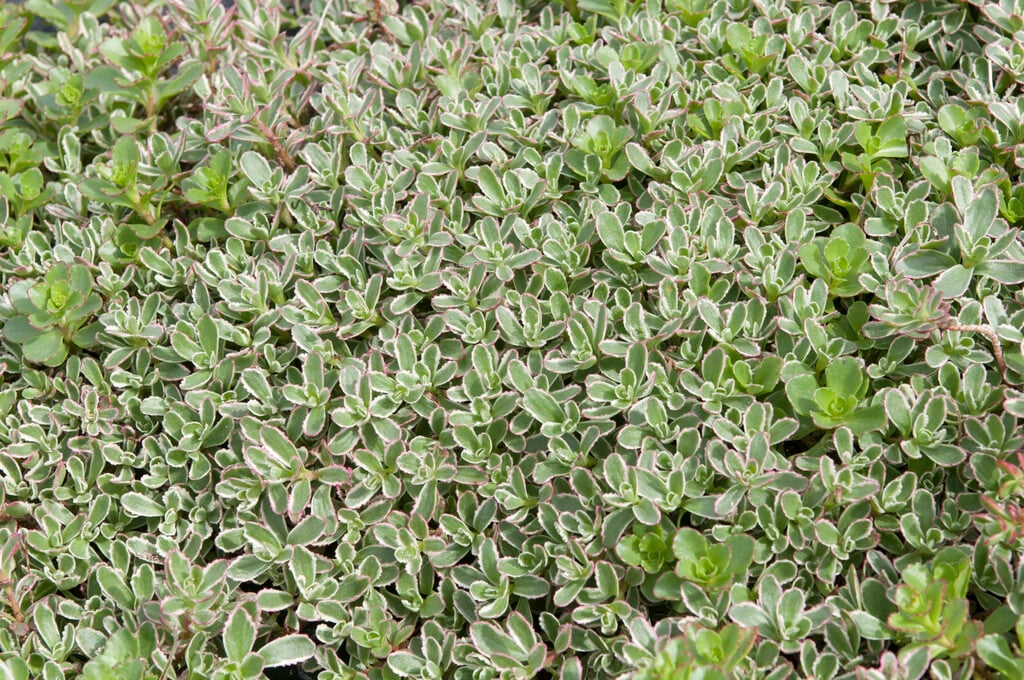
You can control the depth of the substrate, depending on what you want to grow but on smaller areas, to keep the weight down, it’s advisable to opt for shallow rooted plants. Alpine plants require good drainage, but not too much soil. If you want to plant up your roof yourself, there are plenty of plants to choose from. Remember right plant, right place and factor in how much sun they will get, how much they will be exposed to the wind and how much maintenance you will be able to undertake. See our list of recommended plants below.
About the author – Jenny Laville
Jenny is Shows Manager for the RHS, is RHS level 3 qualified and has had allotments for over 15 years. She currently looks after a plot in Buckinghamshire.