Glastonbury goes gardening
The headliner of Glastonbury 2025 is Nature - the oldest artist of them all. Nestled in the south-east corner of Worthy Farm, Somerset, is a 15-acre area filled with art, live music – and, surprisingly, spectacular gardens
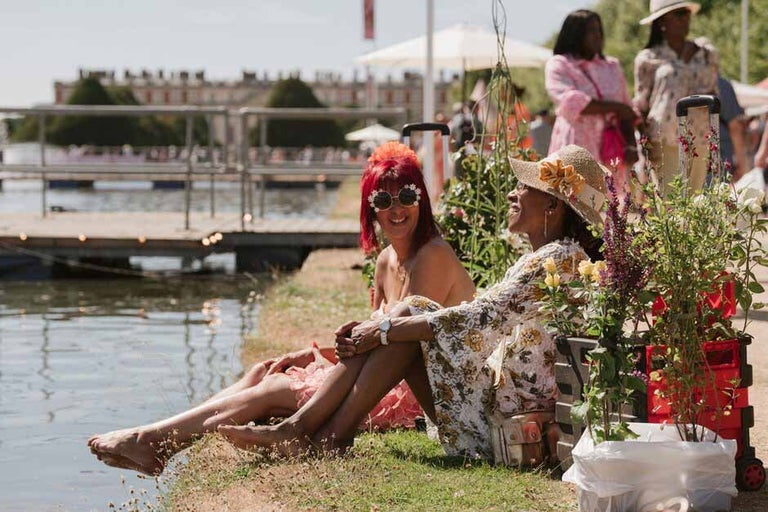
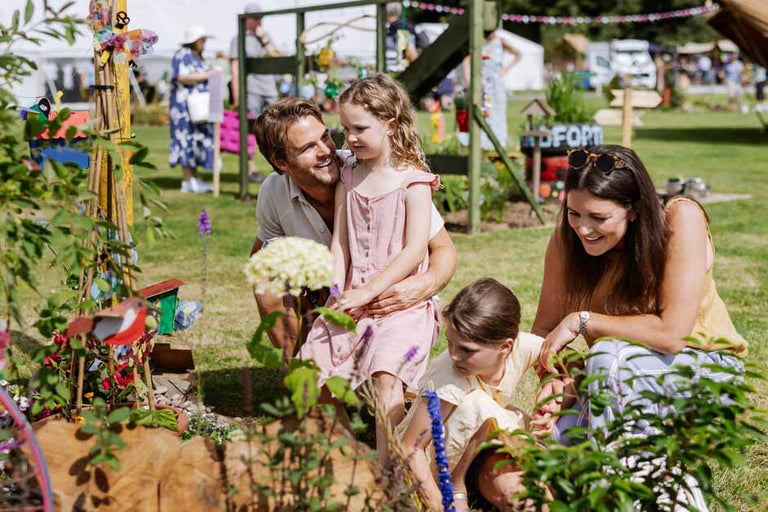
It’s the world’s most famous music festival, but Glastonbury isn’t normally known for horticulture. This year, while 210,000 sun-soaked campers take their pick from over 3,000 performances across dozens of stages, music fans are also exploring the event's greenest new edition, Shangri-La's The Wilding.
While famous names like Rod Stewart, Neil Young and Charli XCX are playing on the main stages – deep in an area known as Shangri-La, the plants, flowers and vegetables are the standout stars.
Of course, music and horticulture have a long history together. From green-fingered legends like Paul McCartney to Joni Mitchell, to countless nature-indebted songs like Bruce Springsteen’s ‘Secret Garden’. The Wilding is an unexpected sight in a space better known for its hedonism than its hostas.
"Concert-goers are invited to step – and dance – into a space where nature is the headliner"
The theme that guides the whole design is ‘seeds of change.’ Here, say the curators, “art grows wild, ideas are propagated and radical joy flourishes.”
It’s presented in both obvious and subtle ways. For example, there are a dozen allotments, and around 40 trees including Corylus maxima ‘Red Filbert’ , Himalayan birch , pink magnolias , maples and sweet cherries . Look closer and there’s an edible billboard made of lettuce and a disguised polytunnel housing tropical palms. Troughs planted with purple sweet williams greet people as they enter the gates.
“We wanted to get plants absolutely everywhere,” says Kaye Dunnings, Creative Director at Shangri-La and architect of The Wilding: “We’ve lost our connection with nature in this country – and this whole space is asking the question: knowing how things are, if we were to start again, what would we do differently?”
There are thousands of plants including coleus, coneflowers, salvias, foxgloves, peonies and yarrow. The small team grew many of them from seed at their off-site farm, transporting them carefully to Glastonbury by lorry.
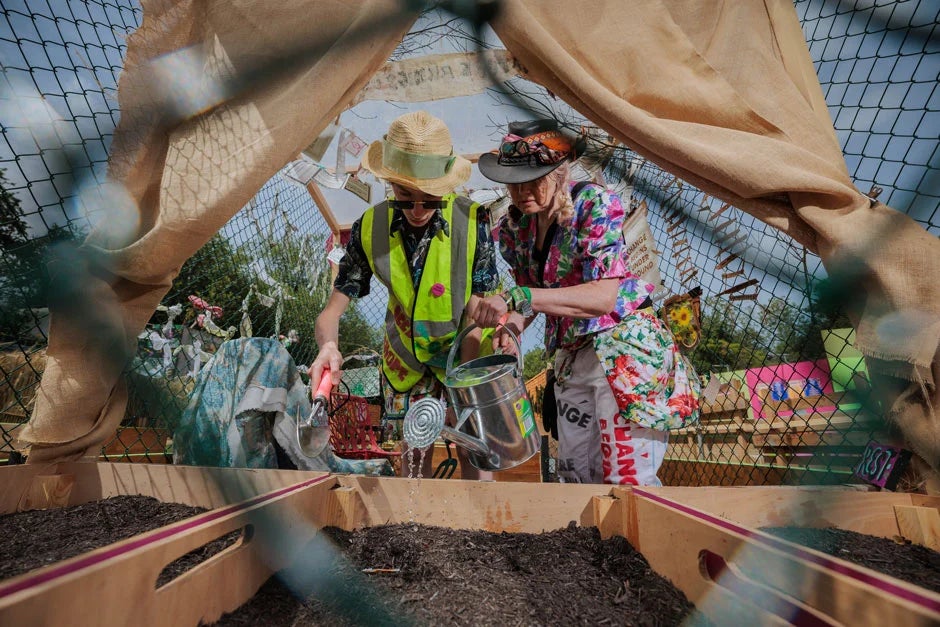
Planning started in December 2024, growing in February 2025, and gardeners have spent three weeks prepping the space before welcoming the public. “I’ve always loved the idea of a secret garden at a festival,” smiles head gardener Adele Perrott, “because it’s the opposite of everything else.”
Here are some of the highlights:
The Wilding allotments
Shangri-La & Jody Hartley
Shangri-La & Leora Bermeister
“Are we allowed to eat it?” asks one puzzled festival-goer, tempted by a ripe tumbling tomato. “Of course,” responds gardener Perrott, “it’s all organic!”
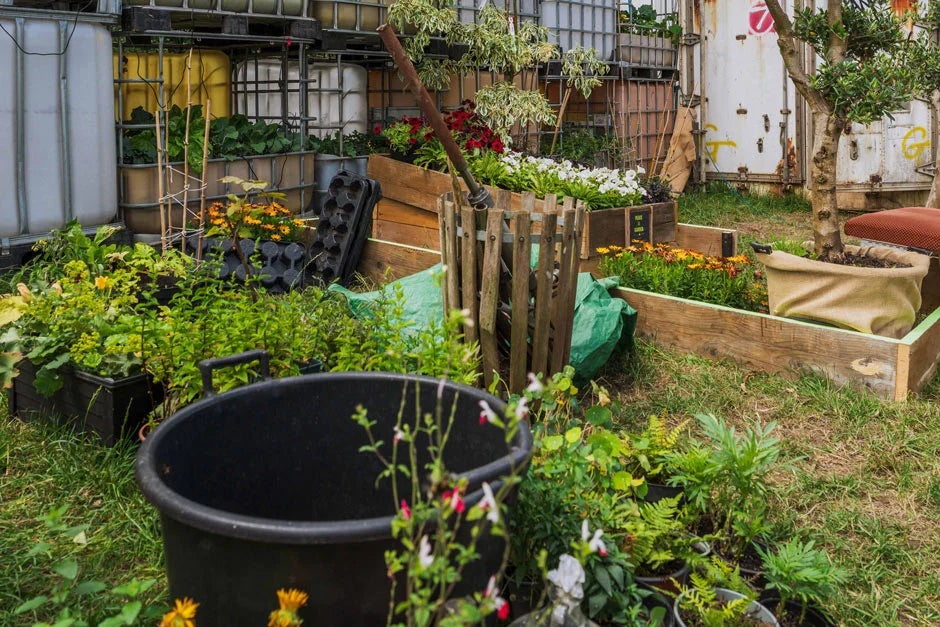
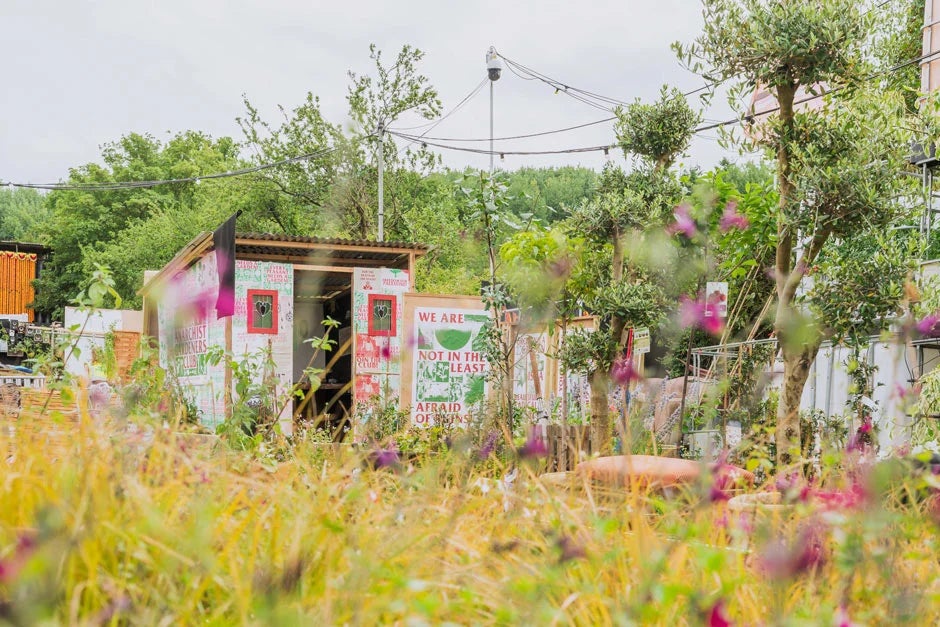
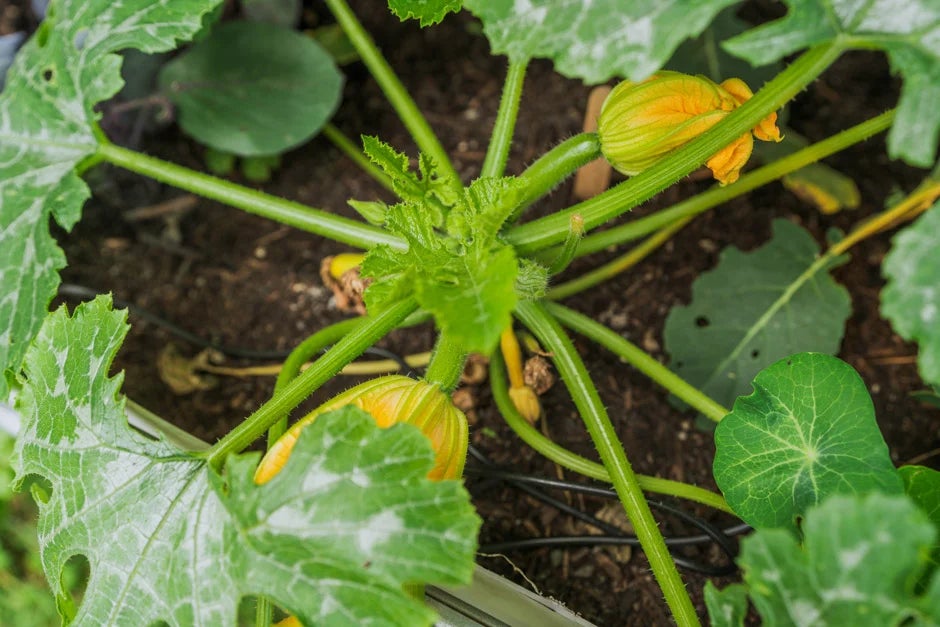
The first thing people see when they wander into The Wilding is a three-tiered bank of repurposed containers growing a rainbow of vegetables. Produce is abundant with a kaleidoscope of colours; oranges, yellows, lots of pastoral purples and pinks. Kale, sweetcorn, purple broccoli, runner beans, spring onions and globe artichokes sit next to herbs like mint and parsley. In a nearby raised bed, guild planting - plants working together to maximise their potential - sees tomatoes, borage, lettuce, alliums and nasturtiums bedded together.
Shangri-La & Leora Bermeister
Shangri-La & Leora Bermeister
“Our cucumbers failed,” concedes Perrott. “We live off-grid, so we didn’t use heated pads or anything like that. All the growing – it’s been a roll of the dice! It’s a miracle we’ve got so much good stuff.” “Everytime a marrow or an artichoke appears we all burst into tears,” adds Dunning. “It’s joy. It’s pride. Allotments are the most amazing places.”
Fieldworks

Shangri-La & Leora Bermeister
Using seven thousand individually placed wheat stalks, Fieldworks is a communal space inspired by crop circles. The wheat was harvested by creator Coral Manton, collected from local farmland using a traditional sickle and dried before being arranged. Complementing the wheat, is a seven-metre ring of wildflowers representing sustainable farming, designed by professional gardener Ellie Rogers.
“Much in the same way a festival is building a place for people to come together to celebrate, this is the same – it’s creating a space,” explains creator Coral Manton, likening the round design to a temporary temple. “We’ve had a lot of people taking photos already,” she gestures. “It seems to be a bit of an Instagram moment. That wasn’t the intention, but when you look at it, of course it is.”
The Hive

Shangri-La & Leora Bermeister
“The fact there are bees, butterflies and other pollinators in this field is incredible,” says Dunning. “That proves what we’re doing is working and it’s very real.”
The Hive, created by Meg Lane, Paula Palazon and Maria Wiecko, is a visual tribute to the bee. It’s also, the makers say, a symbol of the importance of communal living. On the ground-level, soft shield ferns sit next to common borage with its star-shaped pastel flowers. Elsewhere, ghost plants and mingle with climbing mosses in a structure that’s intended as an invitation for us to rewild our cities.
Sonic Bloom
Shangri-La & Leora Bermeister
Shangri-La & Leora Bermeister
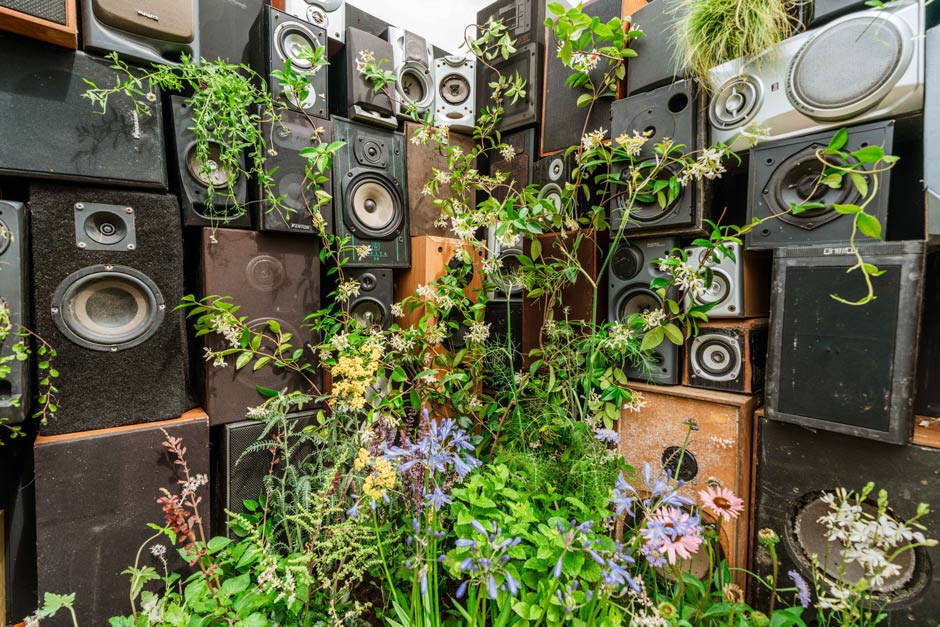
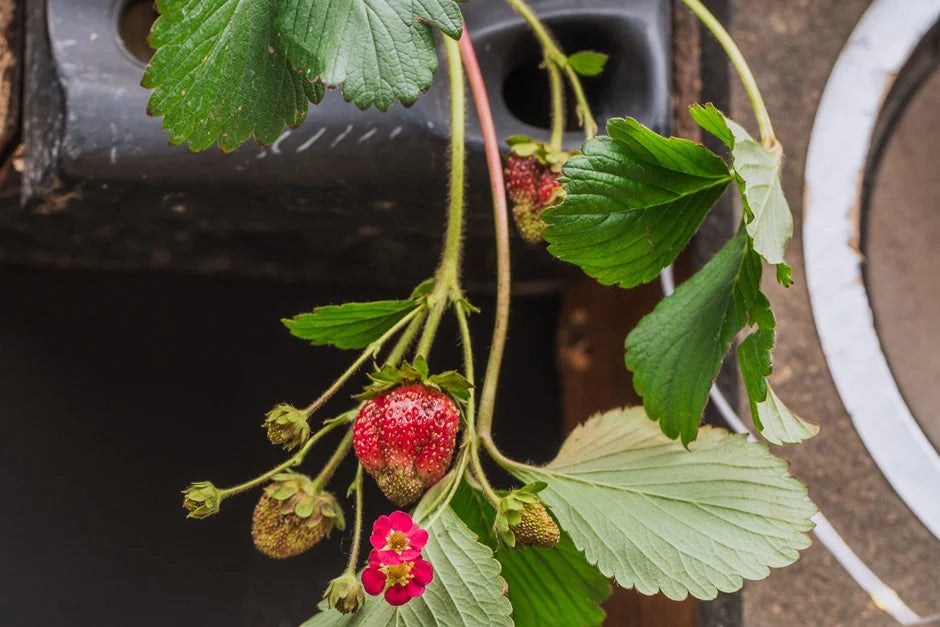
A secret room, tucked behind a bar serving punters pints, Sonic Bloom is a tranquil hideaway. The three-sided space is the ultimate display of music and nature entwined. Clapped-out audio speakers become planters, as strawberries, woodland sage and licorice plant burst through the gaps.
"Here, the audience is invited to take a seat on pallet benches, don a pair of headphones and listen to NATURE - the oldest artist of them all"
Natureeven gets a cut of the streaming royalties, to fund conservation. An inspired collaboration between SoundsRight , Shangri-La and The Edible Bus Stop .
Imaginative details
More than 100 hand-crafted troughs are dotted around The Wilding – planted with reeds, salvias and vibrant sweet williams.

1
of
5
© Greg Cochrane


Legacy
The Wilding, and all the plants, trees and vegetables will return. Part of Shangri-La’s commitment to the theme means the team will transport everything to their land off-site, and nurture it until the next Glastonbury festival in 2027. There, plants will be divided and seeds will be cultivated. “This is the start of a long journey of planting seeds of hope and inspiration for the future,” remarks Dunning. “But we’re outsider artists. We’re learning, and we want to know more. We’re gonna be calling Monty Don! This is our chance to pass gardening down to people through festival culture.”