
Great British growers: peat-free Cliff Bank Nursery
“We want everyone to get back to bare-root.” At Yorkshire’s Cliff Bank Nursery, Ben Preston and Laura Kennedy are rethinking the way gardeners buy plants
On a sunny September morning among staging stacked with salvias in every shade, it’s hard to believe that barely three years ago, this spot was an overgrown tangle of brambles, nettles and thistles. But Ben Preston and partner Laura Kennedy have scythed their way through seven years of neglect to reveal the bones of what was once a large nursery selling mainly shrubs and roses. “We found some old nursery catalogues for the site from the 1960s,” says Ben, “and Buddleja globosa, a bit of a choice shrub, was selling for 15p.”
This seven-acre site just outside the beautiful spa town of Harrogate, North Yorkshire, is now well on its way back to its best, the new business specialising in prairie plants and grasses and very much looking to the future. It’s quite an achievement for the couple, both in their 30s.

Ambitious? Yes. Capable? Absolutely. Ben describes himself as “a modern nurseryman with a vision to create a nursery that draws on traditional skills”. Growing up around his grandparents’ smallholding in nearby Wetherby, he found his passion for plants when he started working for a friend’s gardening business: “I got hooked,” he says. A degree in horticulture later, he took a position at ’s York Gate Garden and soon earned the role of Head Gardener. “I had a dry run at building a nursery at York Gate,” he says. “We created a whole new garden with two people working in the nursery, five gardeners and 170 volunteers – it was a big part of my life.” Laura, too, had become a big part of his world, the couple having met online at the beginning of the covid pandemic. Laura is a mental health nurse by profession, but before long, she was drawn into Ben’s fascination for growing plants.
It was quite by chance that Ben visited the overgrown nursery at Cliff Bank, in November 2021. “A friend persuaded me to come and see the site, which was up for rent and I fell in love with it,” he says. “We had no immediate plans to set up a nursery but it was too good an opportunity to miss. Laura didn’t take much convincing, but I’m not sure she knew what she was letting herself in for.” Just five months later and a 10-year rental agreement signed, the scything began, aided by pigs clearing one side of the site, a digger the other.

This tenacious couple have no intentions of slowing down now the nursery is open and sales are strong: “We want to change the way gardeners buy their plants,” says Ben. Firstly, their intention is to create a garden populated with inspirational plants, so customers can see what they’re purchasing in full growth. “The nursery is going to be an immersive experience – people will come here as if they’re going to visit a garden,” he explains. Secondly, they want to encourage people to buy plants, rather than ones grown in pots: “If people want to buy a plant, it will be lifted from a stock bed,” says Ben. “The top growth will be cut off, the roots washed of all soil and then the plant will be wrapped in newspaper. Mail-order plants are prepared in the same way.
"Gardening is about learning from our failures and working out how better to do it next time"
“Pre-1960s, nearly all plants were bought bare root, so there was no debate over plastic pots or peat . Many plants can be lifted and split right through the and they then establish so much better, though people will need to be patient. Garden classics that we’re used to cutting back – such as asters, Astrantia, Geranium, and Rudbeckia are prime examples. It’s not instant gardening like we’ve become accustomed to – but we’ve all bought a plant in a pot, stuck it in the ground and then six months later pulled it out half-dead, its root ball exactly the same shape, and we’ve got to get away from that. We want everyone to get back to bare-root.”
Ben’s zeal for roots is clear: “It’s really fun seeing the root structure and working out how a plant is going to grow, but gardeners never see roots now. We need to go back to the old-school ways of learning about every plant individually and how it grows, when it grows, and what its root structure is like.”
Ben is more than just a plantsman – he also has a head for business, while Laura brings positive energy and the people skills gained from her medical work in spades. “Gardening is a great medium of communication, whether it’s for people with mental health problems or learning difficulties, or just local people wanting to help out the wider community,” she says. And while Ben also enjoys meeting customers, he’s quick to share that his favourite job is propagating “in the polytunnel, listening to the cricket” and nearly all the plants for sale are grown here from seed, or division.

Controversially, the nursery closes through August, but others have done this successfully, says Ben: “When Piet Oudolf set up his nursery, he used to shut in August, and it means you can cut everything back – all of the salvias, geraniums, Helenium and midsummer-flowering perennials – so that when you come back in September they’ve all flushed again and are looking good. Plus we humans aren’t frazzled either.” Laura adds: “We also use that time to go and visit other nurseries, which helps us to see what other people are doing.”
Laura says they hope Cliff Bank will one day be a local nursery with a national reputation and while the couple’s journey may still be in its infancy, it’s incredible to witness how much has been achieved here already, and on a shoestring too: secondhand sheds were bought on an online marketplace, a polytunnel frame rehomed from RHS Garden Harlow Carr. More is to come – at the top of the sloped site with a view over the Capability Brown landscape at Harewood House, is a neglected Danish greenhouse that the couple hope will one day become a workshop and teaching space. There’s talk of setting up traineeships, too. But for now, their focus is to grow a great nursery.
“Gardening isn’t about being green-fingered,” says Ben, “it’s about learning from our failures, and working out how better to do it next time. It’s a constant try, fail, learn, succeed process.” This philosophy seems to sum up to the couple’s business approach, too, which bodes well for this adventurous project’s future.
“A lot of the big garden centres don’t grow their own plants, even,” says Ben. “But rather than moan about it, I’m going to change it.”
Ben's favourite plants

Liatris pycnostachya
“This north American prarie plant reaches 1.5m with Medusa-like tails when it blooms in August–September.”


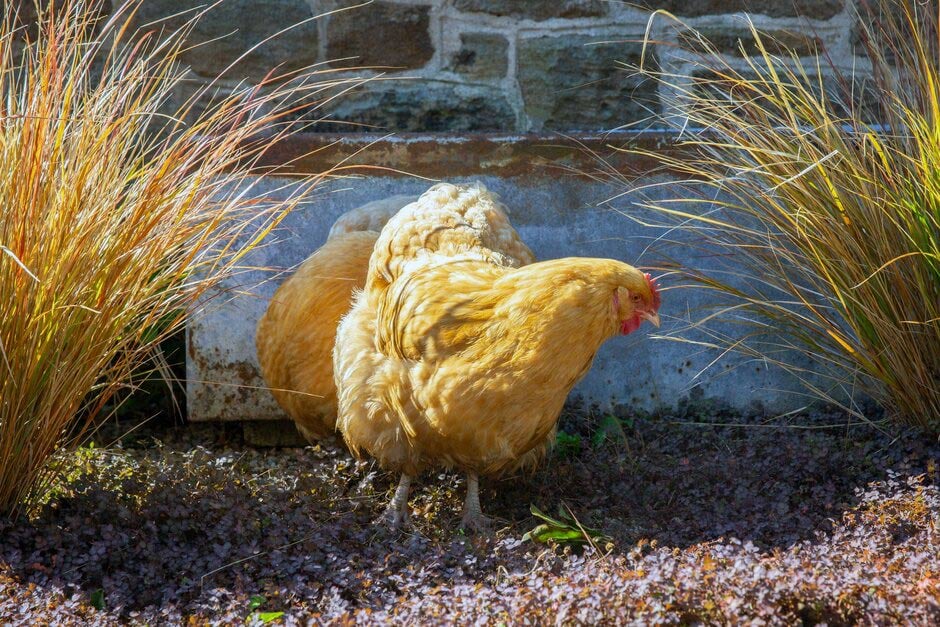
Green credentials
Cliff Bank Nursery is peat free, two friendly Buff Orpington chickens Orla and Mimi, help control the local slug and snail population and there’s very little machinery on site, bar a small tractor to help with heavy loads. Ben and Laura use Austrian scythes to cut back undergrowth and materials discovered during the clearing process are re-used wherever possible.