Find out how gardening can be an important part of a stroke survivor’s recovery process
RHS Editorial Team
5-minute read
For landscape designer and stroke survivor Miria Harris, suffering a stroke was a “disconnecting and disembodying experience.”
“A stroke can strike anyone at any time. The after effects of a stroke affect people in different ways; the only communal experience is the trauma.”
"All stroke survivors will need time and space to recover, process the trauma and reconnect with loved ones"
Miria Harris, landscape designer and stroke survivor
Discover eight ways gardening can support you on your recovery journey.
1)Helps you to adapt
Jonathan Jones and his family took on an allotment two years after his stroke
Jonathan Jones survived a haemorrhagic stroke in 1999. “I had to relearn to walk and talk and I had a weakness on one side of my body,” says Jonathan. “I found not being able to work on the garden frustrating.”
Prior to his stroke, Jonathan worked as a journalist. He now works for the Stroke Association as a Stroke Information Officer and often speaks to survivors as part of his role. He tells them: “I’ve been where you are and it is a long hard struggle, but you can do it.”
"There will be an initial period of thinking ‘why me’. But eventually you realise that you have to learn to live with this and adapt"
Jonathan Jones, Stroke Information Officer for the Stroke Association
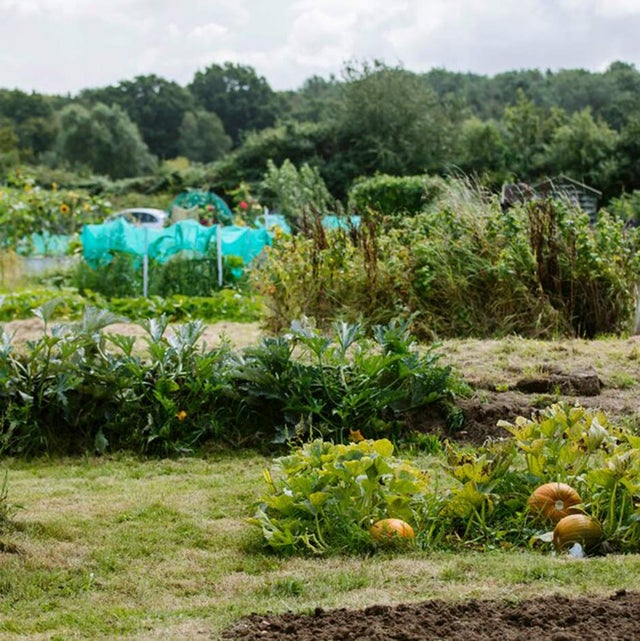
In 2001, Jonathan and his family took on an allotment. “When I first started spending time at the allotment, some of the more experienced gardeners would approach me and try to give me advice. I explained to them that I’ve had a stroke and would need to find my own way of doing things.”
"Recovery takes time. If you were a keen gardener before a stroke, you will be able to garden again. Try to find what works for you and adapt the way you garden"
Jonathan Jones, Stroke Information Officer for the Stroke Association
“We’ve installed raised beds in the allotment, so I don’t have to bend down as much. When I need to get closer to the ground, I use a kneeler and trowel,” explains Jonathan.
Jonathan also finds breaking jobs down into smaller tasks makes them more manageable. “I keep a small container close by so when I’m pulling out weeds, I have somewhere to put them. Once I’ve finished, I’ll carry the container to the heap at the bottom of the garden.”
2) Promotes independence
Tim Forward in the Woking Community Hospital Garden
Tim Forward is the Lead Occupational Therapist on the Bradley Unit at Woking Community Hospital. Tim works with patients who have neurological conditions or have survived a neurological event such as a stroke or a brain injury.
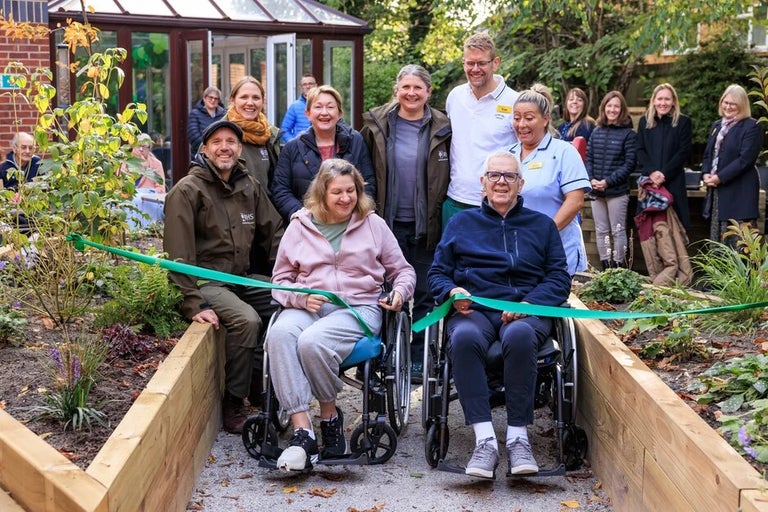
In 2023, a partnership between the RHS and NHS saw a wellbeing garden open at Woking Community Hospital.
“Many of our patients are in hospital for a period of rehabilitation. They are offered a variety of treatments from speech therapy to physiotherapy. Between those sessions there’s a lot of downtime, so having the ability to, with support or independently, access the garden makes a real difference to wellbeing and alleviates boredom.”
"Introducing functional activities or tasks such as gardening can help my patients to work on their limitations and promotes independence"
Tim Forward, Lead Occupational Therapist at Woking Community Hospital
“Abilities can vary along with the amount of time that people stay with us. If a patient wants to be involved in gardening tasks, we’ll look to make this possible for them as soon as they can. Some gardening activities require a level of mobility but there are still lots of things those who aren’t mobile can do.”
"One person’s experience of a stroke can be so different to another person, so just do what you safely can in the garden and find what you enjoy"
Tim Forward, Lead Occupational Therapist at Woking Community Hospital
“Whether they were a keen gardener previously or not, completing an activity can boost patients’ morale and wellbeing on the wards.
“Gardening provides an opportunity for people to physically engage in something and they can see visible results from it. They can carry it on through their admission and once they’ve left hospital as well,” says Tim.
3) Creates space to process the trauma
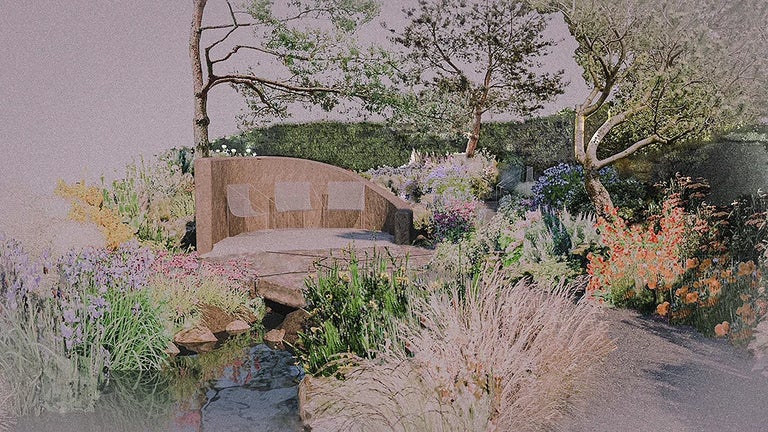
Miria Harris has designed the Stroke Association’s Garden for Recovery for the 2024 RHS Chelsea Flower Show
"The focus for the Stroke Association’s Garden for Recovery was to create a calm, sensory space for visitors to rest, take a breath and be transported away from a hospital environment into an immersive natural space"
Miria Harris, landscape designer and stroke survivor
“It is important to adapt gardens to consider the various physical, mobility and visual difficulties that might be experienced by stroke survivors,” says Miria. “Active gardening can help improve physical dexterity while plants with scent, those that rustle in the breeze or are soft to touch can have a positive calming effect.”
“It needs to be accessible and for different people that can mean different things. For those who aren’t as able, having raised beds and wheelchair accessible options are essential for them to participate,” explains Tim.
4) Improves social skills
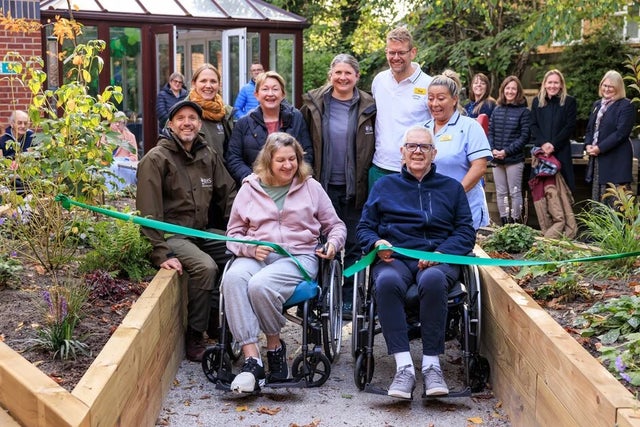
Patients, staff and loved ones congregate in the Woking Community Hospital Garden
According to Tim, the Wellbeing Garden at Woking Community Hospital has already had an impact on the whole ward, including patients and staff.
“When the garden area looks nice, it raises morale and people want to go outside, and they feel the benefits of the garden when they do,” says Tim.
"It is a relaxing environment for patients to congregate with staff and loved ones, which creates vital opportunities for them to practice their communication skills"
Tim Forward, Lead Occupational Therapist at Woking Community Hospital
5) Aids mental and physical recovery
Getting involved in gardening can be a great way to forge connections and build self confidence
Getting outdoors and having some time to just be with your own thoughts can help with your physical and mental recovery.
Jonathan’s allotment is situated at the top of a hill with open views across the countryside. “I go up there when I want some time for myself and enjoy the peace and quiet. The allotment has been a good way for me to get some exercise and something we could do as a family. I’m always meeting people there and most will stop for a chat so there is a sense of community as well.
"At one stage I was quite insular, but over time I found myself chatting to other allotmenteers and being grateful for the break and the chance to compare notes"
Jonathan Jones, Stroke Information Officer for the Stroke Association
“When we took it on, I was new to allotment gardening so the tips I received from others were useful,” says Jonathan.
6) Lifts your spirits
Lift your spirits by planting something that makes you feel happy
Allow yourself to take time to interact and have a relationship with plants.
"I love climbing scented roses; their fragrance always lifts me up. I have two in my garden, rose Claire Austin and ‘Rambling Rector’"
Miria Harris, Landscape Designer and stroke survivor
The Wellbeing Garden at Woking Community Hospital offers those who can’t easily get out to the garden, something beautiful to look at.
"When you’re surrounded by plants and nature it doesn’t feel clinical"
Tim Forward, Lead Occupational Therapist at Woking Community Hospital
7) Offers a sense of purpose
Try growing your own fruit and vegetables
Grow your own fruit and veg and you’ll never be short of having enough to eat. “It’s satisfying to see vegetables such as potatoes and beetroot starting to poke out of the soil,” says Jonathan.
"I can feel like I’m failing with everything else but if I’m managing to grow something to eat and putting food on the table that gives me a sense of purpose"
Jonathan Jones, Stroke Information Officer for the Stroke Association
“We’re so lucky to have the allotment because instead of having to pay large prices in the supermarket we’re eating what we grow. We grow potatoes, turnips, cabbages, apple and pear trees, spring onions, anything that can be stuffed into the ground.
“The first year or two we grew far more than we needed, and we couldn’t eat it all. We now try and leave some beds fallow for a year, and use raised beds to limit how much we grow,” says Jonathan.
8)Reminds you to be kind to yourself
“Be kind to yourself, allow yourself not to be pressured by the idea of getting ‘better’ and embrace the idea of being different. There are many bumps in the road and recovery is not linear,” said Miria.
"Celebrate the small wins as much as the big. Keep being brave and don’t be too proud not to seek support in whatever form that takes"
Miria Harris, landscape designer and stroke survivor
There are 1.3 million stroke survivors in the UK, and every five minutes someone experiences a stroke. For more information and support on life after a stroke, visit the Stroke Association’s website. If you’re looking to make a positive impact to the lives of those affected by stroke, there is also a list of garden-themed fundraising ideas available.
About the author - Charlotte Olver
Charlotte Olver is a garden writer who explores how gardening supports wellbeing. Blending science with storytelling, her work highlights nature’s role in healing and celebrates the garden as a place of restoration, resilience and belonging.