10 award-winning short daffodils
In hues of bright yellow, orange and white, daffodils are the iconic spring plant. The shorter varieties are becoming increasingly popular – discover daffodil expert Johnny Walkers’ top 10 picks

Discover the history and stories behind our love-affair with the daffodil, and learn about the National Collection holders looking after these treasures
When the landscape turns yellow in spring, the country celebrates brighter days ahead. An iconic flower that signals Winter slipping away, daffodils are one of the nation's most popular plants with almost 32,000 daffodil cultivars listed in the Daffodil Register. The UK grows more daffodils commercially than any other country.
Apart from the Tenby Daffodil (Narcissus obvallaris) and the Lent Lily (Narcissus pseudonarcissus), which are thought to be to the British Isles, daffodils actually come primarily from the Iberian Peninsula – Spain, Portugal and Morocco. The flower has been cultivated for thousands of years, often for medicinal rather than ornamental use and been spread worldwide by humans. The Romans are known to have planted daffodils in memory of loved ones or comrades fallen in battle, and are thought to have introduced them into Britain.
RHS Daffodil Diaries is back!
Have you seen daffodils flowering this year? Or think you might have a rare cultivar? Help us understand what daffodils are where in the UK and bring rare varieties back into cultivation.
Log daffodils now >
In Britain, for a time they fell from favour, not fitting well with the fashion for formal Victorian bedding schemes but then during the 19th century, there was a surge in interest in rediscovering old varieties and breeding new hybrids. Plant hunters brought them to the UK and breeders started to create thousands of new varieties. Daffodil fever took hold.
These days many of the 32,000 names in the Daffodil Register, are no longer in cultivation but a few dedicated people have made it their mission to preserve the history, the and the stories of these special plants. There are six National Collections of narcissus, overseen by Plant Heritage.

Caroline Thomson holds her family’s daffodils in The National Heritage Collection of Narcissus Backhouse cultivars at Backhouse Rossie in Fife. Her ancestor, William Backhouse was one of the early pioneers of daffodil hybridization, raising three important daffodils: Narcissus ‘Emperor’, N. Empress – which were two of the first triploid daffodils and N. ‘Weardale Perfection’ – the first known tetraploid in the UK, which changed daffodil breeding in this country forever.
‘Weardale Perfection’ is a bi-coloured daffodil boasting a 12.5cm- diameter flower atop a 60cm stem. William died in 1869 before he could see the bloom from the final-stage of his hybridisation, but his son Charles named it ‘Weardale Perfection’.
The reason this was important is because triploid plants have three sets of chromosomes in every cell. Tetraploid plants have four sets of chromosomes in every cell. Having more than two sets is called polyploidy, which brings several advantages as polyploid plants have an increased ability to adapt to new environments and withstand stress. Polyploidy is a major driver of evolution. These developments meant healthier more robust plants. His innovations were game changing and have contributed to the robust plants we see across the UK today.
Three generations of the Backhouse family hybridised Narcissus for a period of nearly 100 years from the mid 1800s to the mid 1900s. The RHS daffodil register database has 955 records attributed to the six members of the Backhouse family. William Backhouse was the first in the Quaker family daffodil breeding dynasty and his work was recognised by the RHS when they named a section of daffodils under the title ‘Section Backhousei’.
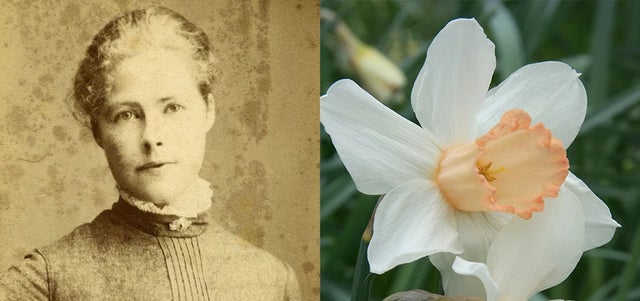
Sarah Elizabeth Dodgson married Robert Backhouse in 1884 and the couple moved to Herefordshire and started hybridising across several genera. Sarah introduced one of the first solid pink trumpet daffodils. Her , including the red cups, inspired the Reverend George Engleheart. Engleheart a giant in the daffodil world at that time, wrote in memoriam of Sarah Backhouse after her death in 1921: “Those who were privileged last April to compare the contents of the Royal Horticultural Society’s hall at large with her one small stand will have discerned the wide gap between talent and genius”
RHS archives show the Backhouse family, over three generations are connected to 954 Narcissus introductions - a massive 600 of those were created by Sarah Backhouse.

National Collection holder Caroline Thomson’s mother, Lady Georgina Buchan-Hepburn, a direct descendant of the Backhouse family, was the first to raise her conservation concerns that the family’s horticultural legacy was being lost to time. The family’s Backhouse Nursery was bulldozed to make way for a park and little of the original features or plants exist today. She started a lifetimes’ work collecting, safe guarding and growing in focused collections both the historic daffodils and the many other plant introductions of the botanising Backhouses across several genera.
Fortunately, some of her forebear’s plants have been preserved by the extended family and have been brought together at Rossie Estate in Fife, a focused conservation programme to create suitable environments, observe document and record the collection. The collection continues to increase with donations of .
“Narcissus ‘Hades’ 2 W-R, a red cup cultivar bred by Mrs RO Backhouse, is an important daffodil in the history of hybridising - now rare and endangered, it's not available to buy, and would be a great find in a garden somewhere,” said Caroline Thomson, holder of the Backhouse National Collection.
Another landmark bulb of the 20th century is Narcissus ‘Mrs RO Backhouse’ 2 W-P, named after Sarah Backhouse after her death, it was the most widely known and grown solid pink trumpet daffodil of the last century. Rather than a pure pink, it's more of a salmon apricot pink.
The Backhouse collection of daffodils were awarded National Plant Collection status by Plant Heritage in late 2016 and RHS Wisley are including specimens in the RHS herbarium for their archive. The collection has recently also been awarded National Scientific Collection status.

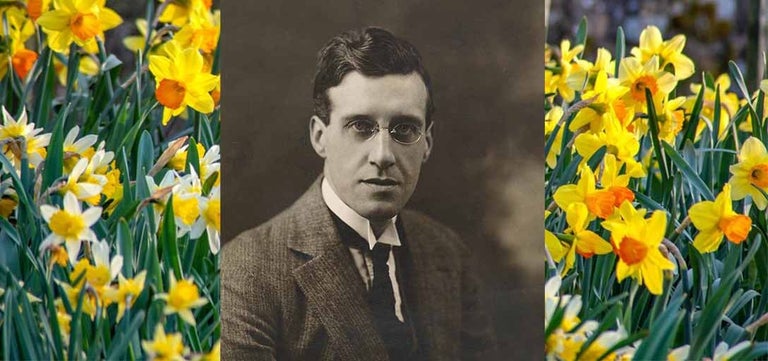
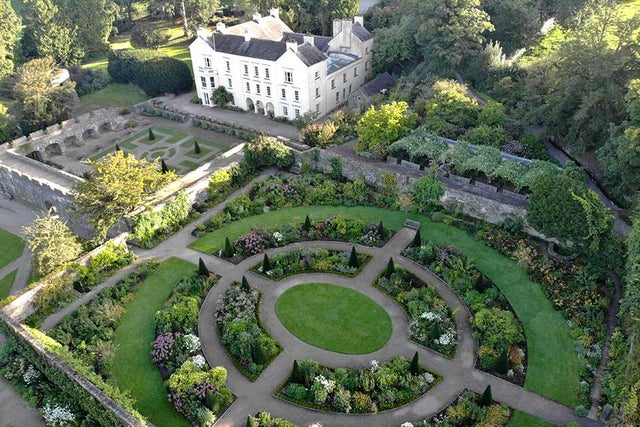
Brodie Castle’s daffodils set the grounds ablaze in bright yellow hues in spring. Between 1899 and 1942, Major Ian Brodie, the 24th Laird of Brodie, became one of the most influential figures in the history of the daffodil thanks to his fascination with hybridisation. He raised tens of thousands of daffodils in the walled garden at the Morayshire estate. The daffodil register database has 414 records of hybrids bred by The Brodie of Brodie. He gave many away to friends, breeders and nurserymen – naming just over 180 varieties himself. Brodie Castle & Estate, which is cared for by the National Trust for Scotland,has around 110 of these in the current National Collection. Not all were bred by Ian Brodie, but he would have known them all. Some are cultivars that he himself bred, some were raised by others he used for breeding, and others were bred from his creations by other breeders.
Most of the daffodils are named after Highland place names – such as Elgin, Dalvey, Findhorn and Invergorden. Others are named after places he visited during his wartime service, like Askelon, Gallipoli and Red Sea.

Former RHS staff Duncan and Kate Donald are the collection holders of pre-1930 daffodils at Croft 16 daffodils and take care of them from their home in Ross-shire. The pair have decades of horticultural experience between them and have worked on collecting, studying and researching veteran Narcissus hybrids since the early 1980s. They look after the National Plant Collection® of pre-1930 daffodils at their Scottish home.

The Springfields Narcissus Collection holds approximately 600 varieties of Narcissus in approximately 15 acres of gardens. Of them, 410 are registered in the National Collection. Springfields holds 10 species, 400 cultivars and 410 taxa. The collection was formed following the closure of the Ministry of Agriculture Fisheries & Food’s Experimental Horticulture Station at Kirton, near Boston.
In 1951, the Rosewarne Experimental Horticulture Station was established at Camborne to provide a centre of research into the production of bulbs, a major industry in the West Country, in particular Cornwall. The advisory service and technical information supplied by Rosewarne and its two satellite stations was free to any grower requesting it. The collection includes many unnamed varieties which were originally bred at Rosewarne and the Glasshouse Crops Research Station at Littlehampton.
During the 38 years it was open, trials were devised to explore almost every of commercial daffodil growing. Research on the efficiency of grading and storage of bulbs, viruses, crop , propagation techniques and the breeding new cultivars proved invaluable to the daffodil growing industry.
Rosewarne’s breeding programme, between 1964 to 1989, had the objective of raising earlier field-grown daffodils, while the station also studied cultural techniques that would deliver earlier crops to satisfy the insatiable demand for spring flowers in London.
When Rosewarne closed in 1989, many of the daffodil bulbs were donated to RHS Garden Wisley for safekeeping. In 2019, the bulbs were passed to RHS Rosemoor to nurture in these beds.
Now mostly planted in Lady Anne’s arboretum at RHS Rosemoor, some identification work is still ongoing following the relocation.

The Reverend George Engleheart (1851-1936), often credited as the father of the modern daffodil, registered 720 new daffodil varieties between 1882 and 1923, although only around 30 are still commercially available. He went to Appleshaw, near Andover, in 1881 and started a lifelong devotion to breeding daffodils. He was the first great amateur producing hundreds of named varieties and a great number received awards from the RHS. Later he moved to Dinton in Hampshire, where he continued his work until 1923, ‘when his bulbs were attacked by eelworm and fly so that he decided to part with his whole stock’.
The Suffolk group of Plant Heritage has the National Plant Collection of Engleheart daffodils, dispersed over five sites, including Columbine Hall, home of Hew Stevenson.
Key moments in the history of daffodils in the UK