Grow your own garden sundries
The garden centre with the lowest carbon footprint of all is the one just outside your back door. Your garden can supply you with much of what you need in the way of plant supports and sundries as well as some decorative garden structures
Save money, save plastic, save the planet...
By choosing and using useful plants such as hazel (Corylus avellana), willow (Salix), dogwood (Cornus), and New Zealand flax (Phormium tenax) in your garden, you'll be able to grow a surprising range of garden sundries.
These plants not only look good, they'll keep your shed well stocked, too.

Twisted birch stems make superb supports for floppy flowers


Garden sundries to grow at home
Beanpoles: Grow coppiced hazel and you get ramrod-straight stems that make excellent plant supports. Harvest three-year old stems in late winter once they’re 3–5cm (1¼–2 inches) in diameter. Trim off the twiggy tops (but save them for supporting peas) to make poles about 2.5m (8ft) tall.
Plant supports: No need for ugly plastic stakes; weave together plant supports from coppiced stems of dogwood or birch, or use corkscrew hazel. Avoid using willow as it's likely to root and the resulting plants may overwhelm whatever you were trying to support in the first place.
Plant labels: Cut a hazel twig about 10cm (4in) long and 2cm (¾in) in diameter, and whittle the off one end with a sharp knife to make a flat surface. Wooden labels absorb water, smudging your writing, so paint with water-based varnish to seal it or tie the label to the plant instead of sticking it into the .

Garden : New Zealand flax makes a handsome ornamental garden , but it also has tough, fibrous leaves that provide a never-ending supply of garden twine. Cut a leaf away at the base, split it lengthways, and peel away long, stringy fibres from the edge.
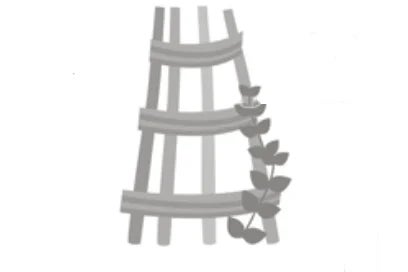
Fencing and trellis: Hazel, willow, and dogwood make wonderful fences, arches, and trellises. Weave young willow or dogwood stems between hazel uprights, or make a simple trellis by lashing together straight hazel stems with flax string to make a grid.
Greenhouse shading: Plant runner beans along the sunny side of a greenhouse and train up strings tied to the roof to provide shade in summer. When you need more light in autumn, simply remove them.

How to grow your own sweet pea supports

Weave together sturdy hazel uprights with young, whippy willow or dogwood stems to make a beautiful, long-lasting support for sweet peas, annual climbers, or climbing beans:

Step 1
Cut six to eight straight hazel stems, 2–3cm (1–1½in) diameter, and trim to the same length – 1.8m (6ft) works well.

Step 2
Push the poles firmly into the ground to make a circle, with each pole crossing at the top. Lash them together firmly with string.

Step 3
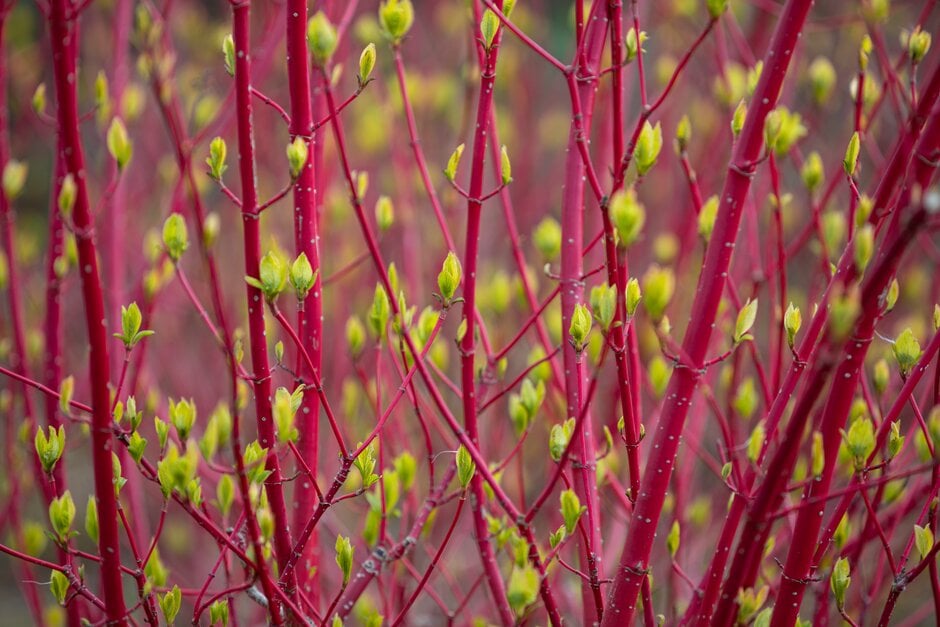
Weave stems of young willow or dogwood in and out between the uprights in wide bands. Try brilliant scarlet Cornus alba ‘Sibirica’, or flame coloured Salix alba var. vitellina.
Step 4
Plant one or two young plants at the foot of each upright, water in, and tie them in with flax string to guide them into the support as they grow.