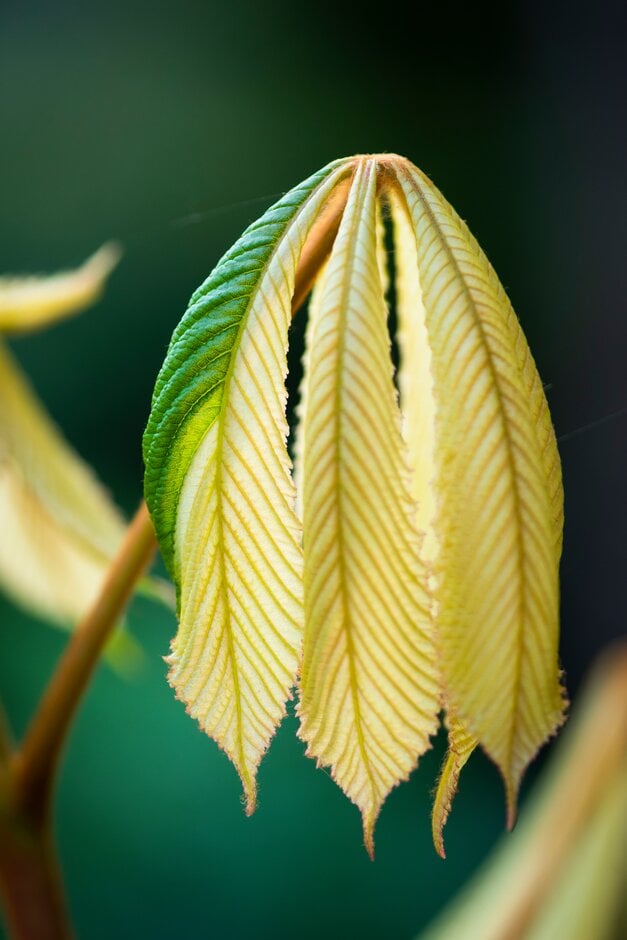
Aesculus hippocastanum 'Wisselink'
horse chestnut 'Wisselink'
A slow-growing but ultimately large, spreading tree to 15m. The large, palmate leaves are green-veined silvery-white, turning slightly greener with age. Large, upright clusters of creamy-white flowers in late spring are followed by prickly, green fruit

Size
Ultimate height
Higher than 12 metresTime to ultimate height
more than 50 yearsUltimate spread
Wider than 8 metresGrowing conditions
Moisture
Moist but well–drained, Well–drainedpH
Acid, Alkaline, NeutralColour & scent
| Stem | Flower | Foliage | Fruit | |
| Spring | Cream White | Green Grey Silver White | ||
|---|---|---|---|---|
| Summer | Green Grey Silver White | |||
| Autumn | Green Grey Silver White | Green Brown | ||
| Winter |
Position
- Full sun
- Partial shade
Aspect
North–facing or South–facing or West–facing or East–facing
Exposure
Exposed or Sheltered Hardiness
H7Botanical details
- Family
- Sapindaceae
- Native to GB / Ireland
- No
- Foliage
- Deciduous
- Habit
- Spreading branched
- Potentially harmful
- Humans/Pets (dogs): harmful if eaten. Wear gloves and other protective equipment when handling For further information and contact numbers regarding pets, see the HTA guide to potentially harmful plants
- Genus
Aesculus can be deciduous trees or large shrubs with showy flowers, palmately-lobed leaves and sometimes good autumn colour
- Name status
Accepted
How to grow
Cultivation
Tolerates a wide range of conditions, but only suitable for large gardens
Propagation
Propagate by grafting
Suggested planting locations and garden types
- Architectural
- Wildlife gardens
- Low Maintenance
Pruning
Pests
May be susceptible to horse chestnut scale and leaf-mining moth
Diseases
May be susceptible to coral spot, canker, leaf spot and honey fungus
Get involved
The RHS is the UK’s gardening charity, helping people and plants to grow - nurturing a healthier, happier world, one person and one plant at a time.