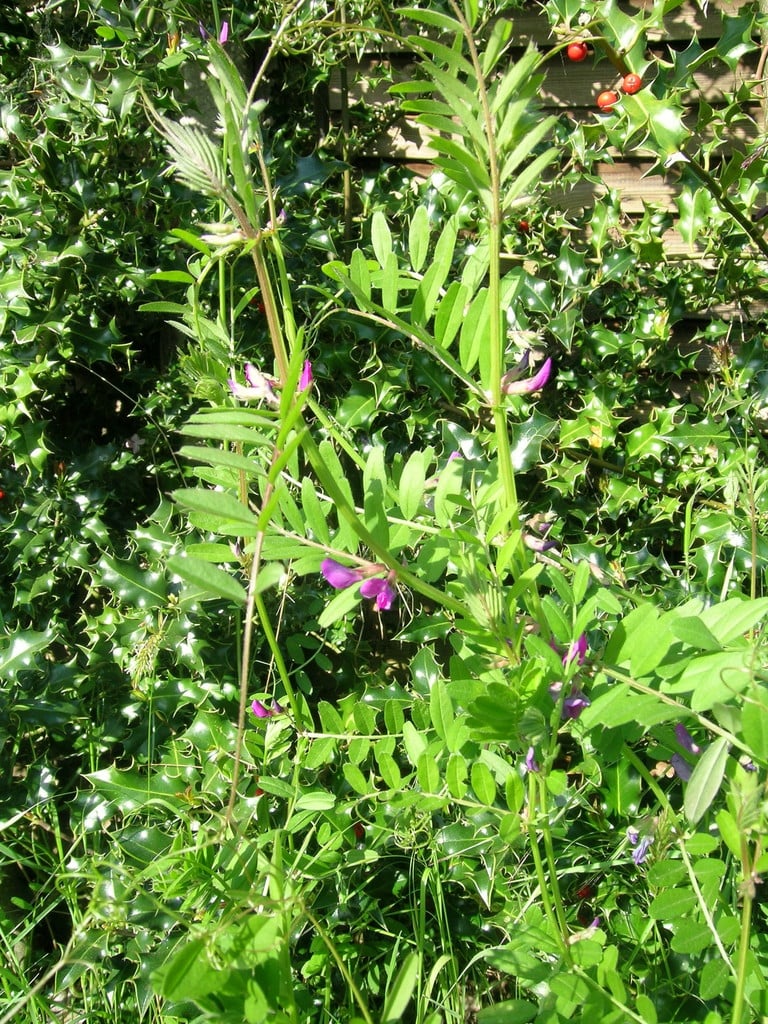
Vicia sativa
common vetch
The common vetch is a downy, scrambling annual that reaches 75cm in height. Leaves are composed of pairs of opposite leaflets and end with a tendril. Cerise flowers, 2-3cm across, in typical pea shape form, are borne singly or in pairs from April to September
Buy this plant
Size
Ultimate height
0.5–1 metresTime to ultimate height
1 yearUltimate spread
0.1–0.5 metresGrowing conditions
Moisture
Well–drainedpH
Acid, Alkaline, NeutralColour & scent
| Stem | Flower | Foliage | Fruit | |
| Spring | Pink Purple | Green | ||
|---|---|---|---|---|
| Summer | Pink Purple | Green | ||
| Autumn | Green | |||
| Winter |
Position
- Full sun
Aspect
East–facing or South–facing or West–facing
Exposure
Sheltered Hardiness
H7Botanical details
- Family
- Fabaceae
- Native to GB / Ireland
- Yes
- Foliage
- Deciduous
- Habit
- Climbing
- Genus
Vicia are annuals, herbaceous perennials or climbers; leaves may be simple or divided into many small leaflets, often ending in a tendril. The yellow, purple, white or pink, pea-like flowers are produced in small clusters on the stem or in larger, upright sprays
- Name status
Correct
How to grow
Cultivation
Occurs naturally in well-drained locations, especially sandy soils. As a legume, this vetch is used as a green manure to fix nitrogen in the soil. See our video How to grow and sow green manure for advice
Propagation
Propagate by seed. Scarification may be necessary to break dormancy
Suggested planting locations and garden types
- Wildflower meadow
- Wildlife gardens
Pruning
No pruning required
Pests
Generally pest-free
Diseases
Generally disease-free
Get involved
The Royal Horticultural Society is the UK’s leading gardening charity. We aim to enrich everyone’s life through plants, and make the UK a greener and more beautiful place.