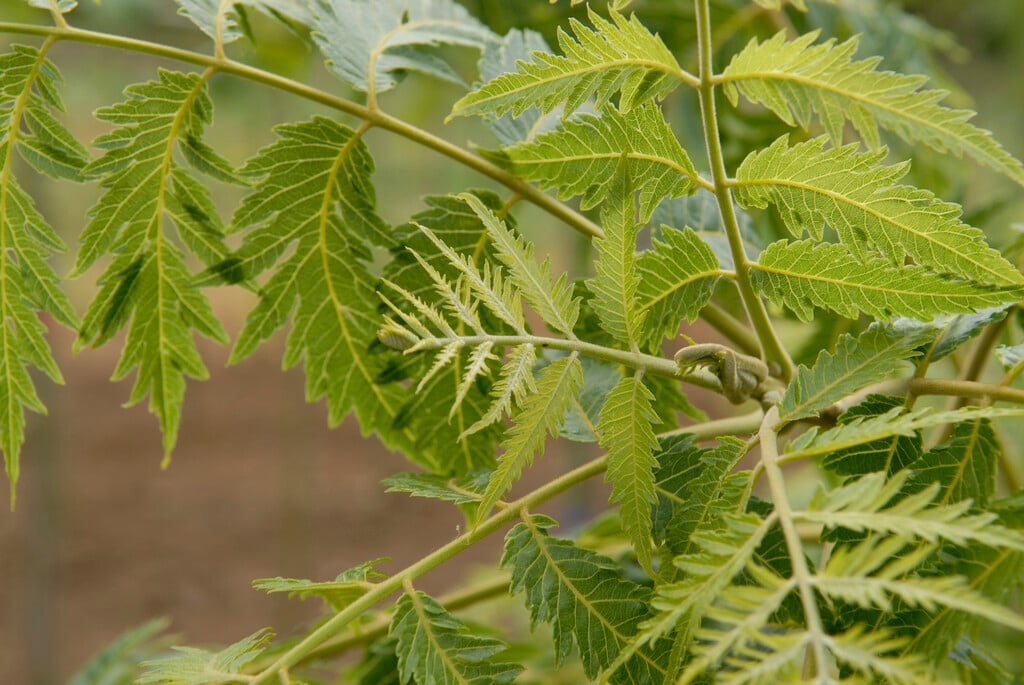
Juglans nigra 'Laciniata'
A moderately vigorous, very rare variety of walnut with a broad, cone-shaped semi-open crown, which reaches a mature height of around 15m, not very often available to purchase and grown for ornamental value as it does not produce edible fruit. It has long, deeply cut feathery bright green foliage which shimmers in the sunshine, green flowers in spring and brown to charcoal-black branches and bark
Size
Ultimate height
Higher than 12 metresTime to ultimate height
20–50 yearsUltimate spread
Wider than 8 metresGrowing conditions
Moisture
Moist but well–drainedpH
Acid, Alkaline, NeutralColour & scent
| Stem | Flower | Foliage | Fruit | |
| Spring | Green | Green | ||
|---|---|---|---|---|
| Summer | Green | |||
| Autumn | Green | |||
| Winter |
Position
- Full sun
- Partial shade
Aspect
East–facing or North–facing or South–facing or West–facing
Exposure
Exposed or Sheltered Hardiness
H6Botanical details
- Family
- Juglandaceae
- Native to GB / Ireland
- No
- Foliage
- Deciduous
- Habit
- Spreading branched
- Genus
Juglans are deciduous trees with pinnate leaves, and inconspicuous flowers in catkins followed by usually edible nuts
- Name status
Accepted
How to grow
Cultivation
Grow in any deep, fertile soil. Suited to very large gardens or parks. For nut production, more than one tree is needed for cross pollination
Propagation
Propagate by grafting
Suggested planting locations and garden types
- Architectural
Pruning
Pests
May be susceptible to aphids and walnut blister mites
Diseases
May be susceptible to walnut leaf spot, walnut leaf blotch, honey fungus and coral spot
Get involved
The Royal Horticultural Society is the UK’s leading gardening charity. We aim to enrich everyone’s life through plants, and make the UK a greener and more beautiful place.
