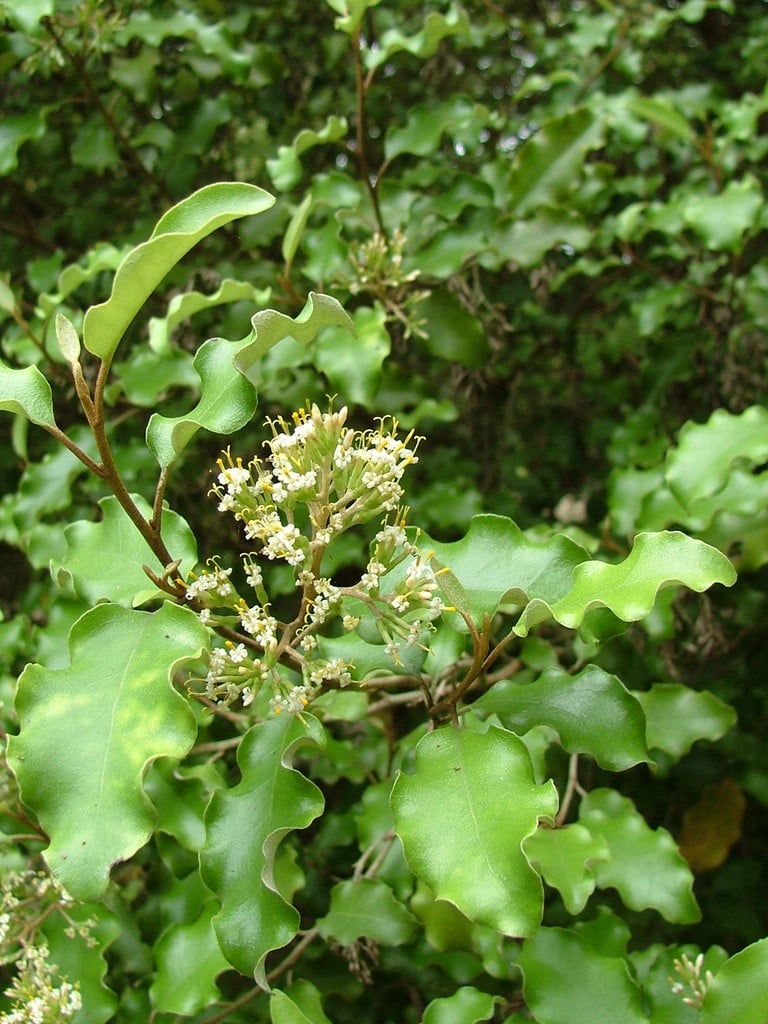
Olearia paniculata

RHS Plant Profile
akiraho
akiraho RHS

Synonyms

Olearia forsteri
Olearia forsteri from Tresco

Plants for pollinators
Shrubs

An upright large shrub or small tree up to 6m high with young shoots covered in dark brown felt, elliptic to ovate-oblong, wavy-edged leaves, to 10cm long, shiny, soft olive-green above and covered with soft buff or silvery down below, and dull white flowerheads, 6mm across, which look inconspicuous but are noticeably scented, in autumn and early winter

Position

Full sun

Soil Types

Chalk, Loam, Sand

Max Height

4-8 metres

Max Spread

1.5-2.5 metres

Size

Time to Maturity
10–20 years
Max Spread
1.5-2.5 metres
Max Height
4-8 metres

Growing Conditions

Chalk Loam Sand
Moisture
Moist but well–drained or Well–drained
pH
Acid or Alkaline or Neutral

Position

Full sun
Aspect
West–facing or South–facing
Exposure
Exposed or Sheltered
Hardiness
H4

Colour & Scent

Fragrance Flower
Season Stem Flower Foliage Fruit
Spring
Summer
Autumn
Winter

Botanical Details

Family
Asteraceae
Native to GB/Ireland
No
Foliage
Evergreen
Habit
Columnar upright
Genus
Olearia can be evergreen shrubs, small trees or herbaceous perennials, with simple, leathery, toothed or entire leaves and corymbs of daisy-like flower-heads
Name Status
Correct
Plant Range
New Zealand

How to Grow

Cultivation

Grow in well-drained soil in full sun; it makes an excellent wind-resistant hedge in seaside gardens

Propagation

Propagate by seed, by semi-ripe cuttings in summer, or by heeled hardwood cuttings of lateral shoots in a cold frame in early autumn

Suggested planting locations and garden types

  • Cottage and informal garden
  • City and courtyard gardens
  • Coastal
  • Mediterranean climate plants
  • Wildlife gardens
  • Low Maintenance
  • Flower borders and beds
  • Wall side borders
  • Hedging and screens

Pruning

No pruning required or Pruning group 9 (late-flowering evergreen shrubs)

Pests

Generally pest-free

Diseases

Generally disease-free but may be susceptible to honey fungus (rarely)