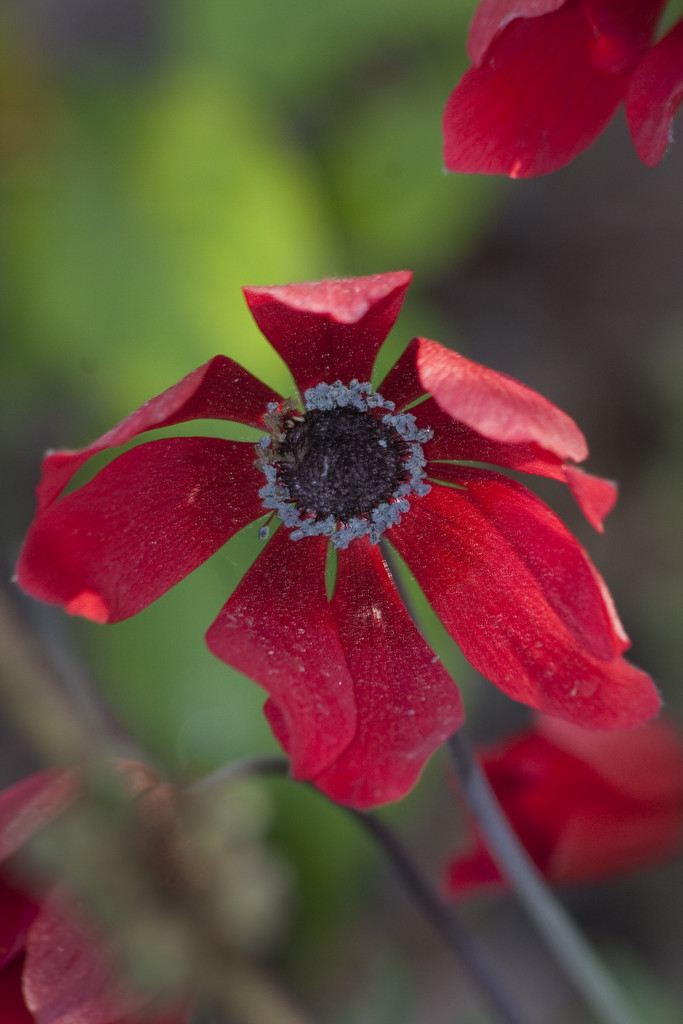
Anemone pavoniana

RHS Plant Profile
peacock windflower
peacock windflower RHS

Synonyms

Anemone pavoniana

Bulbs

A tuberous perennial to 40cm high with divided basal leaves. Cup-shaped red, blue or purple flowers, often with a pale whitish zone towards the centre, and comprising 8-12 elliptic petals that spread apart are borne in spring

Position

Full sun

Soil Types

Loam, Sand

Max Height

0.1-0.5 metres

Max Spread

0.1-0.5 metres

Size

Time to Maturity
2–5 years
Max Spread
0.1-0.5 metres
Max Height
0.1-0.5 metres

Growing Conditions

Loam Sand
Moisture
Well–drained
pH
Acid or Alkaline or Neutral

Position

Full sun
Aspect
West–facing or East–facing or South–facing
Exposure
Sheltered
Hardiness
H5

Colour & Scent

Season Stem Flower Foliage Fruit
Spring
Summer
Autumn
Winter

Botanical Details

Family
Ranunculaceae
Native to GB/Ireland
No
Foliage
Deciduous
Habit
Columnar upright
Potentially harmful
Ingestion may cause mild stomach upset; contact may irritate skin. Wear gloves and other protective equipment when handling
Genus
Anemone are herbaceous perennials with fibrous, rhizomatous or tuberous rootstocks, palmately lobed leaves and saucer-shaped, usually 5-petalled flowers
Name Status
Synonym
Plant Range
Spain

How to Grow

Cultivation

Grow in a well drained soil in full sun; keep dry during dormancy

Propagation

Propagate by seed or separate tubers in summer when dormant

Suggested planting locations and garden types

  • Patio and container plants
  • Mediterranean climate plants
  • Cottage and informal garden
  • Rock garden

Pruning

No pruning required

Pests

Susceptible to leaf and bud eelworms and damage from slugs

Diseases

May be susceptible to Powdery mildews