Size
Ultimate height
0.5–1 metresTime to ultimate height
2–5 yearsUltimate spread
1–1.5 metresGrowing conditions
Moisture
Moist but well–drainedpH
Acid, Alkaline, NeutralColour & scent
| Stem | Flower | Foliage | Fruit | |
| Spring | Green | |||
|---|---|---|---|---|
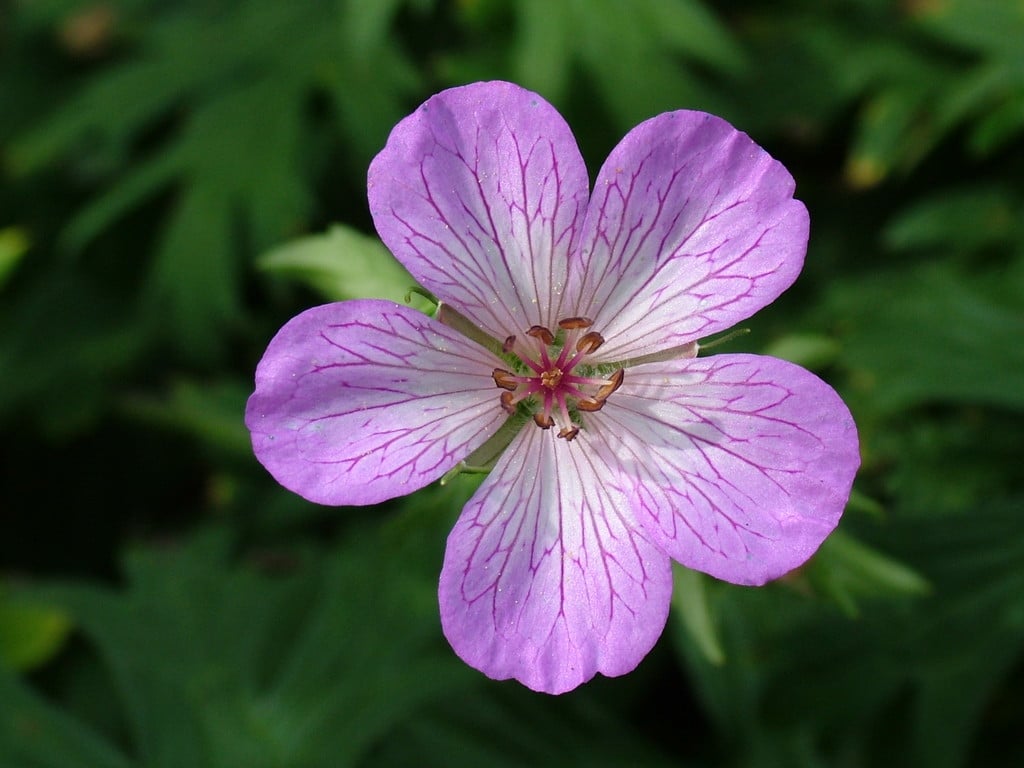
| Summer | Purple Pink White | Green | ||
| Autumn | Purple Pink White | Green | ||
| Winter |
Position
- Full sun
- Partial shade
Aspect
South–facing or West–facing or North–facing or East–facing
Exposure
Exposed or Sheltered Hardiness
H6Botanical details
- Family
- Geraniaceae
- Native to GB / Ireland
- No
- Foliage
- Deciduous
- Habit
- Clump forming
- Genus
Geranium can be annuals, biennials and perennials, herbaceous or evergreen, with rounded, usually palmately lobed or divided leaves, and lax inflorescences of rounded, 5-petalled flowers
- Name status
Correct
- Plant range
- Korea
How to grow
Cultivation
Grow in sun or partial shade in moist but well-drained soil
Propagation
Propagate by seed, sown in containers outdoors as soon as seed is ripe or in spring; by division in spring; or by basal softwood cuttings taken in spring and rooted with bottom heat
Suggested planting locations and garden types
- City and courtyard gardens
- Cottage and informal garden
- Wildlife gardens
- Low Maintenance
- Flower borders and beds
- Ground cover
- Underplanting of roses and shrubs
- Banks and slopes
Pruning
No pruning required, but cutting back flowered stems and old leaves may encourage the growth of fresh leaves and flowers
Pests
Generally pest-free, but may be susceptible to capsid bug, geranium sawfly, vine weevil, slugs and snails, and rabbits
Diseases
Generally disease-free, but may be susceptible to a rust, downy mildews, leafy gall, and virus diseases; may also be susceptible to powdery mildews in dry conditions
Get involved
The RHS is the UK’s gardening charity, helping people and plants to grow - nurturing a healthier, happier world, one person and one plant at a time.