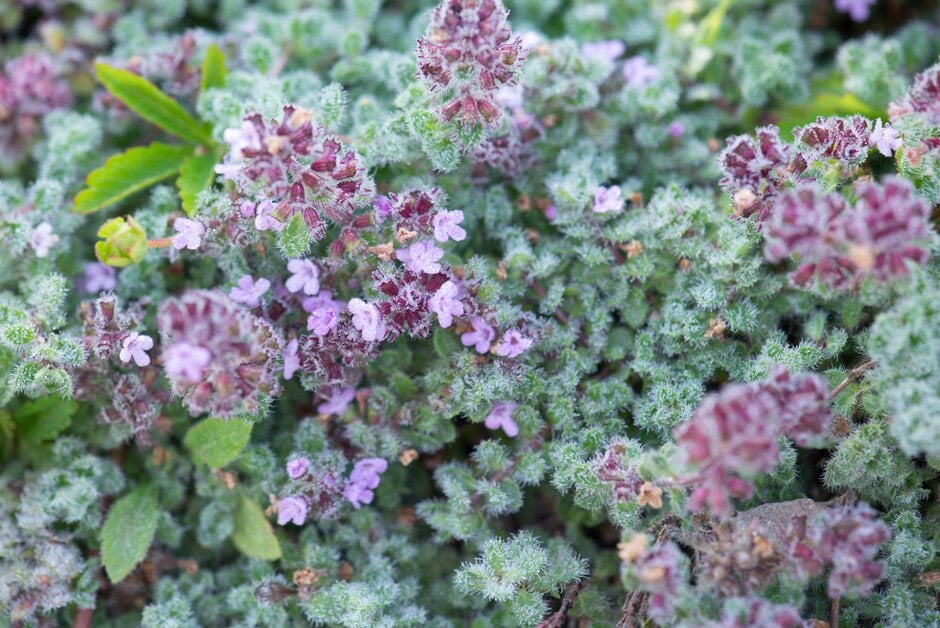
Thymus polytrichus A. Kern. ex Borbás

RHS Plant Profile
wild thyme
wild thyme RHS

Other common names

brotherwort, Christ's bedstraw, Christ's blood, hillwort, mother of thyme, pellamountain, penny mountain, serpolet oil plant, breath of God

Synonyms

Thymus serpyllum misapplied

Plants for pollinators
Shrubs

A low-growing, creeping, mat-forming evergreen sub-shrub with small, fragrant, dark green to grey woolly foliage and very small pale pink flowers which appear from June to July. Not suitable for culinary use but great for ground cover, in cracks and stone walls and also for pollinating insects

Position

Full sun

Soil Types

Chalk, Loam, Sand

Max Height

Up to 10 cm

Max Spread

0.1-0.5 metres

Size

Time to Maturity
5–10 years
Max Spread
0.1-0.5 metres
Max Height
Up to 10 cm

Growing Conditions

Chalk Loam Sand
Moisture
Well–drained
pH
Alkaline or Neutral

Position

Full sun
Aspect
East–facing or South–facing or West–facing
Exposure
Exposed or Sheltered
Hardiness
H5
Drought Resistance
Yes

Colour & Scent

Fragrance Foliage
Season Stem Flower Foliage Fruit
Spring
Summer
Autumn
Winter

Botanical Details

Family
Lamiaceae
Native to GB/Ireland
No
Foliage
Evergreen
Habit
Matforming
Genus
Thymus are evergreen woody-based perennials, shrub or sub-shrubs with small aromatic leaves and terminal whorls of small, 2-lipped, tubular, purple, pink or white flowers in late spring or summer
Name Status
Correct

How to Grow

Cultivation

Grow in well drained, alkaline to neutral soil in full sun. Won't tolerate wet or waterlogged conditions. Will tolerate drought and poor soils. See thyme cultivation for more information

Propagation

Propagate by division or semi-hardwood cuttings

Suggested planting locations and garden types

  • City and courtyard gardens
  • Cottage and informal garden
  • Gravel garden
  • Mediterranean climate plants
  • Rock garden
  • Wildlife gardens
  • Low Maintenance
  • Garden edging
  • Ground cover

Pruning

Lightly trim to remove dead flowers. Cut back harder after flowering to keep bushy and compact

Pests

Generally pest-free

Diseases

Generally disease-free