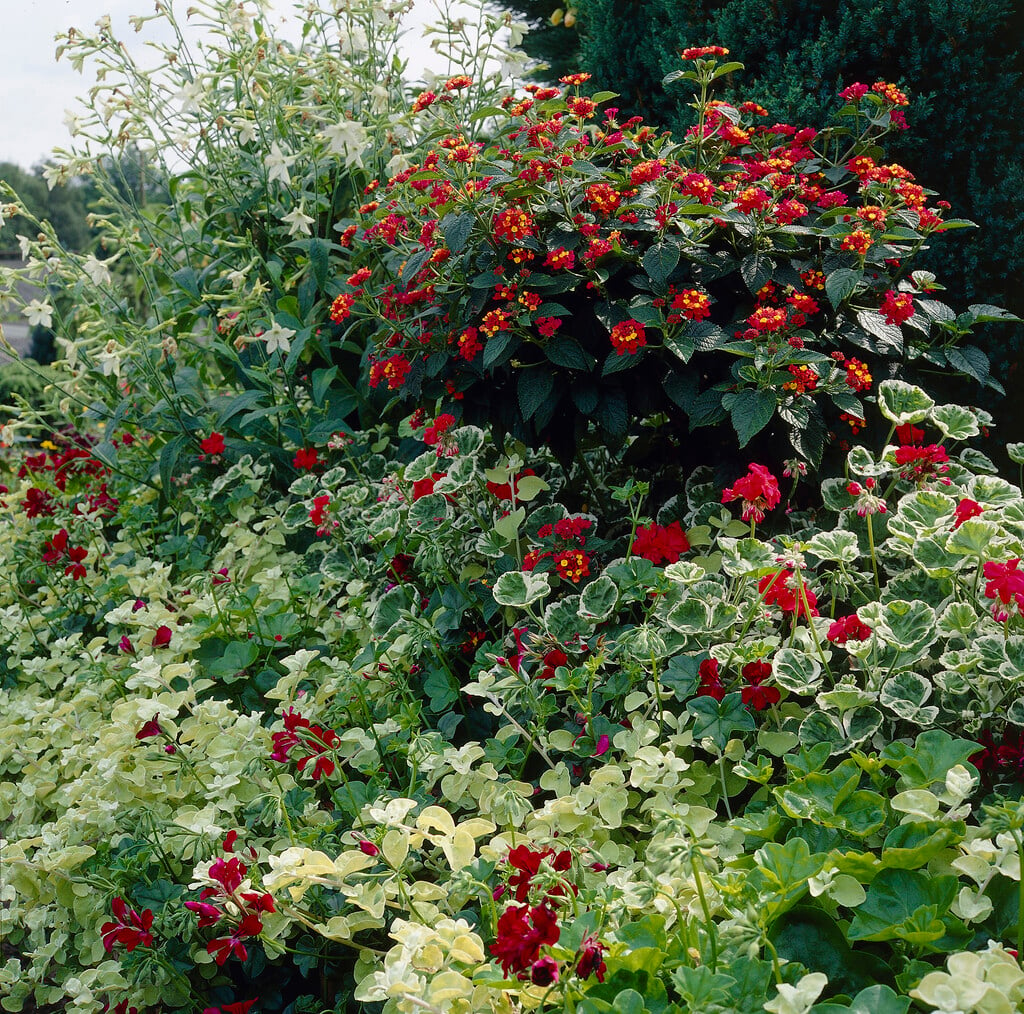
Lantana camara red-flowered

<i>Lantana</i> <i>camara</i> red-flowered visionspictures.com

Synonyms

Lantana 'Red'

Annual Biennial Shrubs

Position

Full sun

Soil Types

Chalk, Clay, Loam, Sand

Max Height

0.1-0.5 metres

Max Spread

0.1-0.5 metres

Size

Time to Maturity
1–2 years
Max Spread
0.1-0.5 metres
Max Height
0.1-0.5 metres

Growing Conditions

Chalk Clay Loam Sand
Moisture
Moist but well–drained or Well–drained
pH
Acid or Alkaline or Neutral

Position

Full sun
Aspect
South–facing or West–facing
Exposure
Sheltered
Hardiness
H1C
Drought Resistance
Yes

Botanical Details

Family
Verbenaceae
Native to GB/Ireland
No
Foliage
Evergreen
Habit
Bushy
Potentially harmful
Harmful if eaten. Wear gloves and other protective equipment when handling
Genus
Lantana can be evergreen shrubs or perennials, with simple, often wrinkled leaves, and domed terminal clusters of small, salver-shaped flowers
Name Status
Correct

How to Grow

Cultivation

Grow outdoors in fertile, moist but well-drained soil in full sun in frost-free conditions. Grow under glass in a peat-free, loam-based compost in full light. Protect from frost

Propagation

Propagate by semi-ripe cuttings

Suggested planting locations and garden types

  • City and courtyard gardens
  • Cottage and informal garden
  • Hanging Basket
  • Patio and container plants
  • Flower borders and beds
  • Ground cover
  • Wall side borders

Pruning

pruning group 9. deadhead regularly

Pests

May be susceptible to glasshouse whitefly and glasshouse red spider mite

Diseases

May be susceptible to Powdery mildews when grown under glass