Zinnia peruviana
Peruvian zinnia
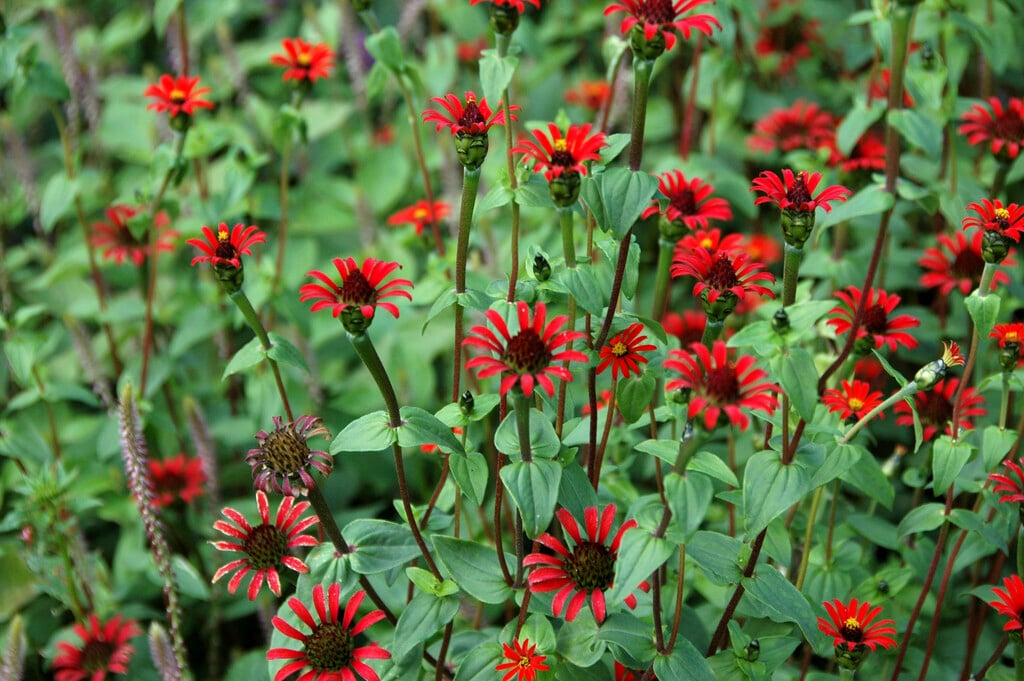
An upright, sparsely branched annual to 1m, with rough, bristly stems and leaves and single, daisy-like flowers in shades of red, orange, deep pink or yellow in summer and autumn
Other common names
red spider zinniazinnia 'Red Spider'
Synonyms
Zinnia peruviana 'Red Spider'Zinnia 'Red Spider'
see moreChrysogonum peruvianum
Zinnia tenuiflora
Size
Ultimate height
0.5–1 metresTime to ultimate height
1 yearUltimate spread
0.1–0.5 metresGrowing conditions
Moisture
Moist but well–drained, Well–drainedpH
Acid, Alkaline, NeutralColour & scent
| Stem | Flower | Foliage | Fruit | |
| Spring | Green | |||
|---|---|---|---|---|
| Summer | Pink Orange Red Yellow | Green | ||
| Autumn | Pink Orange Red Yellow | Green | ||
| Winter |
Position
- Full sun
Aspect
West–facing or South–facing
Exposure
Sheltered Hardiness
H2Botanical details
- Family
- Asteraceae
- Native to GB / Ireland
- No
- Foliage
- Deciduous
- Habit
- Bushy
- Genus
Zinnia can be annuals, perennials or sub-shrubs, with branching stems bearing opposite leaves and solitary terminal flower-heads in summer
- Name status
Correct
- Plant range
- S USA to Arg.
How to grow
Cultivation
Grow in humus-rich, well-drained, fertile soil in full sun. Best grown in an open situation to minimise problems with powdery mildew
Propagation
Propagate by seed sown in pots in spring, or in warm areas, sown in situ in late spring
Suggested planting locations and garden types
- City and courtyard gardens
- Coastal
- Cottage and informal garden
- Patio and container plants
- Sub-tropical
- Wildlife gardens
- Bedding
- Conservatory and greenhouse
- Cut flowers
Pruning
Deadhead to prolong flowering
Pests
Generally pest-free
Diseases
May be susceptible to grey moulds, powdery mildews and a leaf spot
Get involved
The Royal Horticultural Society is the UK’s leading gardening charity. We aim to enrich everyone’s life through plants, and make the UK a greener and more beautiful place.