Not the plant you're looking for? Search over 300,000 plants
Shrubs
Size
Ultimate height
2.5–4 metresTime to ultimate height
10–20 yearsUltimate spread
1.5–2.5 metresGrowing conditions
Clay
Loam
Sand
Moisture
Moist but well–drained, Well–drainedpH
Acid, NeutralColour & scent
| Stem | Flower | Foliage | Fruit | |
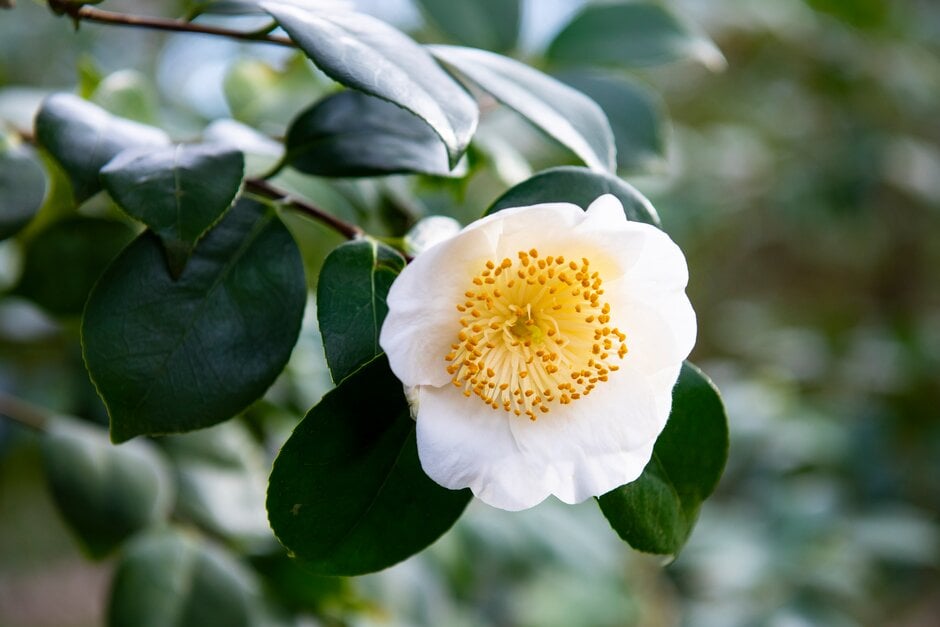
| Spring | White Yellow | Green | ||
|---|---|---|---|---|
| Summer | Green | |||
| Autumn | Green | |||
| Winter | Green |
Position
- Full shade
- Partial shade
Aspect
North–facing or West–facing or South–facing
Exposure
Sheltered Hardiness
H5Botanical details
- Family
- Theaceae
- Native to GB / Ireland
- No
- Foliage
- Evergreen
- Habit
- Bushy
- Genus
Camellia are evergreen shrubs with simple, ovate, glossy, leathery leaves and showy flowers with solitary or clustered flowers early in the year
- Name status
Accepted
- Horticultural Group
- Camellia in this higo group originate from the Higo province of Japan and have distinctive pink, red or white flowers, sometimes with streaks or blotches, with a sunburst-shaped cluster of golden yellow stamens in the centre of each flower. The petals are scarce and flat
How to grow
Cultivation
Prefers a humus-rich, acid or neutral soil and shelter from cold, dry winds and early morning sun which can damage buds and flowers. See camellia cultivation
Propagation
Propagate by semi-hardwood cuttings
Suggested planting locations and garden types
- City and courtyard gardens
- Cottage and informal garden
- Flower borders and beds
- Wall side borders
Pruning
Pests
May be susceptible to aphids, cushion scale and vine weevil
Diseases
May be susceptible to honey fungus, Phytophthora root rot, camellia gall, camellia leaf blight, camellia yellow mottle virus and camellia petal blight
Get involved
The RHS is the UK’s gardening charity, helping people and plants to grow - nurturing a healthier, happier world, one person and one plant at a time.
