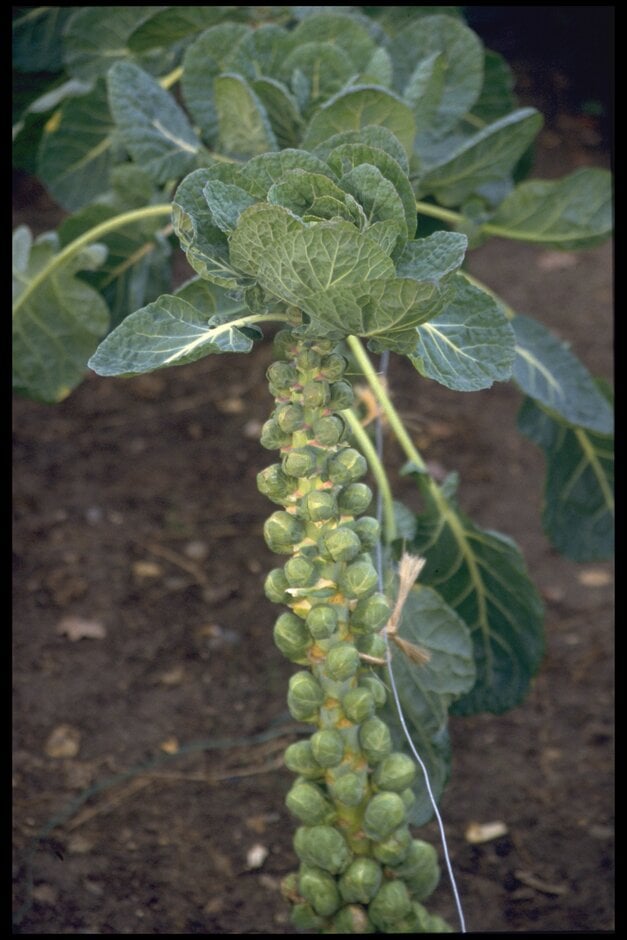
Brassica oleracea (Gemmifera Group) 'Bosworth'
Brussels sprout 'Bosworth'
An F1 hybrid, 80cm high, with medium to large, dark green leaves, and solid, sweet-tasting, oval sprouts, 4cm long and 3cm across, which are well-spaced and easy to pick, and are still good even when harvested in late winter. Brussels sprouts, Brassica oleracea (Gemmifera Group), are biennials usually grown as annual vegetables, the swollen buds as well as the leaves being edible.

Buy this plant
Size
Ultimate height
0.5–1 metresTime to ultimate height
1–2 yearsUltimate spread
0.1–0.5 metresGrowing conditions
Moisture
Moist but well–drainedpH
Acid, Alkaline, NeutralColour & scent
| Stem | Flower | Foliage | Fruit | |
| Spring | Green | |||
|---|---|---|---|---|
| Summer | Green | |||
| Autumn | Green | |||
| Winter | Green |
Position
- Full sun
Aspect
South–facing or West–facing or East–facing
Exposure
Sheltered Hardiness
H4Botanical details
- Family
- Brassicaceae
- Native to GB / Ireland
- No
- Foliage
- Evergreen
- Habit
- Columnar upright
- Genus
Brassicas can be annual, biennial or perennial plants, most are upright with alternate, often glaucous leaves, long taproots and clusters of cross-shaped, yellow or white flowers. The genus includes a number of species bred to produce food crops, such as cabbages, turnips, mustards and oilseed rape, as well as others grown for their ornamental value
- Name status
Accepted
How to grow
Cultivation
Sow seed thinly, about 1-2cm deep and in rows 15cm apart, with shelter from for example cloches or a coldframe, in late winter, or directly outdoors in a seedbed in early spring; thin seedlings to at least 3cm apart, and when they are 10-15 cm high, in early summer, transplant young plants to growing positions, 60cm apart, in fertile, moist but well-drained soil, preferably neutral or alkaline and medium or heavy, in a sunny site sheltered from the wind; harvest sprouts from autumn onwards; for more advice, see Brussels sprouts cultivation See https://www.rhs.org.uk/plants/trials-awards for further information about RHS plant trials and awards
Propagation
Propagate by seed sown under cover in early spring; if plants are allowed to flower and seed, the seedlings will not come true because 'Bosworth' is an F1 hybrid. See sowing vegetable seeds or sowing seeds indoors
Suggested planting locations and garden types
Pruning
No pruning required
Pests
May be susceptible to, like other brassicas, to many pests, including cabbage root fly, caterpillars of small and large cabbage white butterflies, aphids, flea beetles, slugs and snails, and by birds, especially pigeons
Diseases
May be susceptible to, like other brassicas, to many diseases, including club root, especially in acidic soil; 'Bosworth' is said to have some resistance to downy mildew and ringspot
Get involved
The Royal Horticultural Society is the UK’s leading gardening charity. We aim to enrich everyone’s life through plants, and make the UK a greener and more beautiful place.