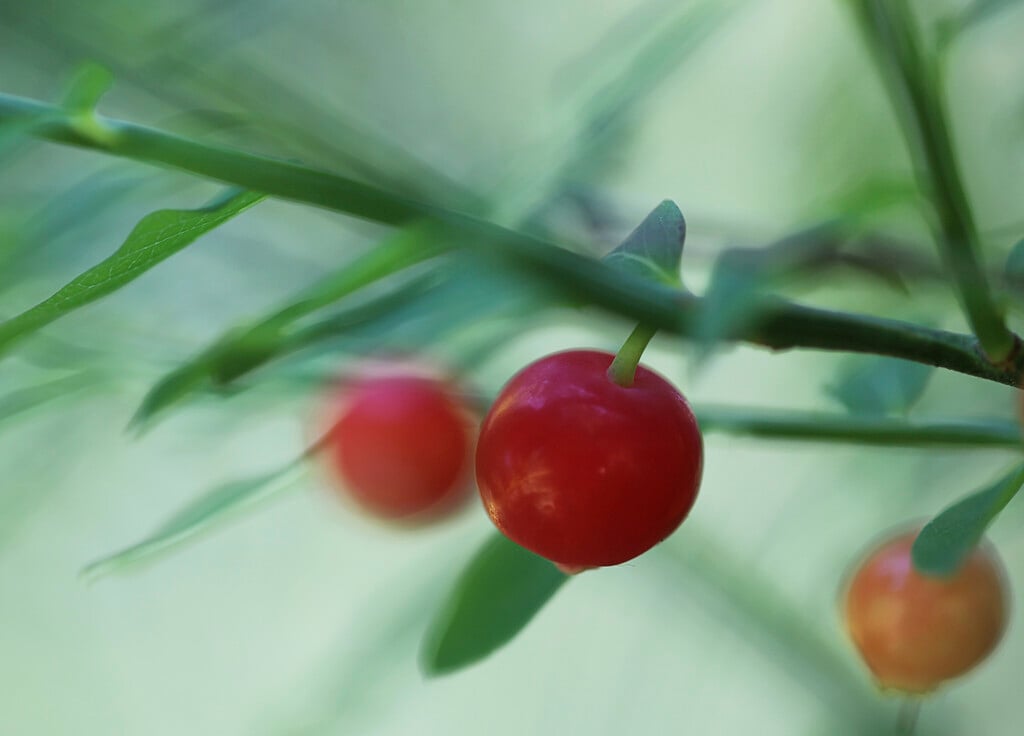
Vaccinium parvifolium

RHS Plant Profile
red bilberry
red bilberry visionspictures.com

Other common names

red huckleberry

Fruit Edible Shrubs

This is a graceful shrub or short tree reaching nearly 2m in favourable conditions. It has deciduous green leaves which turn red in autumn and small white bell-shaped flowers borne individually in leaf axils, which develop into bright red edible berries

Position

Full sun, Partial shade

Soil Types

Loam, Sand

Max Height

1.5-2.5 metres

Max Spread

1-1.5 metres

Size

Time to Maturity
2–5 years
Max Spread
1-1.5 metres
Max Height
1.5-2.5 metres

Growing Conditions

Loam Sand
Moisture
Moist but well–drained
pH
Acid

Position

Full sun Partial shade
Aspect
East–facing or North–facing or South–facing or West–facing
Exposure
Sheltered
Hardiness
H6

Colour & Scent

Season Stem Flower Foliage Fruit
Spring
Summer
Autumn
Winter

Botanical Details

Family
Ericaceae
Native to GB/Ireland
No
Foliage
Deciduous
Habit
Spreading branched, Bushy, Columnar upright
Genus
Vaccinium can be evergreen or deciduous shrubs or small trees, with simple leaves and small, bell- or urn-shaped flowers followed by juicy, sometimes edible berries
Name Status
Correct
Plant Range
Western N America

How to Grow

Cultivation

Grow in moist but well-drained acidic soil. Choose a sheltered site in full sun or light shade in the north, light shade in the south.

Propagation

Propagate by softwood cuttings in late spring or semi-ripe cuttings in summer

Suggested planting locations and garden types

  • Cottage and informal garden
  • Edible fruit

Pruning

No pruning required

Pests

Generally pest-free

Diseases

May be susceptible to honey fungus (rarely), powdery mildews, root rot and chlorosis due to iron and manganese deficiency; see nutrient deficiencies