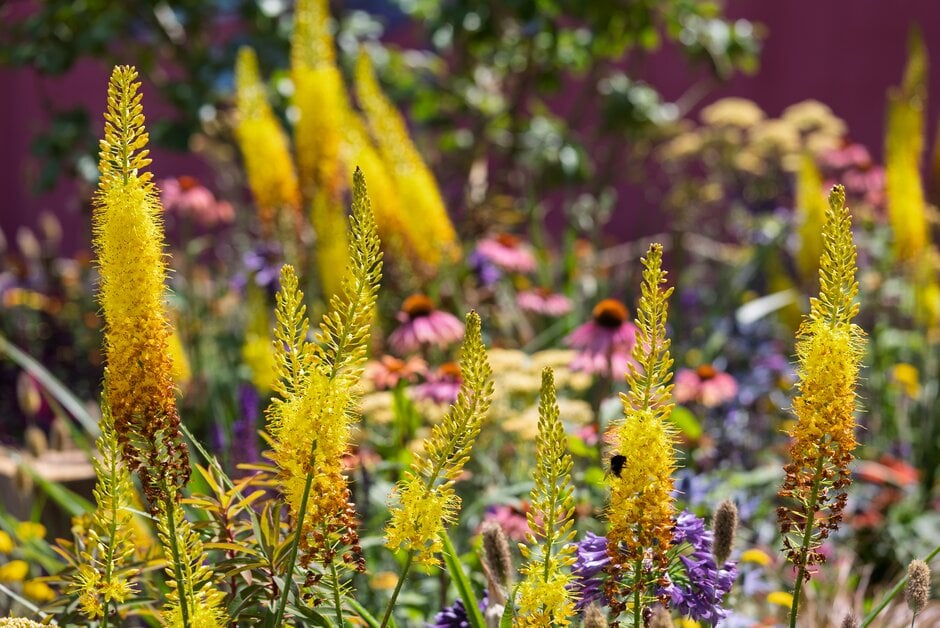
Eremurus 'Charleston'
A tuberous plant with fleshy, octopus-shaped roots to around 130cm in height and strap-like blue-green foliage. Tall spikes of hundreds of tiny lemon-yellow flowers, which bloom from the base of the spikes upwards, appear from June to July

Buy this plant
Size
Ultimate height
1–1.5 metresTime to ultimate height
2–5 yearsUltimate spread
0.5–1 metresGrowing conditions
Moisture
Well–drainedpH
Alkaline, NeutralColour & scent
| Stem | Flower | Foliage | Fruit | |
| Spring | Blue Green | |||
|---|---|---|---|---|
| Summer | Yellow | Blue Green | ||
| Autumn | Blue Green | |||
| Winter |
Position
- Full sun
Aspect
South–facing or West–facing
Exposure
ShelteredDrought resistance
Yes Hardiness
H5Botanical details
- Family
- Asphodelaceae
- Native to GB / Ireland
- No
- Foliage
- Deciduous
- Habit
- Clump forming, Columnar upright
- Genus
Eremurus are herbaceous perennials growing from fleshy roots, with rosettes of strap-shaped basal leaves and a dense racemes of small star-shaped flowers on erect leafless stems
- Name status
Accepted
How to grow
Cultivation
Grow in fertile, sandy, very well-drained soil in full sun, with shelter from strong winds. Plant in a deep, wide hole for optimum growth. Mulch with garden compost in autumn, but avoid covering the crown. Young spring growth can be protected with a dry mulch such as grit or gravel. See Eremurus cultivation
Propagation
Propagate by seed by sowing in containers in a cold frame in autumn or at 15°C (59°F) in late winter. Can also be propagated by division after flowering
Suggested planting locations and garden types
- Architectural
- City and courtyard gardens
- Cottage and informal garden
- Flower borders and beds
Pruning
No pruning requirred
Pests
May be susceptible to slugs
Diseases
Generally disease-free
Get involved
The Royal Horticultural Society is the UK’s leading gardening charity. We aim to enrich everyone’s life through plants, and make the UK a greener and more beautiful place.