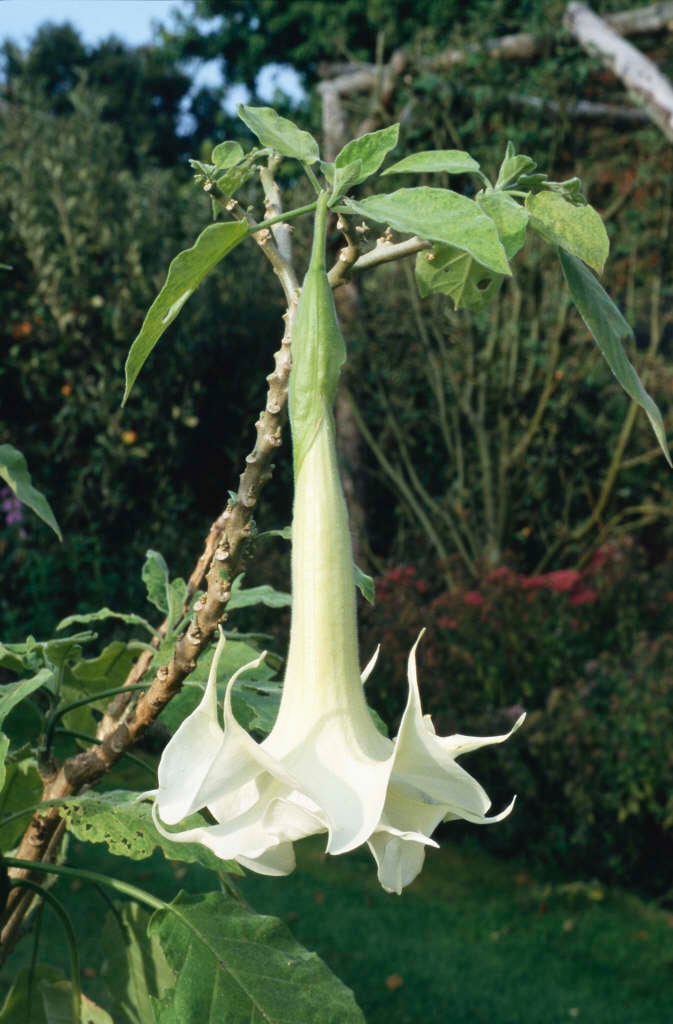
Brugmansia arborea 'Knightii'

RHS Plant Profile
angel's trumpet 'Knightii'
angel's trumpet 'Knightii' RHS 2002

Synonyms

Brugmansia 'Knightii'
Brugmansia × candida 'Plena'
Brugmansia arborea 'Knightii'

Award of Garden Merit
Conservatory Greenhouse Shrubs

An evergreen shrub or small tree to 4m in height or more, with large elliptic leaves and pendulous, fragrant, hose-in-hose double, white flowers to 30cm in length

Position

Full sun

Soil Types

Chalk, Clay, Loam, Sand

Max Height

2.5-4 metres

Max Spread

1.5-2.5 metres

Size

Time to Maturity
10–20 years
Max Spread
1.5-2.5 metres
Max Height
2.5-4 metres

Growing Conditions

Chalk Clay Loam Sand
Moisture
Moist but well–drained
pH
Acid or Alkaline or Neutral

Position

Full sun
Aspect
South–facing or West–facing
Exposure
Sheltered
Hardiness
H1C
Drought Resistance
Yes

Colour & Scent

Fragrance Flower
Season Stem Flower Foliage Fruit
Spring
Summer
Autumn
Winter

Botanical Details

Family
Solanaceae
Native to GB/Ireland
No
Foliage
Evergreen
Habit
Bushy
Potentially harmful
TOXIC if eatenskin irritantavoid eye contact. Wear gloves and other protective equipment when handling TOXIC to pets - see the HTA guide to potentially harmful plants for further information and useful contact numbers
Genus
Brugmansia are large evergreen shrubs with simple, ovate leaves and large, solitary, pendent trumpet-shaped or tubular flowers which are often fragrant
Name Status
Accepted

How to Grow

Cultivation

Under glass, grow in peat-free, loam-based potting compost in full light. Water freely while in active growth and apply a balanced liquid fertiliser every 2 weeks. Keep barely moist in winter. Maintain a minimum winter temperature of about 5°C; the plants will lose their leaves but these will regrow in spring. Plants may be moved outdoors to a position in light, dappled shade in summer. See brugmansia cultivation for further information

Propagation

Propagate by seed or semi-hardwood cuttings

Suggested planting locations and garden types

  • City and courtyard gardens
  • Cottage and informal garden
  • Patio and container plants
  • Flower borders and beds

Pruning

Pruning group 9, or pruning group 7 if needed

Pests

May be susceptible to glasshouse red spider mite, glasshouse whitefly, thrips and mealybugs under glass

Diseases

Generally disease-free