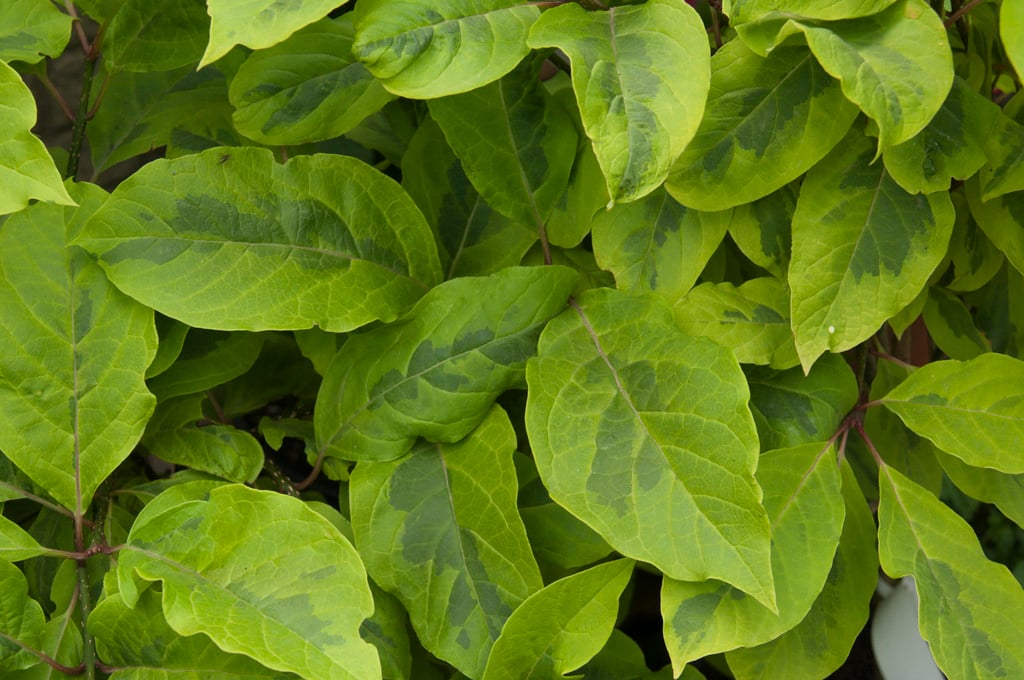
Syringa emodi 'Variegata' (v)

RHS Plant Profile
Himalayan lilac 'Variegata'
Himalayan lilac 'Variegata' RHS

Synonyms

Syringa emodi 'Aureovariegata'

Shrubs

A large, upright shrub with yellow to lime-green leaves with an irregular, darker green, central splash. The tubular, white flowers are produced in upright sprays, to 15cm tall, in early summer but are not pleasantly scented

Position

Full sun

Soil Types

Chalk, Clay, Loam, Sand

Max Height

2.5-4 metres

Max Spread

2.5-4 metres

Size

Time to Maturity
10–20 years
Max Spread
2.5-4 metres
Max Height
2.5-4 metres

Growing Conditions

Chalk Clay Loam Sand
Moisture
Moist but well–drained or Well–drained
pH
Alkaline or Neutral

Position

Full sun
Aspect
South–facing or West–facing
Exposure
Exposed or Sheltered
Hardiness
H5

Colour & Scent

Season Stem Flower Foliage Fruit
Spring
Summer
Autumn
Winter

Botanical Details

Family
Oleaceae
Native to GB/Ireland
No
Foliage
Deciduous
Habit
Bushy
Genus
Syringa can be deciduous shrubs or trees, with simple, entire or rarely pinnate leaves and conical panicles of small, very fragrant, 4-lobed tubular flowers in late spring or early summer
Name Status
Accepted

How to Grow

Cultivation

Grow in well-drained, fertile, humus-rich alkaline to neutral soil. Thrives in chalky ground and appreciates mulching when planted in full sun

Propagation

Propagate by softwood cuttings or layering in early summer

Suggested planting locations and garden types

  • Low Maintenance
  • Flower borders and beds

Pruning

Pruning group 1

Pests

May be susceptible to lilac leaf-mining moth, willow scale and thrips

Diseases

May be susceptible to lilac blight, honey fungus, phytophthora, powdery mildews and bacterial canker (Pseudomonas Syringae)