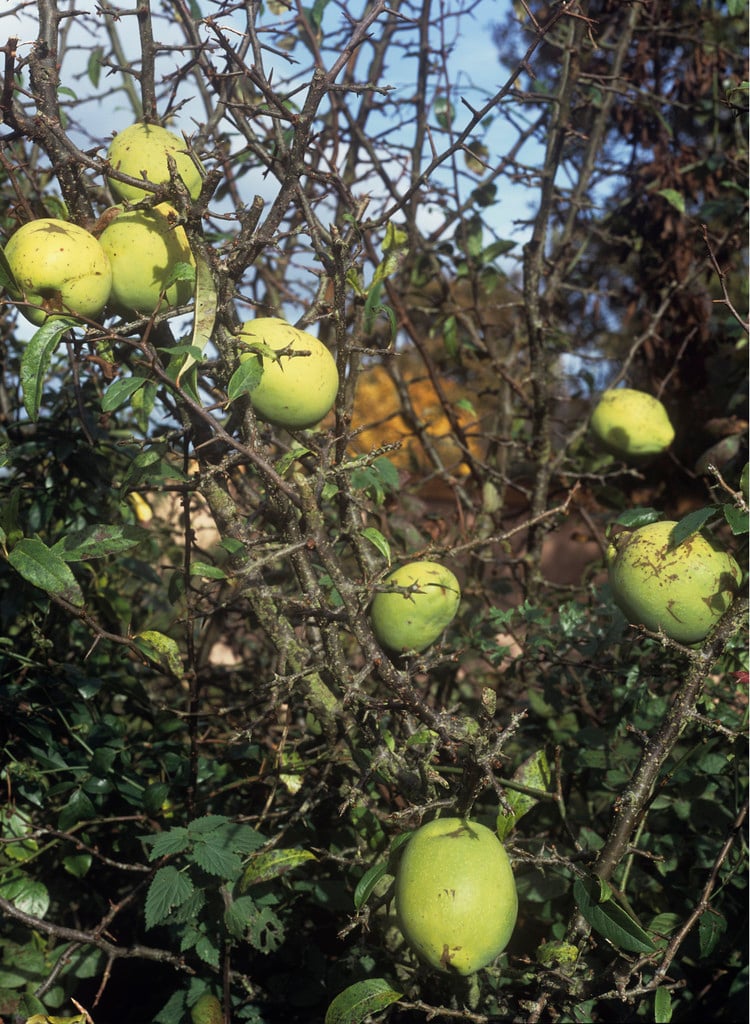
Chaenomeles cathayensis

RHS Plant Profile
Chinese flowering quince
Chinese flowering quince RHS

Synonyms

Chaenomeles lagenaria var. wilsonii
Chaenomeles lagenaria var. cathayensis

Plants for pollinators
Shrubs Trees Fruit Edible

A vigorous, upright deciduous shrub or small tree about 3m tall, with spiny stems and lance-shaped mid-green leaves to 12cm long. Small clusters of pink-flushed white flowers, 4cm across, appear in early and mid-spring, followed by large, aromatic yellow-green fruit up to 15cm long. These can be used to make jams and jellies but please see notes on toxicity for further advice

Position

Full sun, Partial shade

Soil Types

Chalk, Clay, Loam, Sand

Max Height

2.5-4 metres

Max Spread

2.5-4 metres

Size

Time to Maturity
5–10 years
Max Spread
2.5-4 metres
Max Height
2.5-4 metres

Growing Conditions

Chalk Clay Loam Sand
Moisture
Moist but well–drained or Well–drained
pH
Acid or Alkaline or Neutral

Position

Full sun Partial shade
Aspect
East–facing or South–facing or North–facing or West–facing
Exposure
Exposed or Sheltered
Hardiness
H6

Colour & Scent

Fragrance Fruit
Season Stem Flower Foliage Fruit
Spring
Summer
Autumn
Winter

Botanical Details

Family
Rosaceae
Native to GB/Ireland
No
Foliage
Deciduous
Habit
Bushy, Spreading branched
Potentially harmful
Seeds contain toxins so these should be removed if you are considering eating the fruitusually grown as an ornamental shrub. Pets: Fruit are ornamental - not to be eaten - see the HTA guide to potentially harmful plants for further information and useful contact numbers
Genus
Chaenomeles are deciduous, usually spiny shrubs with simple leaves and cup-shaped, 5-petalled flowers, solitary or clustered, in spring, followed by edible often fragrant green or yellow fruits
Name Status
Correct
Plant Range
China, Tibet

How to Grow

Cultivation

Grow in full sun or part shade in well-drained soil, lime tolerant but may become chlorotic on very alkaline soils

Propagation

Propagate by semi-ripe cuttings in summer or layering in autumn

Suggested planting locations and garden types

  • Coastal
  • Cottage and informal garden
  • Wildlife gardens
  • Climber and wall shrubs
  • Hedging and screens
  • Wall side borders
  • Edible fruit

Pruning

Pruning group 2, or pruning group 13 if wall-trained

Pests

May be susceptible to scale insects, brown scale and aphids

Diseases

May be susceptible to fireblight, blossom wilt, brown rot and honey fungus (rarely)