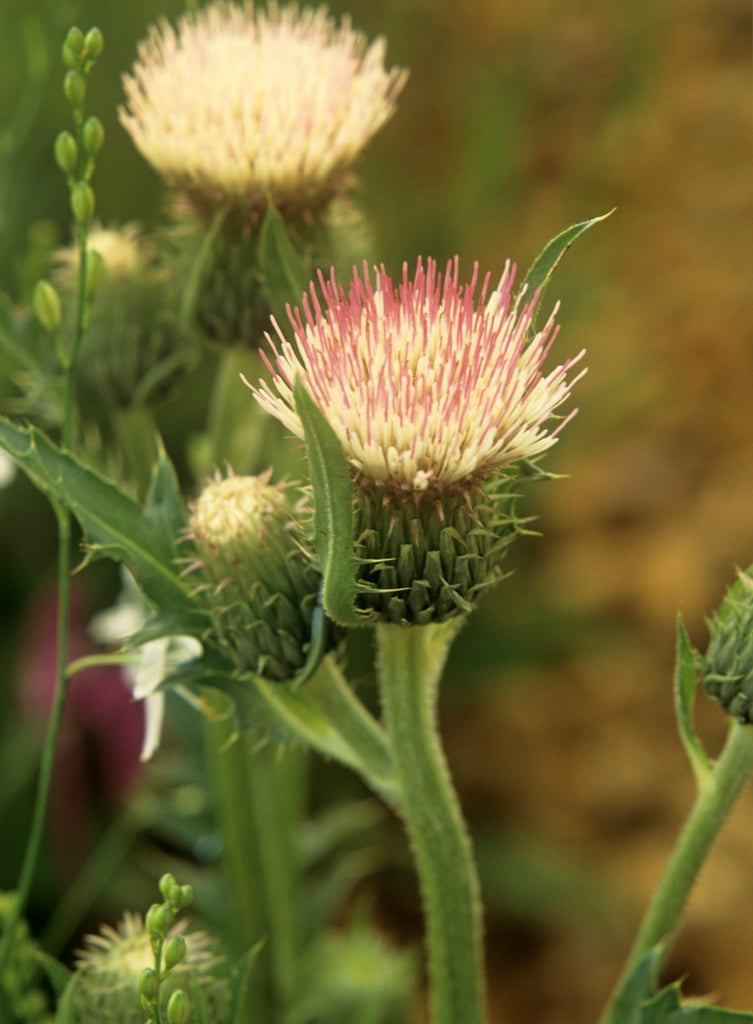
Cirsium 'Mount Etna'

RHS Plant Profile
thistle 'Mount Etna'
thistle 'Mount Etna' RHS
Herbaceous Perennial

A herbaceous perennial up to 60cm high with deeply cut, softly spiny green leaves and pincushion-like flowerheads in midsummer, and in flushes to late summer if dead headed, the flowers creamy white, tipped with protruding magenta-pink filaments; the flowers are good for pollinators, and if the last flowers are allowed to remain, the seed heads may provide food for finches

Position

Full sun

Soil Types

Chalk, Loam, Sand

Max Height

0.5-1 metres

Max Spread

0.1-0.5 metres

Size

Time to Maturity
2–5 years
Max Spread
0.1-0.5 metres
Max Height
0.5-1 metres

Growing Conditions

Chalk Loam Sand
Moisture
Moist but well–drained or Well–drained
pH
Acid or Alkaline or Neutral

Position

Full sun
Aspect
West–facing or South–facing or East–facing
Exposure
Exposed or Sheltered
Hardiness
H5

Colour & Scent

Season Stem Flower Foliage Fruit
Spring
Summer
Autumn
Winter

Botanical Details

Family
Asteraceae
Native to GB/Ireland
No
Foliage
Deciduous
Habit
Clump forming
Genus
Cirsium may be biennials or perennials with spiny leaves and typical thistle-type flower-heads
Name Status
Accepted

How to Grow

Cultivation

Grow in full sun in well-drained soil

Propagation

Propagate by division from autumn to spring or by root cuttings

Suggested planting locations and garden types

  • City and courtyard gardens
  • Cottage and informal garden
  • Prairie planting
  • Wildlife gardens
  • Low Maintenance
  • Cut flowers
  • Flower borders and beds

Pruning

No pruning required except deadheading to prolong the flowering season

Pests

Generally pest-free

Diseases

May be susceptible to powdery mildews