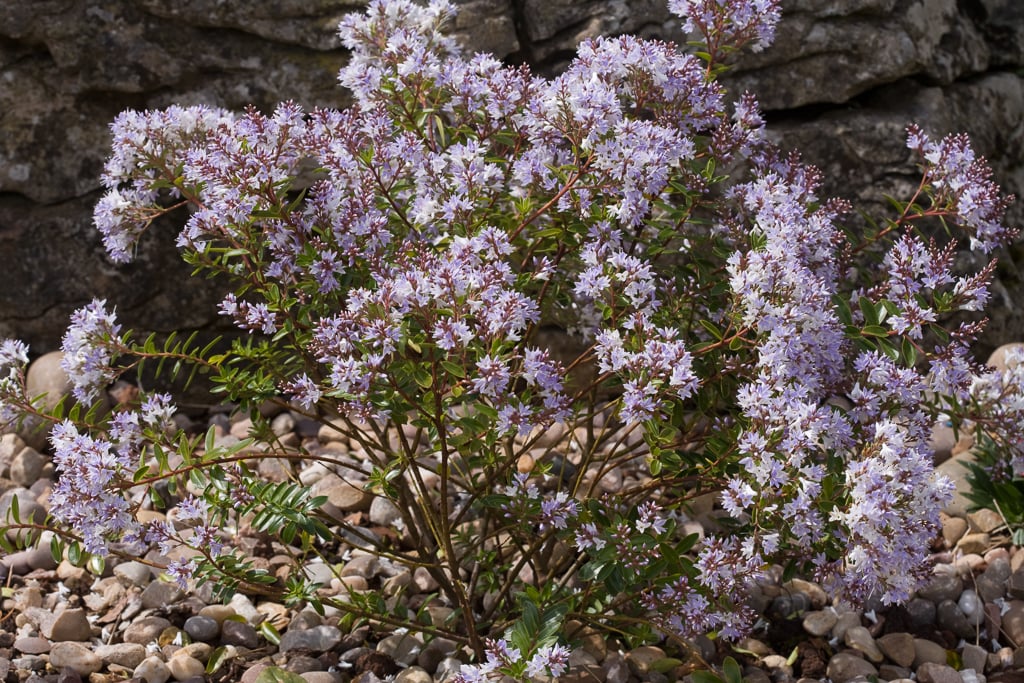
Hebe diosmifolia

RHS Plant Profile
box-leaved hebe
box-leaved hebe John Fielding

Synonyms

Hebe diosmifolia

Shrubs

A compact, bushy, evergreen shrub up to 1m tall with narrow, lance-shaped, dark green leaves to 2cm long that have a few small teeth along the leaf margins. Flowers are white to pale lilac-blue and borne near the branch tips in flat-topped clusters from late spring into summer

Position

Full sun, Partial shade

Soil Types

Chalk, Clay, Loam, Sand

Max Height

0.5-1 metres

Max Spread

0.5-1 metres

Size

Time to Maturity
5–10 years
Max Spread
0.5-1 metres
Max Height
0.5-1 metres

Growing Conditions

Chalk Clay Loam Sand
Moisture
Moist but well–drained or Well–drained
pH
Alkaline or Neutral

Position

Full sun Partial shade
Aspect
East–facing or North–facing or South–facing or West–facing
Exposure
Exposed or Sheltered
Hardiness
H5
Drought Resistance
Yes

RHS Recommended: for People & Planet

Growing conditions for maximum benefit

This plant will provide the maximum benefits if it is healthy and allowed to grow to maturity

For Bio-Diversity

  • Plants for Pollinators

Colour & Scent

Season StemFlowerFoliageFruit
Spring White, Purple, Blue Green
Summer White, Purple, Blue Green
Autumn Green
Winter Green

Botanical Details

Family
Plantaginaceae
Native to GB/Ireland
No
Foliage
Evergreen
Habit
Bushy
Genus
Veronica can be annuals, perennials or sub-shrubs with paired leaves and small flowers usually in terminal or axillary racemes or spikes
Name Status
Synonym
Horticultural Group
This genus has changed from Hebe to Veronica
Plant Range
New Zealand (N.Island)

How to Grow

Cultivation

Grow in a well-drained soil in full sun or partial shade

Propagation

Propagate by seed or by semi-hardwood cuttings

Suggested planting locations and garden types

  • City and courtyard gardens
  • Cottage and informal garden
  • Gravel garden
  • Patio and container plants
  • Wildlife gardens
  • Flower borders and beds

Pruning

pruning group 9

Pests

May be susceptible to aphids

Diseases

high risk host for xylella fastidiosa. May be susceptible to downy mildews, fungal leaf spot, fungal rot, Phytophthora and sometimes honey fungus