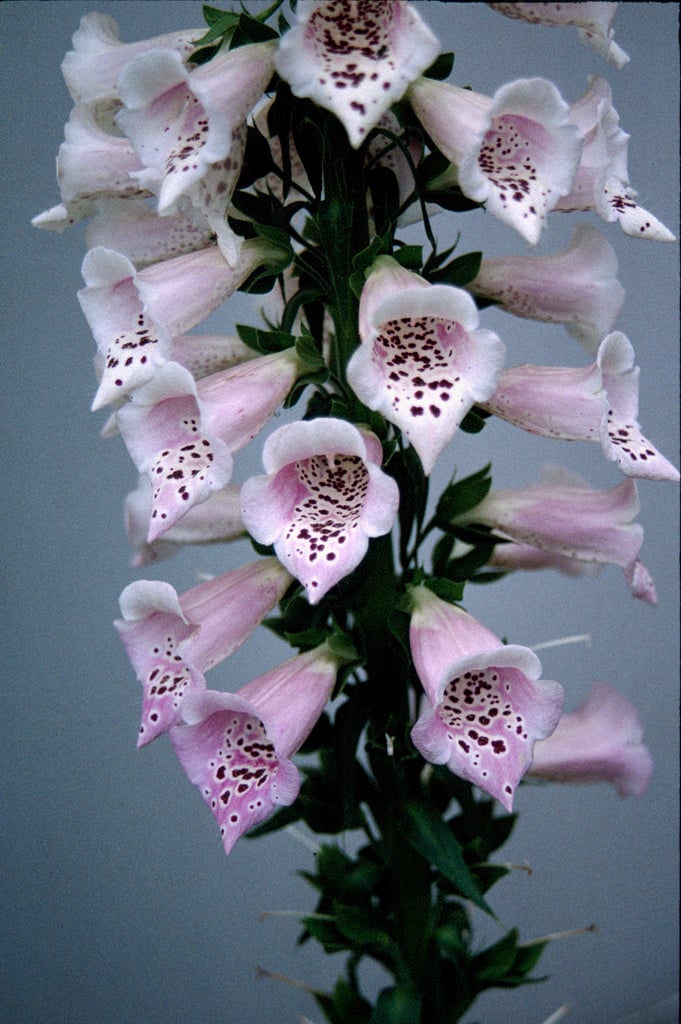
Digitalis purpurea 'Camelot Lavender' (Camelot Series)

RHS Plant Profile
foxglove 'Camelot Lavender'
foxglove 'Camelot Lavender' RHS

Synonyms

Digitalis 'Camelot Deep Lavender'

Award of Garden MeritPlants for pollinators
Annual Biennial

A biennial or short-lived perennial, 1.2m high, with overwintering rosettes of green leaves, and spikes of pale purplish-pink flowers, spotted inside with maroon outlined in white, over a long flowering period in summer; the flowers appear in the first rather than second year, grow all round the spikes rather than on one side

Position

Partial shade

Soil Types

Loam, Sand

Max Height

1-1.5 metres

Max Spread

0.1-0.5 metres

Size

Time to Maturity
1–2 years
Max Spread
0.1-0.5 metres
Max Height
1-1.5 metres

Growing Conditions

Loam Sand
Moisture
Moist but well–drained
pH
Acid or Neutral

Position

Partial shade
Aspect
South–facing or North–facing or West–facing or East–facing
Exposure
Exposed or Sheltered
Hardiness
H5

Colour & Scent

Season Stem Flower Foliage Fruit
Spring
Summer
Autumn
Winter

Botanical Details

Family
Plantaginaceae
Native to GB/Ireland
No
Foliage
Semi evergreen
Habit
Columnar upright
Potentially harmful
TOXIC if eaten. Wear gloves and other protective equipment when handling TOXIC to pets - see the HTA guide to potentially harmful plants for further information and useful contact numbers
Genus
Digitalis can be biennials or usually short-lived perennials forming a rosette of simple leaves with bell-shaped flowers in slender, erect, usually one-sided racemes
Name Status
Accepted

How to Grow

Cultivation

Grow in moist but well-drained humus-rich soil in light dappled shade, for example in a mixed bed or an open woodland garden, and add organic mulch; native foxgloves are usually found in the wild on acidic soils, but they can also grow on neutral soils, and tolerate slightly alkaline soils

Propagation

Propagate by seed, sown in spring; it is an F1 hybrid, so plants from self-seeding will not come true

Suggested planting locations and garden types

  • City and courtyard gardens
  • Cottage and informal garden
  • Coastal
  • Wildlife gardens
  • Flower borders and beds
  • Wall side borders

Pruning

No pruning required, but deadheading, cutting down dead flowering stems, will encourage secondary flowering shoots, and encourage growth the following year

Pests

May be susceptible to aphids and leaf and bud eelworm

Diseases

May be susceptible to powdery mildews, downy mildews and leaf spot