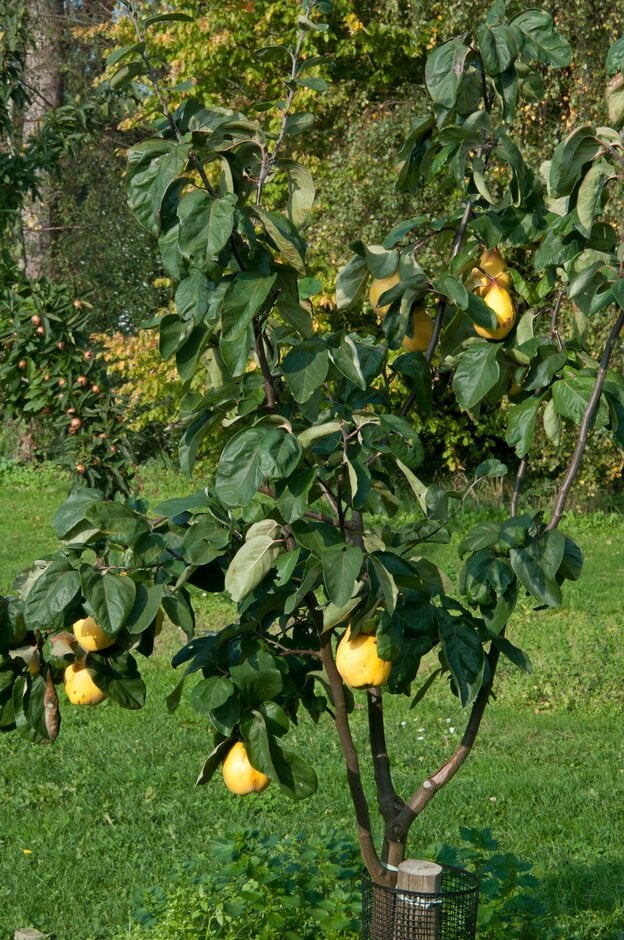
Cydonia oblonga 'Vranja' ambig. (F)

RHS Plant Profile
quince 'Vranja'
quince 'Vranja' RHS
Fruit Edible

A variety of quince up to 5m in height, which is highly productive. Green leaves with pale undersides appear before fragrant, white to pale rose-pink flowers in spring, followed by pear-shaped, fragrant golden-yellow fruits from October which can be used for jams and jellies or adding sparingly to apple pies and crumbles for extra tartness. As quince fruits are very fragrant, they are best stored away from other fruits to avoid tainting them

Position

Full sun

Soil Types

Clay, Loam

Size

Time to Maturity
10–20 years

Growing Conditions

Clay Loam
Moisture
Moist but well–drained
pH
Acid or Alkaline or Neutral

Position

Full sun
Aspect
South–facing or West–facing
Exposure
Sheltered
Hardiness
H5

Colour & Scent

Fragrance Flower Fruit
Season Stem Flower Foliage Fruit
Spring
Summer
Autumn
Winter

Botanical Details

Family
Rosaceae
Native to GB/Ireland
No
Foliage
Deciduous
Habit
Spreading branched
Genus
Cydonia are large deciduous shrubs with simple, ovate leaves and 5-petalled, bowl-shaped pink or white flowers, followed by pear-like fruits, edible when ripe
Name Status
Accepted
Horticultural Group
This genus produces fruit, but not necessarily edible fruit

How to Grow

Cultivation

Grow in fertile, moist soil in a warm, sheltered spot. See quince cultivation

Propagation

Propagate by grafting or by semi-ripe or hardwood cuttings

Suggested planting locations and garden types

  • Cottage and informal garden
  • Edible fruit

Pruning

Pruning group 1 but any growth from beneath the graft point, should be removed as soon as possible

Pests

May be susceptible to caterpillars and aphids

Diseases

May be susceptible to quince leaf blight, brown rot, fireblight, powdery mildews and honey fungus