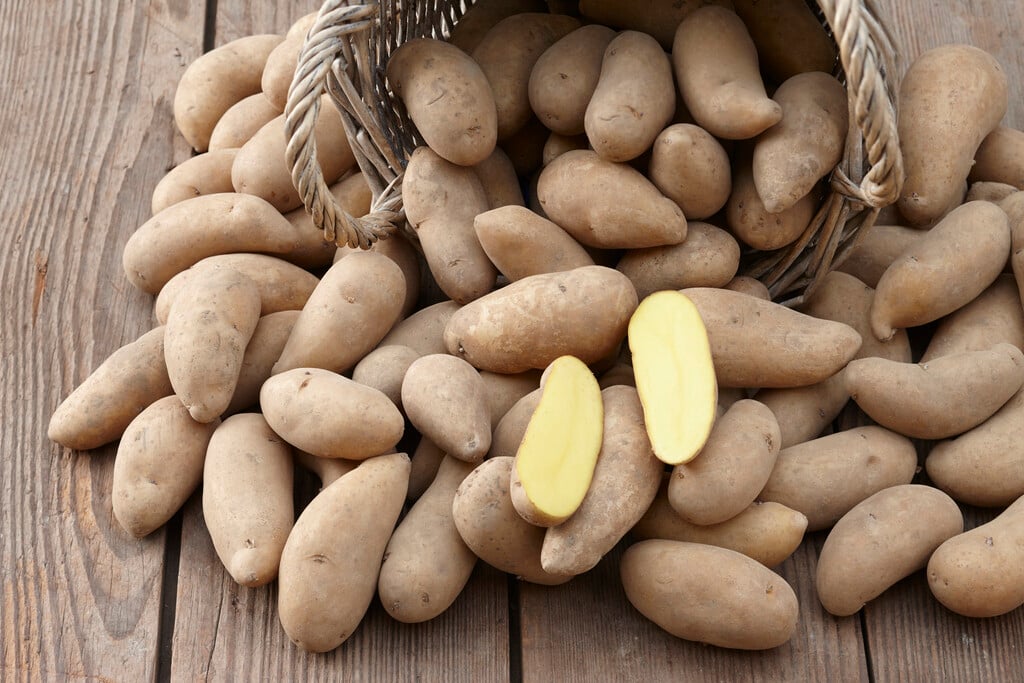
Solanum tuberosum (Phureja Group) 'Mayan Gold'PBR

RHS Plant Profile
potato 'Mayan Gold'
Annual Biennial

A tender, upright, branching perennial maincrop variety with dark green foliage, purple flowers and long, oval tubers with golden yellow skin and a nutty flavour. Good for most cooking methods except boiling when they tend to fall apart. Available to harvest June to August

Position

Full sun, Partial shade

Soil Types

Clay, Loam, Sand

Max Height

0.5-1 metres

Max Spread

0.5-1 metres

Size

Time to Maturity
1 year
Max Spread
0.5-1 metres
Max Height
0.5-1 metres

Growing Conditions

Clay Loam Sand
Moisture
Moist but well–drained
pH
Acid or Alkaline or Neutral

Position

Full sun Partial shade
Aspect
South–facing or West–facing
Exposure
Sheltered
Hardiness
H2

Colour & Scent

Season Stem Flower Foliage Fruit
Spring
Summer
Autumn
Winter

Botanical Details

Family
Solanaceae
Native to GB/Ireland
No
Foliage
Deciduous
Habit
Bushy, Clump forming
Potentially harmful
Harmful if eatenexcept potato crop. Wear gloves and other protective equipment when handling. Pets (dogs): Harmful if eatenexcept potato crop - for further information and contact numbers regarding pets, see the HTA guide to potentially harmful plants
Genus
Solanum can be annuals, perennials, evergreen or deciduous shrubs or twining climbers, with simple or pinnnately lobed leaves and star- or bowl-shaped, 5-lobed flowers with prominent stamens, followed by fleshy fruits
Name Status
Accepted

How to Grow

Cultivation

Grow in an open, frost-free site with deep, fertile, moisture-retentive soil for high quality and heavy yields. Plants are tall so if possible try to grow on a less exposed site. Improve soil by adding organic matter, such as well-rotted manure, in the autumn. Draw earth up around the stems as they emerge, to exclude light and prevent the potatoes from becoming green. Water well in dry periods. Potatoes can also be grown in large containers or potato gro-bags. See potato cultivation for further advice

Propagation

Propagate by chitting tubers or 'seed potatoes'. This is done by standing the tubers 'rose-end' up (the end with the most eyes) in egg boxes or trays in a cool, light place. After two to three weeks the shoots will begin to sprout. Plant out after frosts have passed, from about mid March to mid April

Suggested planting locations and garden types

  • Cottage and informal garden
  • Patio and container plants

Pruning

No pruning required

Pests

May be susceptible to cutworms, slugs, wireworms, leaf and bud eelworm and potato cyst eelworm

Diseases

May be susceptible to honey fungus (rarely), Potato scab, Potato blight, Potato rot, Potato blackleg and stem canker