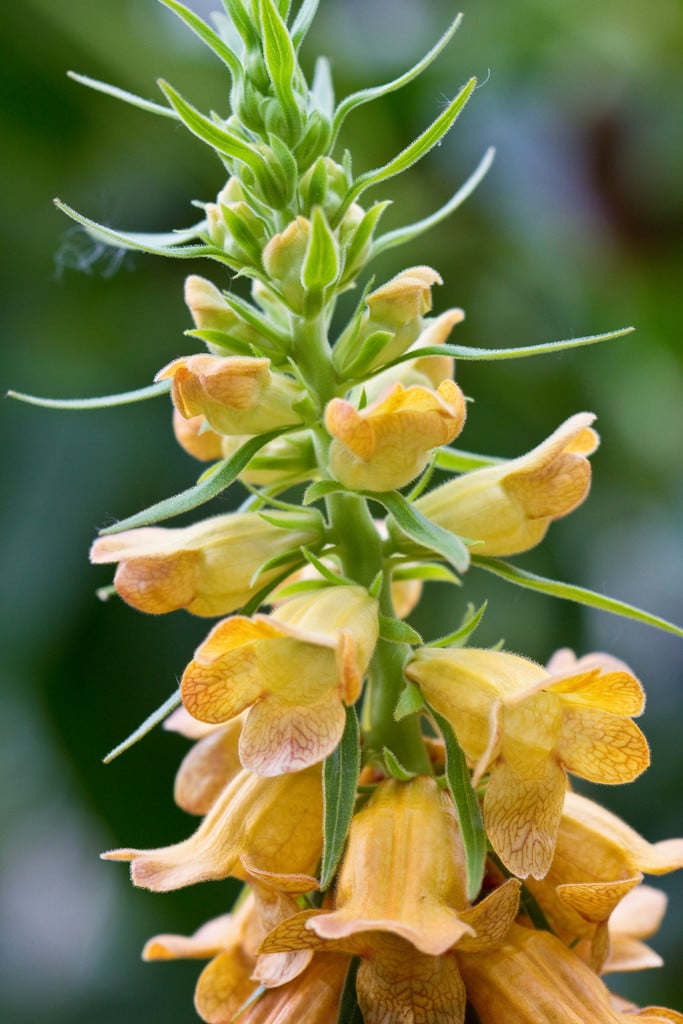
Digitalis sceptrum

RHS Plant Profile
sceptre foxglove
sceptre foxglove RHS

Synonyms

Isoplexis sceptrum

Plants for pollinators
Conservatory Greenhouse Shrubs

A tender evergreen shrub, up to 1.8m high, with toothed, ovate to ovate-oblong leaves and racemes up to 13cm long of yellow flowers, netted inside with tawny-brown, in summer

Position

Full sun, Partial shade

Soil Types

Loam, Sand

Max Height

1.5-2.5 metres

Max Spread

1.5-2.5 metres

Size

Time to Maturity
5–10 years
Max Spread
1.5-2.5 metres
Max Height
1.5-2.5 metres

Growing Conditions

Loam Sand
Moisture
Moist but well–drained or Well–drained
pH
Acid or Neutral

Position

Full sun Partial shade
Aspect
South–facing or West–facing
Exposure
Sheltered
Hardiness
H2

Colour & Scent

Season Stem Flower Foliage Fruit
Spring
Summer
Autumn
Winter

Botanical Details

Family
Plantaginaceae
Native to GB/Ireland
No
Foliage
Evergreen
Habit
Bushy
Potentially harmful
TOXIC if eaten. Wear gloves and other protective equipment when handling TOXIC to pets - see the HTA guide to potentially harmful plants for further information and useful contact numbers
Genus
Digitalis can be biennials or usually short-lived perennials forming a rosette of simple leaves with bell-shaped flowers in slender, erect, usually one-sided racemes
Name Status
Correct
Plant Range
Madeira

How to Grow

Cultivation

In frost-free areas, grow in a sheltered position in a sunny to partially shaded site in well-drained soil; in frost-prone areas, grow in a cool greenhouse with minimum night temperatures of 5-10°C, in medium-fertility, peat-free, loam-based compost, with added sand and leafmould, water plentifully in summer but moderately in winter, and keep plants well ventilated. See foxglove cultivation for further advice

Propagation

Propagate by seed, sown at 18-24°C in a sandy seed mixture in spring; by softwood cuttings in spring; or by semi-ripe cuttings in summer with bottom heat

Suggested planting locations and garden types

  • Coastal
  • City and courtyard gardens
  • Cottage and informal garden
  • Gravel garden
  • Patio and container plants
  • Mediterranean climate plants
  • Wall side borders

Pruning

No pruning required except deadheading to encourage further flowering

Pests

May be susceptible to caterpillars, glasshouse red spider mite and glasshouse whitefly but generally pest-free

Diseases

May be susceptible to fungal leaf spots, powdery mildews, downy mildews, crown rots and root rots