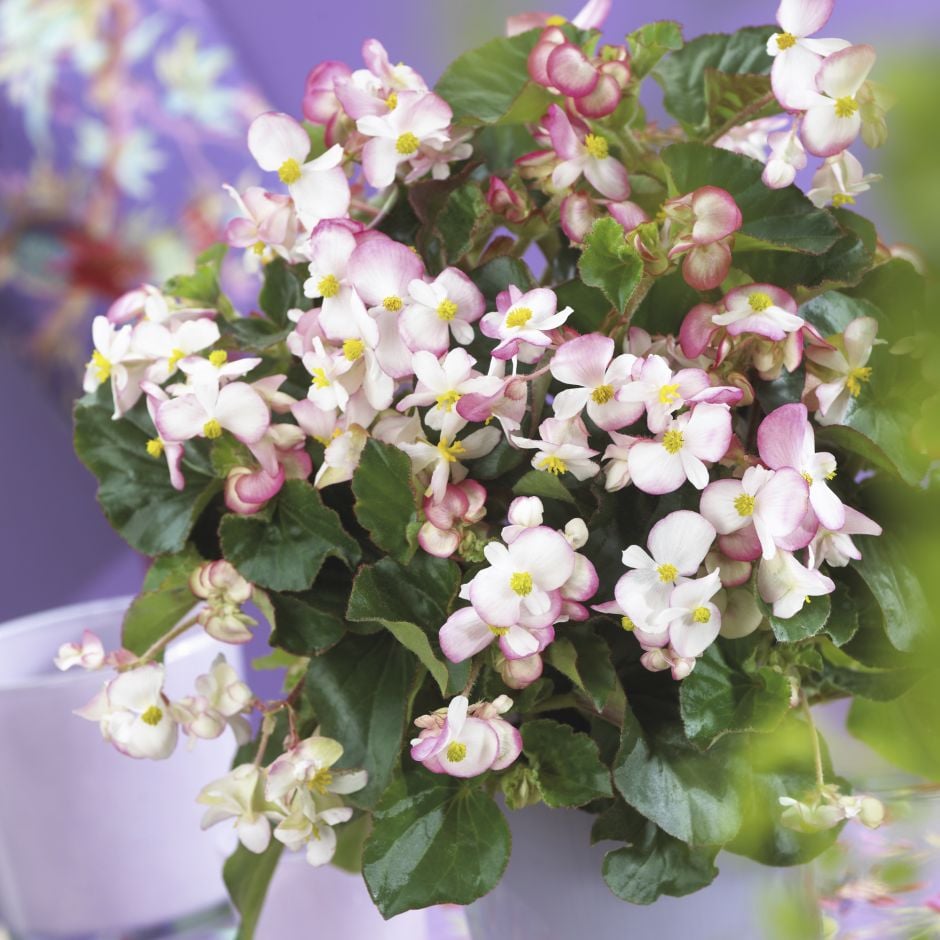
Begonia 'Berose'

<i>Begonia</i> 'Berose' Syngenta

Synonyms

Begonia 'Berose'

Bedding Conservatory Greenhouse Herbaceous Perennial

A tender, upright, evergreen perennial, up to around 45cm high, with succulent stems and oval to broadly elliptic, glossy green leaves with toothed and often wavy edges. Clusters of white flowers edged with rose-pink appear from mid spring to summer

Position

Partial shade

Soil Types

Loam, Sand

Max Height

0.1-0.5 metres

Max Spread

0.1-0.5 metres

Size

Time to Maturity
1–2 years
Max Spread
0.1-0.5 metres
Max Height
0.1-0.5 metres

Growing Conditions

Loam Sand
Moisture
Well–drained
pH
Acid or Neutral

Position

Partial shade
Aspect
East–facing or North–facing or West–facing
Exposure
Sheltered
Hardiness
H1B

Colour & Scent

Season Stem Flower Foliage Fruit
Spring
Summer
Autumn
Winter

Botanical Details

Family
Begoniaceae
Native to GB/Ireland
No
Foliage
Evergreen
Habit
Bushy, Columnar upright
Genus
Begonia can be annuals, evergreen or deciduous perennials or shrubs, with fibrous, tuberous or rhizomatous roots and usually asymmetrical leaves, often strikingly patterned, and small or large flowers, both male and female in the same cluster
Name Status
Synonym
Horticultural Group
Semperflorens-Cultorum begonias are fibrous-rooted evergreen perennials, much used for summer bedding, with rounded, often attractively coloured leaves, and sprays of single or double flowers 1-2.5cm across in summer or throughout the year

How to Grow

Cultivation

Thrives in fertile, well-drained soil, ideally in dappled or afternoon shade though will tolerate most positions. Plant out after the last frosts; best grown as bedding or in containers that can be moved indoors over winter. See begonias: outdoors for further information

Propagation

Propagate by seed, by root cuttings, or by leaf cuttings in spring or summer in a propagating case, in partial shade

Suggested planting locations and garden types

  • City and courtyard gardens
  • Cottage and informal garden
  • Patio and container plants
  • Bedding
  • Garden edging
  • Underplanting of roses and shrubs

Pruning

No pruning required

Pests

May be susceptible to caterpillars, mealybugs, mites, thrips, vine weevil and aphids

Diseases

May be susceptible to grey moulds (botrytis), Powdery mildews and stem rot