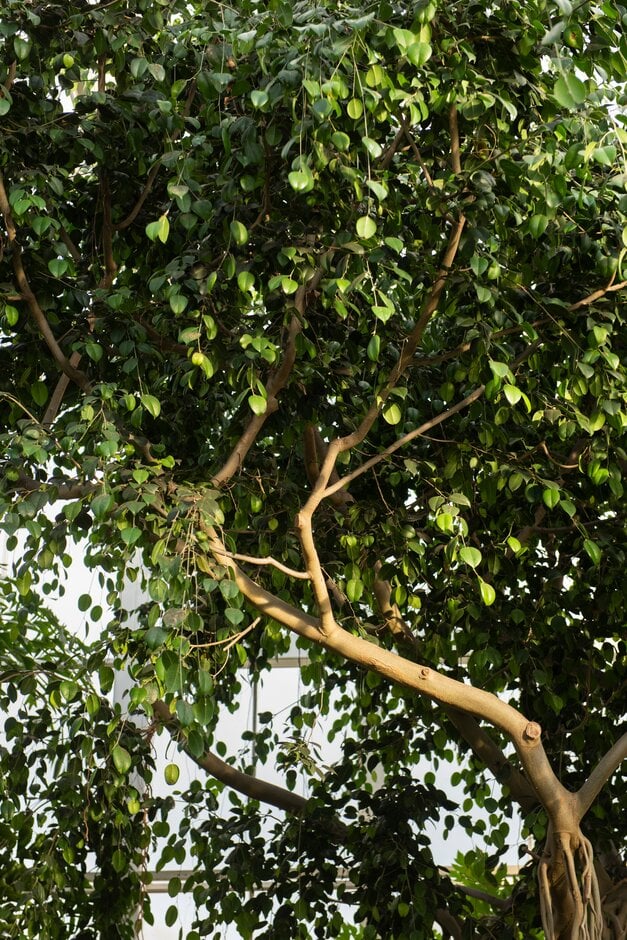
Size
Ultimate height
2.5–4 metresTime to ultimate height
10–20 yearsUltimate spread
1.5–2.5 metresGrowing conditions
Moisture
Moist but well–drained, Well–drainedpH
Acid, Alkaline, NeutralColour & scent
| Stem | Flower | Foliage | Fruit | |
| Spring | Green Yellow | |||
|---|---|---|---|---|
| Summer | Green Yellow | |||
| Autumn | Green Yellow | |||
| Winter | Green Yellow |
Position
- Full sun
- Partial shade
Aspect
South–facing or West–facing or East–facing
Exposure
Sheltered Hardiness
H1CBotanical details
- Family
- Moraceae
- Native to GB / Ireland
- No
- Foliage
- Evergreen
- Habit
- Bushy
- Potentially harmful
- Humans/Pets (dogs): Skin allergen, harmful if eaten. For further information and contact numbers regarding pets, see the HTA guide to potentially harmful plants
- Genus
Ficus can be evergreen or deciduous trees, shrubs or climbers, with often leathery, simple, entire or lobed leaves and tiny flowers borne within a hollow receptacle which enlarges to form the fruit
- Name status
Unresolved
How to grow
Cultivation
Under glass grow in a peat-free loam-based potting compost with added fine bark chippings in full or filtered light. Maintain an even temperature ensuring it does not fall below 13⁰C in winter and avoid draughts and fumes from heaters. See ornamental fig cultivation for more advice
Propagation
Propagate by semi-hardwood cuttings
Suggested planting locations and garden types
- Patio and container plants
- Low Maintenance
Pruning
Pests
May be susceptible to glasshouse red spider mite, thrips, mealybugs and scale insects under glass
Diseases
May be susceptible to honey fungus
Get involved
The Royal Horticultural Society is the UK’s leading gardening charity. We aim to enrich everyone’s life through plants, and make the UK a greener and more beautiful place.