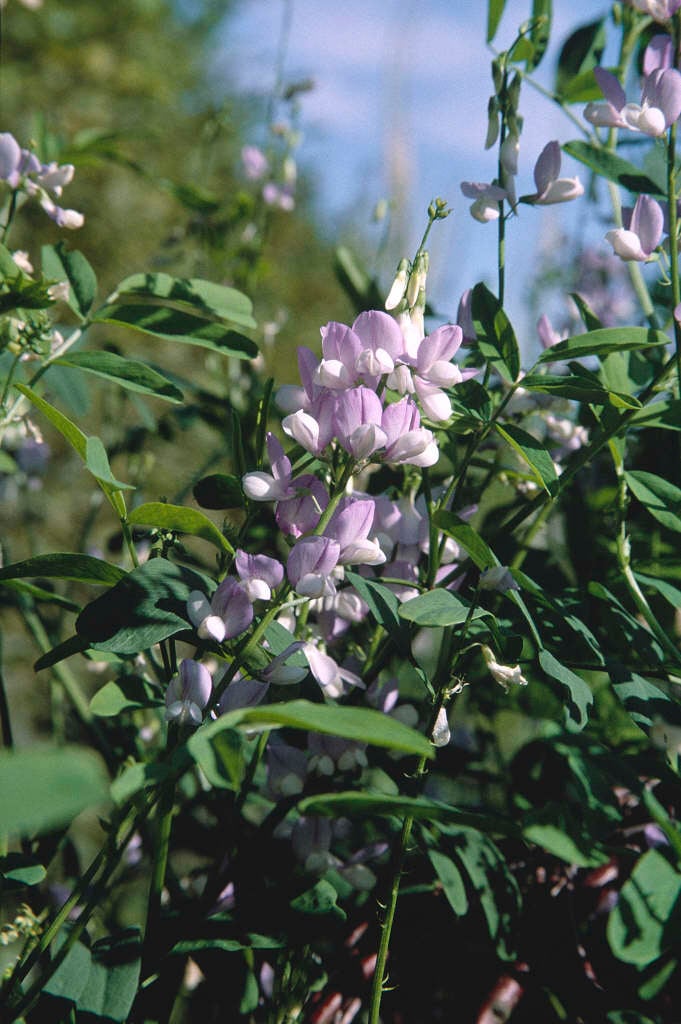
Galega officinalis

RHS Plant Profile
common goat's rue
common goat's rue RHS

Other common names

French lilac, goat's rue

Herbaceous Perennial

A strong-growing, bushy perennial forming a clump of stems with attractive pinnate leaves and pea-like, white, lilac or purple flowers borne in erect racemes from mid summer to early autumn

Position

Full sun, Partial shade

Soil Types

Chalk, Clay, Loam, Sand

Max Height

1-1.5 metres

Max Spread

0.5-1 metres

Size

Time to Maturity
2–5 years
Max Spread
0.5-1 metres
Max Height
1-1.5 metres

Growing Conditions

Chalk Clay Loam Sand
Moisture
Moist but well–drained or Well–drained
pH
Acid or Alkaline or Neutral

Position

Full sun Partial shade
Aspect
West–facing or East–facing or South–facing
Exposure
Exposed or Sheltered
Hardiness
H7

Colour & Scent

Season Stem Flower Foliage Fruit
Spring
Summer
Autumn
Winter

Botanical Details

Family
Fabaceae
Native to GB/Ireland
No
Foliage
Deciduous
Habit
Bushy
Genus
Galega are robust bushy perennials with pinnate leaves and axillary racemes of pea-like flowers in summer and autumn
Name Status
Correct
Plant Range
C & S Europe

How to Grow

Cultivation

Easy to grow in almost any garden soil but may spread rapidly in fertile soil and will need staking; prefers an open sunny position but will tolerate light shade

Propagation

Propagate by seed, soaked in warm water overnight, in containers in a cold frame in spring or by division in spring or late autumn

Suggested planting locations and garden types

  • Cottage and informal garden
  • Flower borders and beds

Pruning

Cut back flowered stems to prevent self-seeding

Pests

Pea and bean weevil and aphids may be troublesome

Diseases

May be susceptible to powdery mildews