Begonia 'Black Raspberry'
begonia 'Black Raspberry'
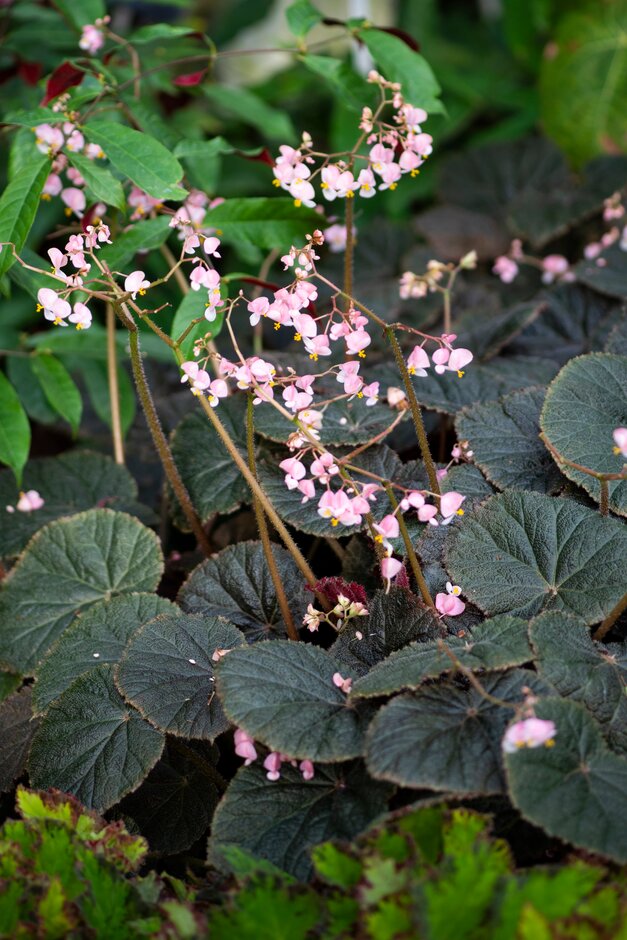
An evergreen, rhizomatous perennial with very dark reddish-purple, roughly heart-shaped leaves with a puckered surface and tiny white hairs on both sides and on the stems. Clusters of simple, pale pink flowers, held above the foliage, may appear year round
Size
Ultimate height
0.1–0.5 metresTime to ultimate height
2–5 yearsUltimate spread
0.1–0.5 metresGrowing conditions
Moisture
Well–drainedpH
Acid, NeutralColour & scent
| Stem | Flower | Foliage | Fruit | |
| Spring | Pink | Red Purple | ||
|---|---|---|---|---|
| Summer | Pink | Red Purple | ||
| Autumn | Pink | Red Purple | ||
| Winter | Pink | Red Purple |
Position
- Partial shade
Aspect
East–facing or West–facing
Exposure
Sheltered Hardiness
H1BBotanical details
- Family
- Begoniaceae
- Native to GB / Ireland
- No
- Foliage
- Evergreen
- Habit
- Bushy
- Potentially harmful
- Ornamental bulbs - not to be eaten. Wear gloves and other protective equipment when handling. Pets: Ornamental bulbs - not to be eaten - see the HTA guide to potentially harmful plants for further information and useful contact numbers
- Genus
Begonia can be annuals, evergreen or deciduous perennials or shrubs, with fibrous, tuberous or rhizomatous roots and usually asymmetrical leaves, often strikingly patterned, and small or large flowers, both male and female in the same cluster
- Name status
Accepted
How to grow
Cultivation
Grow in light, well-drained, peat-free, acid to neutral potting compost. Place in filtered light with shade from hot sun at an optimum of 15C to 22C, with high humidity. Will not tolerate continuous direct sunlight or waterlogging. Water moderately when in growth and apply a balanced liquid fertiliser at alternative waterings. See begonia cultivation - indoors for further information
Propagation
Propagate by leaf cuttings or sections of rhizome
Suggested planting locations and garden types
- Houseplants
- Conservatory and greenhouse
Pruning
No pruning required
Pests
May be susceptible to caterpillars, mealy bugs, mites, glasshouse thrips, vine weevil and aphids
Diseases
May be susceptible to grey mould, powdery mildews, stem rot and rhizome rot
Get involved
The Royal Horticultural Society is the UK’s leading gardening charity. We aim to enrich everyone’s life through plants, and make the UK a greener and more beautiful place.