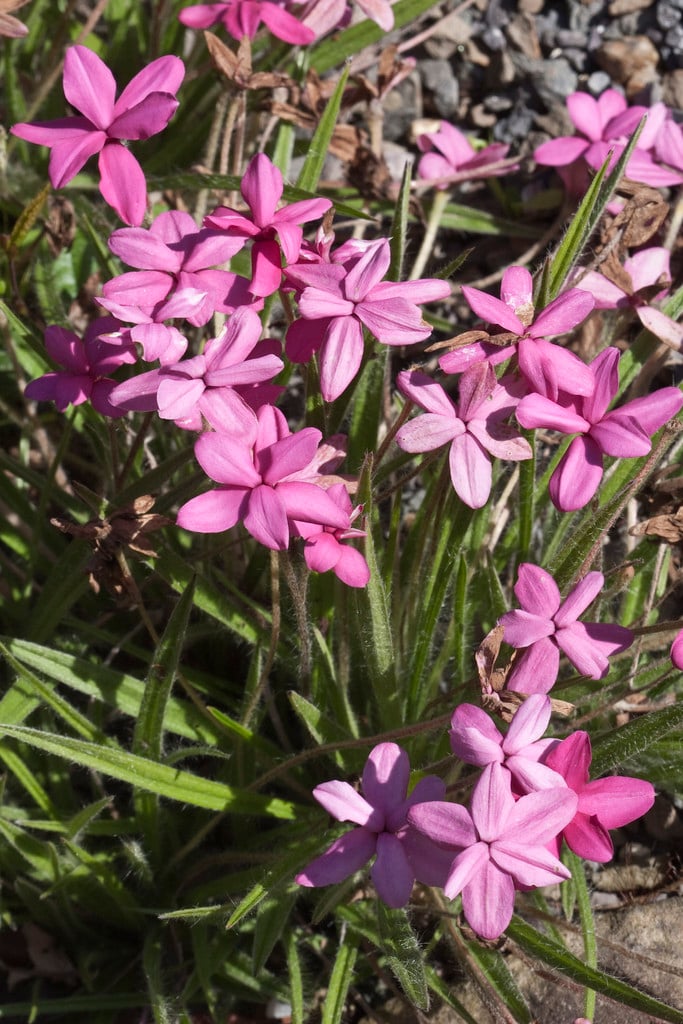
Rhodohypoxis baurii 'Tetra Red'

RHS Plant Profile
red star 'Tetra Red'
red star 'Tetra Red' RHS

Synonyms

Rhodohypoxis 'Tetra Red'
Rhodohypoxis 'Tetraploid Red'

Alpine Rockery

A clump-forming alpine herbaceous perennial 10cm high with basal clusters of keeled, folded, dull greyish green leaves, to 10cm long, and large deep cerise-pink, almost red, flowers with broad tepals throughout summer

Position

Full sun

Soil Types

Loam, Sand

Max Height

Up to 10 cm

Max Spread

0-0.1 metre

Size

Time to Maturity
2–5 years
Max Spread
0-0.1 metre
Max Height
Up to 10 cm

Growing Conditions

Loam Sand
Moisture
Well–drained
pH
Acid or Neutral

Position

Full sun
Aspect
South–facing or West–facing
Exposure
Sheltered
Hardiness
H3

Colour & Scent

Season Stem Flower Foliage Fruit
Spring
Summer
Autumn
Winter

Botanical Details

Family
Hypoxidaceae
Native to GB/Ireland
No
Foliage
Deciduous
Habit
Clump forming
Genus
Rhodohypoxis are small clump-forming herbaceous perennials with tufts of hairy, narrowly lance-shaped leaves and solitary star-shaped, white, pink, red or purple flowers in summer
Name Status
Accepted

How to Grow

Cultivation

Grow in an alpine house in a mix of equal parts lime-free potting compost, leaf mould, and sharp sand, in full light, water freely and apply a balanced liquid fertilizer monthly when in growth, and keep just moist in winter; or grow outdoors in a trough or rock garden, in well-drained, moderately fertile, humus-rich soil in full sun, and in winter protect with a propped pane of glass to keep plants almost dry

Propagation

Propagate by division of established clumps, or by separating offsets, in late autumn

Suggested planting locations and garden types

  • Gravel garden
  • Patio and container plants
  • Rock garden

Pruning

No pruning required

Pests

May be susceptible to glasshouse red spider mite and thrips under glass

Diseases

Generally disease-free