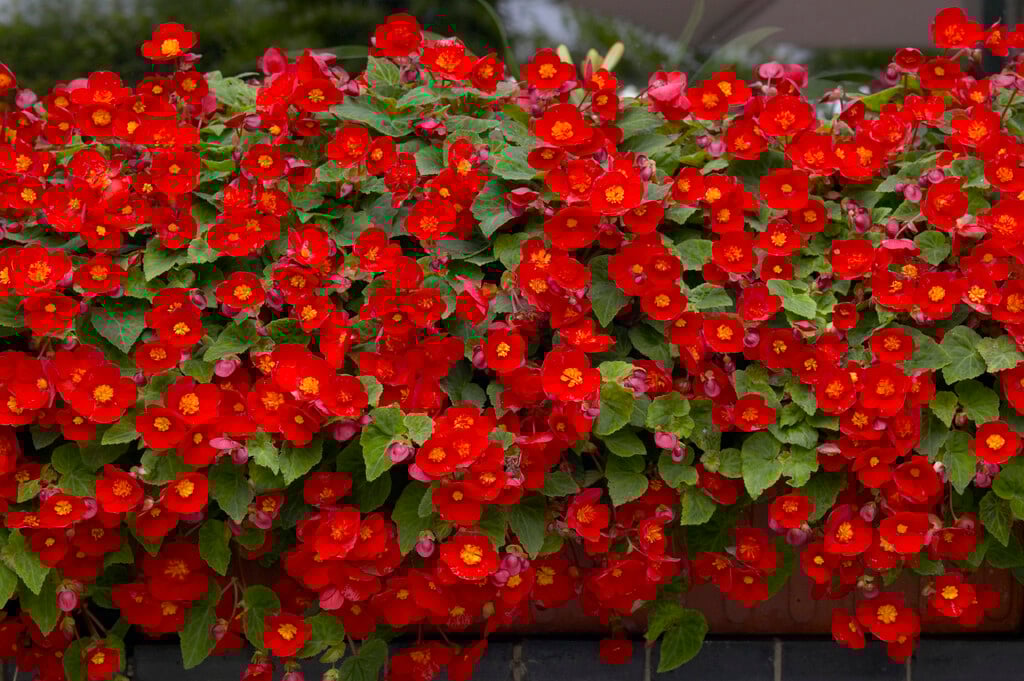
Size
Ultimate height
0.1–0.5 metresTime to ultimate height
1 yearUltimate spread
0.1–0.5 metresGrowing conditions
Moisture
Moist but well–drainedpH
Acid, NeutralColour & scent
| Stem | Flower | Foliage | Fruit | |
| Spring | Green | |||
|---|---|---|---|---|
| Summer | Red | Green | ||
| Autumn | Red | Green | ||
| Winter |
Position
- Partial shade
Aspect
West–facing or North–facing or East–facing
Exposure
Sheltered Hardiness
H1CBotanical details
- Family
- Begoniaceae
- Native to GB / Ireland
- No
- Foliage
- Deciduous
- Habit
- Bushy, Clump forming
- Potentially harmful
- Ornamental bulbs - not to be eaten. Wear gloves and other protective equipment when handling Pets: Ornamental bulbs - not to be eaten - see the HTA guide to potentially harmful plants for further information and useful contact numbers
- Genus
Begonia can be annuals, evergreen or deciduous perennials or shrubs, with fibrous, tuberous or rhizomatous roots and usually asymmetrical leaves, often strikingly patterned, and small or large flowers, both male and female in the same cluster
- Name status
Accepted
- Horticultural Group
- Tuberhybrida begonias are bushy tuberous perennials with glossy leaves and usually double flowers in small clusters in summer; most are dormant in winter
How to grow
Cultivation
Grow in baskets and containers of peat-free multipurpose compost. Plant in borders, in neutral to acidic soil that has been enriched with organic matter. Prefers part shade, or bright shade. Overwinter in frost-free conditions. See Begonias: outdoors for further advice
Propagation
Propagate by seed in early spring in 21°C or propagate by softwood cuttings
Suggested planting locations and garden types
- City and courtyard gardens
- Cottage and informal garden
- hanging basket
- Patio and container plants
- Sub-tropical
- Bedding
- Conservatory and greenhouse
- Garden edging
- Wall side borders
Pruning
Cut back all foliage back to soil level as it dies back in autumn
Pests
May be susceptible to caterpillars, mealy bugs, mites, glasshouse thrips, vine weevil and aphids
Diseases
May be susceptible to grey moulds, powdery mildews, stem rot and rhizome rot
Get involved
The Royal Horticultural Society is the UK’s leading gardening charity. We aim to enrich everyone’s life through plants, and make the UK a greener and more beautiful place.