Not the plant you're looking for? Search over 300,000 plants
Annual Biennial
Size
Ultimate height
0.5–1 metresTime to ultimate height
1 yearUltimate spread
0.1–0.5 metresGrowing conditions
Loam
Sand
Moisture
Well–drainedpH
Acid, Alkaline, NeutralColour & scent
| Stem | Flower | Foliage | Fruit | |
| Spring | Green | |||
|---|---|---|---|---|
| Summer | Pink Purple Red White Yellow Orange | |||
| Autumn | ||||
| Winter |
Position
- Full sun
Aspect
South–facing or West–facing
Exposure
Exposed or Sheltered Hardiness
H5Botanical details
- Family
- Plantaginaceae
- Native to GB / Ireland
- No
- Foliage
- Deciduous
- Habit
- Bushy
- Genus
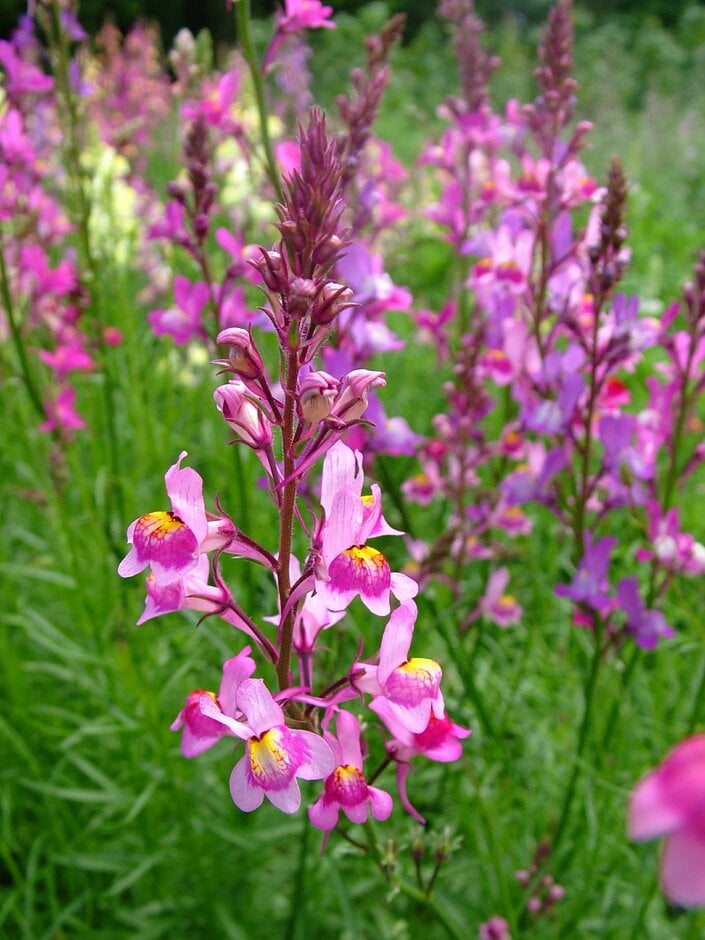
Linaria can be annuals, biennials or herbaceous perennials, with simple leaves and terminal racemes of 2-lipped flowers with conspicuous spurs
- Name status
Trade
How to grow
Cultivation
Grow in a well-drained soil in full sun
Propagation
Propagate by seed in pots in a cold frame in early spring. Propagate by division or softwood cuttings in spring
Suggested planting locations and garden types
- City and courtyard gardens
- Cottage and informal garden
- Wildlife gardens
- Cut flowers
- Flower borders and beds
Pruning
After flowering, plants can be cut back to prevent self-seeding
Pests
May be susceptible to aphids
Diseases
May be susceptible to powdery mildews
Get involved
The Royal Horticultural Society is the UK’s leading gardening charity. We aim to enrich everyone’s life through plants, and make the UK a greener and more beautiful place.