Dactylicapnos macrocapnos
bleeding heart vine
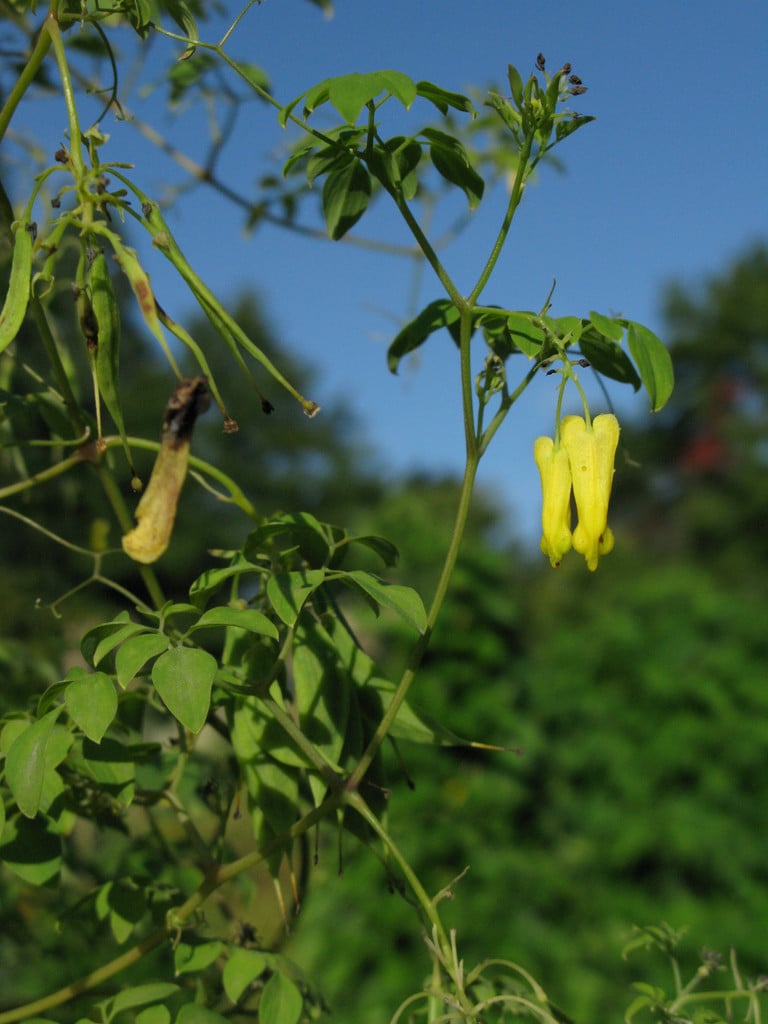
A tuberous perennial climber, to 7-10m, with finely-divided green leaves with splashes of white. Flowers are bright yellow in summer and autumn and are followed by flat pea-like pods
Size
Ultimate height
8–12 metresTime to ultimate height
2–5 yearsUltimate spread
1–1.5 metresGrowing conditions
Moisture
Moist but well–drainedpH
Acid, NeutralColour & scent
| Stem | Flower | Foliage | Fruit | |
| Spring | Green White | |||
|---|---|---|---|---|
| Summer | Yellow | Green White | ||
| Autumn | Green White | |||
| Winter |
Position
- Partial shade
Aspect
West–facing or East–facing
Exposure
Sheltered Hardiness
H4Botanical details
- Family
- Papaveraceae
- Native to GB / Ireland
- No
- Foliage
- Deciduous
- Habit
- Climbing
- Potentially harmful
- Can cause stomach upset if ingested and contact with foliage may aggravate skin allergies. Wear gloves and other protective equipment when handling
- Genus
Dactylicapnos (formerly included in Dicentra) are frost-tender deciduous climbing perennials or annuals, with compound or pinnate leaves, and flowers with heart-shaped outer petals which are characteristically pouched at the base, convergent to the tips, then bent outwards. These are usually borne in small, sometimes hanging, clusters, followed by pods, some strikingly inflated
- Name status
Correct
- Plant range
- Nepal to S Tibet
How to grow
Cultivation
Grow in partial shade in a moist but well-drained soil. A soil rich in leaf mould is ideal
Propagation
Propagate by seed; sow fresh seed in vermiculite or grit and place in a cold frame through winter (stratifying). Can also be propagated by semi-ripe cuttings in June. If the clump is large enough, propagation may be possible by division when the plant is dormant
Suggested planting locations and garden types
- City and courtyard gardens
- Flower borders and beds
- Wall side borders
Pruning
Cut back foliage down to ground level at end of growing season
Pests
Diseases
Generally disease-free
Get involved
The Royal Horticultural Society is the UK’s leading gardening charity. We aim to enrich everyone’s life through plants, and make the UK a greener and more beautiful place.