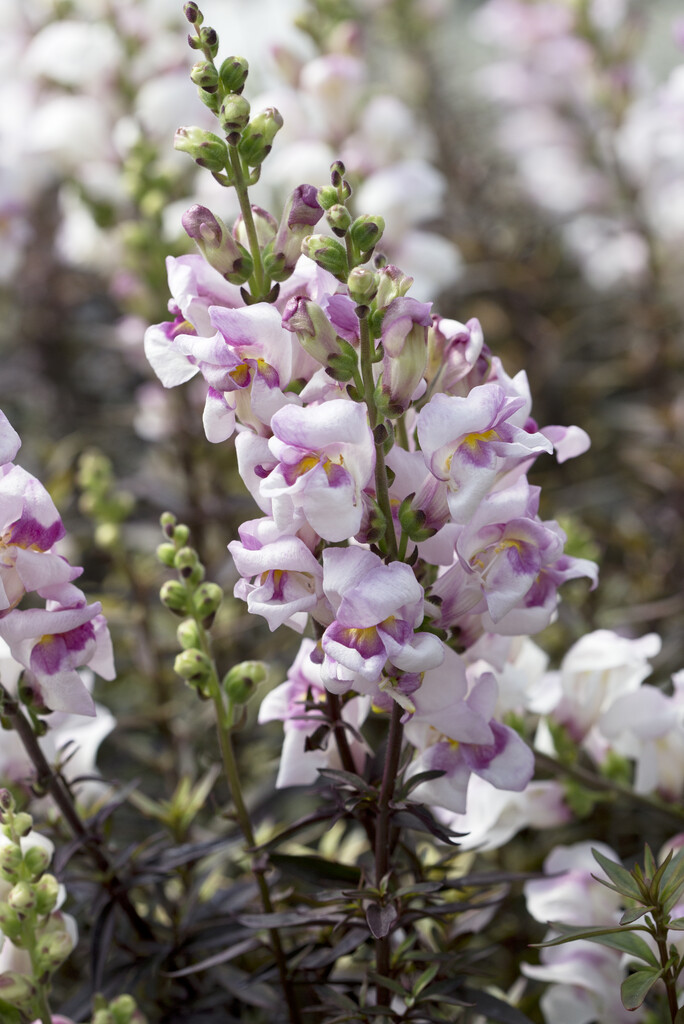
Antirrhinum majus 'Bronze Dragon'

RHS Plant Profile
snapdragon 'Bronze Dragon'
snapdragon 'Bronze Dragon' visionspictures.com
Herbaceous Perennial Annual Biennial

A short-lived perennial, often grown as an annual, up to 30cm high, with lance-shaped, very dark bronze leaves, and racemes of bicoloured pink and white flowers from summer to early autumn

Position

Full sun

Soil Types

Sand, Chalk, Loam

Max Height

0.1-0.5 metres

Max Spread

0.1-0.5 metres

Size

Time to Maturity
1–2 years
Max Spread
0.1-0.5 metres
Max Height
0.1-0.5 metres

Growing Conditions

Sand Chalk Loam
Moisture
Well–drained or Moist but well–drained
pH
Neutral or Alkaline or Acid

Position

Full sun
Aspect
South–facing or West–facing
Exposure
Sheltered
Hardiness
H3

RHS Recommended: for People & Planet

Growing conditions for maximum benefit

This plant will provide the maximum benefits if it is healthy and allowed to grow to maturity

For Bio-Diversity

  • Plants for Pollinators

Colour & Scent

Season Stem Flower Foliage Fruit
Spring
Summer
Autumn
Winter

Botanical Details

Family
Plantaginaceae
Native to GB/Ireland
No
Foliage
Deciduous
Habit
Bushy
Genus
Antirrhinum can be annuals, perennials or sub-shrubs, with simple leaves and tubular, 2-lipped flowers which may be solitary or in terminal racemes, in summer and autumn
Name Status
Accepted

How to Grow

Cultivation

Grow in a sunny position in well-drained soil

Propagation

Propagate by seed sown at 16-18°C in late summer or early autumn, and overwinter young plants under glass, or by seed in early spring

Suggested planting locations and garden types

  • Wildlife gardens
  • Cottage and informal garden
  • City and courtyard gardens
  • Patio and container plants
  • Flower borders and beds
  • Wall side borders
  • Bedding

Pruning

No pruning required, but deadheading will prolong the flowering period

Pests

May be susceptible to aphids

Diseases

Said to have good resistance to antirrhinum rust; may be susceptible to Powdery mildews, and may also be affected by damping off, downy mildews, Fusarium wilt, leaf spots, sclerotinia diseases, shothole, Verticillium wilt, and other wilts