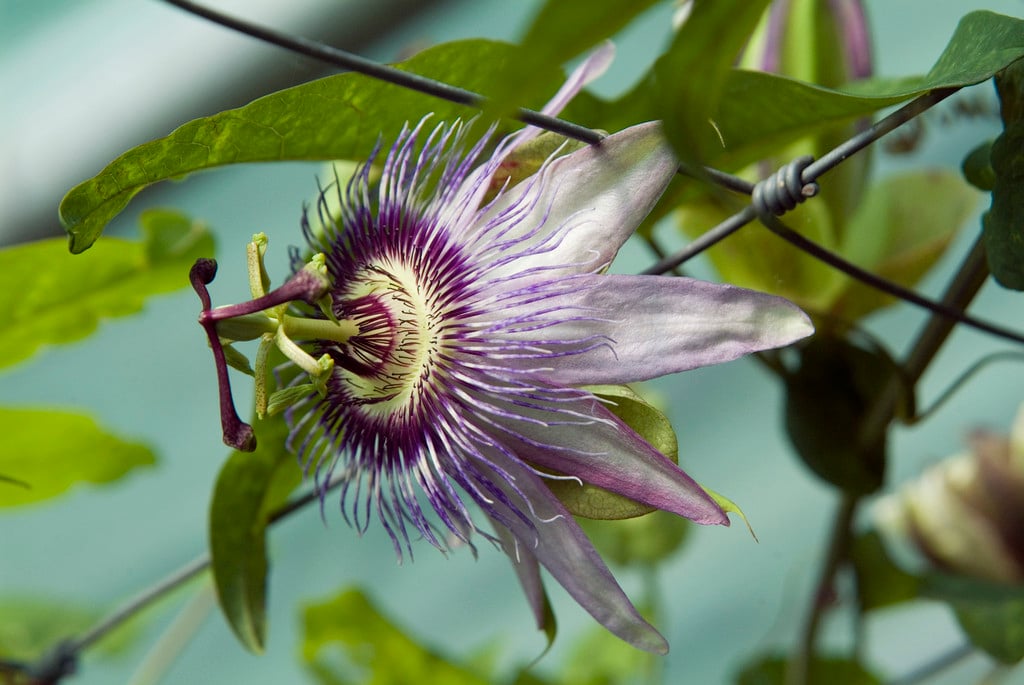
Passiflora 'Justine Lyons'
passion flower 'Justine Lyons'
a vigorous, semi-evergreen climber with twining tendrils and large three- or five-lobed leaves. Lightly-scented flowers to 12.5cm across with lilac, fully reflexed petals and rings of darker purple coronal filaments are borne in summer. Flowers are rarely followed by orange-yellow fruit. The pulp in the fruits only can be eaten when they are fully ripe and yellow-orange. Unripe fruit is toxic
Buy this plant
Size
Ultimate height
4–8 metresTime to ultimate height
5–10 yearsUltimate spread
2.5–4 metresGrowing conditions
Moisture
Moist but well–drainedpH
Acid, Alkaline, NeutralColour & scent
| Stem | Flower | Foliage | Fruit | |
| Spring | Green | |||
|---|---|---|---|---|
| Summer | Purple White | Green | ||
| Autumn | Green | Orange Yellow | ||
| Winter | Green |
Position
- Full sun
Aspect
West–facing or South–facing
Exposure
Sheltered Hardiness
H4Botanical details
- Family
- Passifloraceae
- Native to GB / Ireland
- No
- Foliage
- Semi evergreen
- Habit
- Climbing
- Potentially harmful
- Fruit are ornamental - not to be eaten. Wear gloves and other protective equipment when handling Pets: Fruit are ornamental - not to be eaten - see the HTA guide to potentially harmful plants for further information and useful contact numbers
- Genus
Passiflora are mostly tender tendril-climbing shrubs, with simple or palmately-lobed, generally evergreen leaves and showy flowers of distinctive structure with often colourful coronal filaments, followed by conspicuous fruits, edible in some species
- Name status
Accepted
How to grow
Cultivation
Fast-growing climber for a warm position in a sunny and sheltered position; thrives in moist but well-drained soil. In cold areas, grow in a container and overwinter indoors
Propagation
Propagate by, semi-hardwood cuttings or by layering in spring or autumn
Suggested planting locations and garden types
- City and courtyard gardens
- Cottage and informal garden
- Patio and container plants
- Wall side borders
Pruning
Pruning group 11 or 12
Pests
May be susceptible to glasshouse red spider mite, scale insects and glasshouse whitefly
Diseases
May be susceptible to honey fungus (rarely) and a virus
Get involved
The Royal Horticultural Society is the UK’s leading gardening charity. We aim to enrich everyone’s life through plants, and make the UK a greener and more beautiful place.