Not the plant you're looking for? Search over 300,000 plants
Shrubs
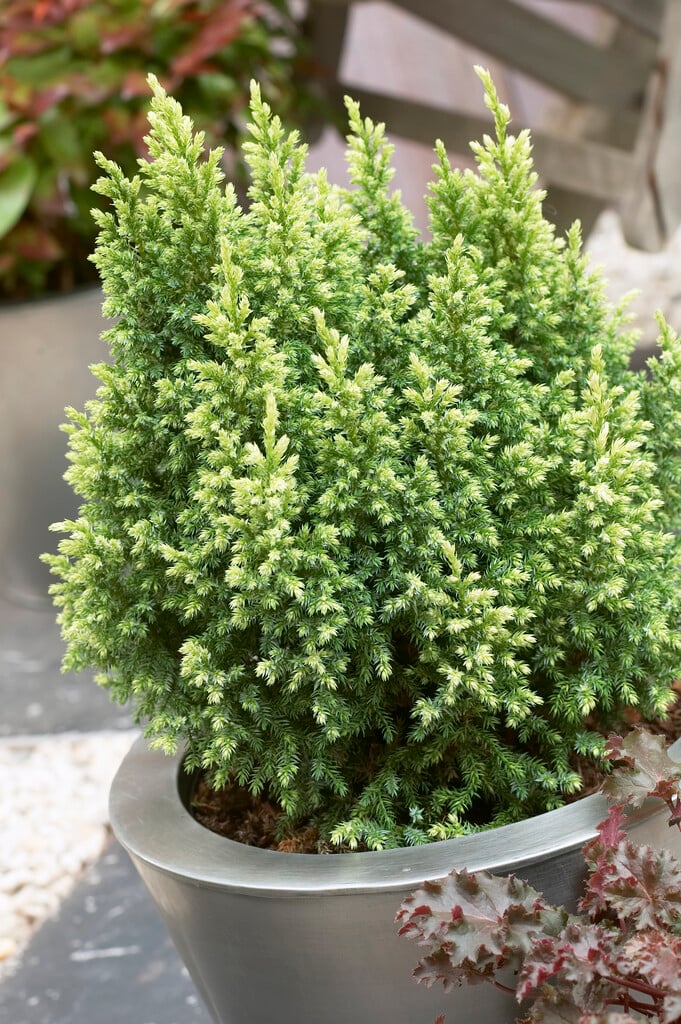
Size
Ultimate height
1–1.5 metresTime to ultimate height
5–10 yearsUltimate spread
1–1.5 metresGrowing conditions
Chalk
Clay
Loam
Sand
Moisture
Moist but well–drained, Well–drainedpH
Acid, Alkaline, NeutralColour & scent
| Stem | Flower | Foliage | Fruit | |
| Spring | Green Gold Yellow | |||
|---|---|---|---|---|
| Summer | Green Gold Yellow | |||
| Autumn | Green Gold Yellow | |||
| Winter | Green Gold Yellow |
Position
- Full shade
- Partial shade
Aspect
East–facing or West–facing or South–facing
Exposure
Exposed or ShelteredDrought resistance
Yes Hardiness
H7Botanical details
- Family
- Cupressaceae
- Native to GB / Ireland
- No
- Foliage
- Evergreen
- Habit
- Bushy
- Potentially harmful
- Harmful if eaten/skin allergen. Wear gloves and other protective equipment when handling
- Genus
Juniperus can be prostrate or erect, evergreen shrubs or trees with aromatic, scale-like or sharply pointed awl-shaped leaves, and small globose fruits
- Name status
Accepted
How to grow
Cultivation
Grow in any well-drained soil, including dry, chalky or sandy soils, preferably in full sun or in light dappled shade.
Propagation
Propagate by semi-hardwood cuttings in early autumn
Suggested planting locations and garden types
- Architectural
- City and courtyard gardens
- Rock garden
- Low Maintenance
- Flower borders and beds
Pruning
See pruning group 1
Pests
May be susceptible to aphids, scale insects, conifer red spider mite and caterpillars
Diseases
May be susceptible to phytophthora, canker and honey fungus. See also Conifers: brown patches
Get involved
The Royal Horticultural Society is the UK’s leading gardening charity. We aim to enrich everyone’s life through plants, and make the UK a greener and more beautiful place.