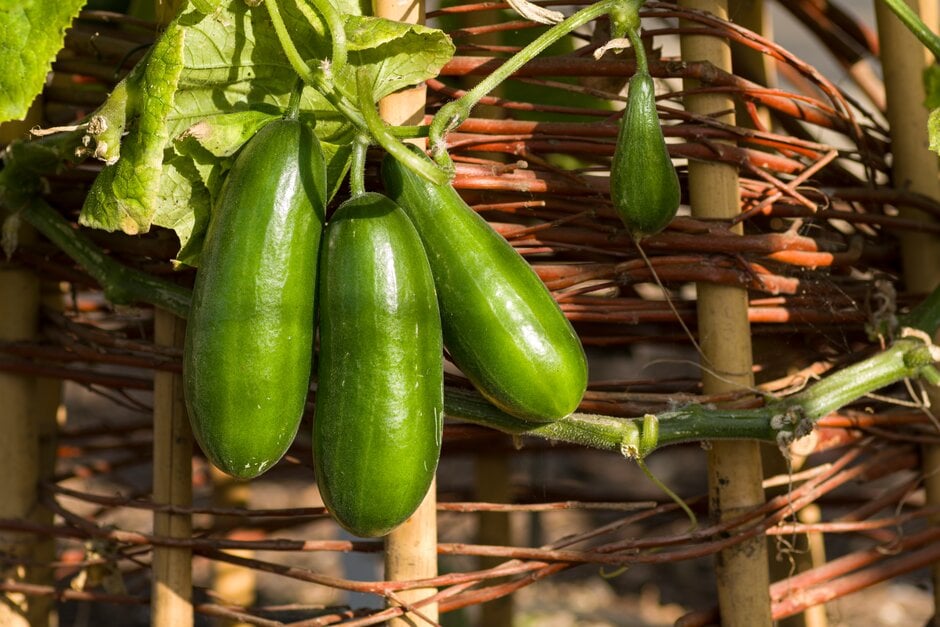
Cucumis sativus 'Mini Munch'

RHS Plant Profile
cucumber 'Mini Munch'
cucumber 'Mini Munch' RHS
Award of Garden Merit
Annual Biennial

An all female, mini cucumber variety that is noted for being a particular heavy croppper, producing small, snack sized fruits at 7cm long. The cucumbers have a crunchy texture and excellent flavour and have a long cropping period between June and October

Position

Full sun

Soil Types

Clay, Loam, Sand

Max Height

2.5-4 metres

Max Spread

0.1-0.5 metres

Size

Time to Maturity
1 year
Max Spread
0.1-0.5 metres
Max Height
2.5-4 metres

Growing Conditions

Clay Loam Sand
Moisture
Moist but well–drained
pH
Alkaline or Acid or Neutral

Position

Full sun
Aspect
South–facing or West–facing
Exposure
Sheltered
Hardiness
H1C

Colour & Scent

Season Stem Flower Foliage Fruit
Spring
Summer
Autumn
Winter

Botanical Details

Family
Cucurbitaceae
Native to GB/Ireland
No
Foliage
Deciduous
Habit
Trailing
Potentially harmful
Pets: Bitter fruit can be TOXIC if eaten - see the HTA guide to potentially harmful plants for further information and useful contact numbers
Genus
Cucumis is a genus of twining plants with tendrils which includes cucumber, melons and gerkins. Around 30 species are native to Africa and 25 to India, Southeast Asia and Australia.
Name Status
Accepted

How to Grow

Cultivation

Grow from seed between March and April in a heated greenhouse or on a sunny windowsill in pots and maintain a constant temperature of 21C. Prick out young plants into 25cm pots filled with a good quality growing potting compost and maintain a temperature of 12-15C. Water little and often to keep the compost evenly moist and feed every two weeks. See vegetable cultivation

Propagation

Propagate by seed. See sowing vegetable seeds

Suggested planting locations and garden types

  • Patio and container plants
  • Conservatory and greenhouse

Pruning

Pinch out the growing point of the plant once it reaches the top of the support. Shorten sideshoots to two leaves beyond any developing fruit

Pests

May be susceptible to glasshouse whitefly, glasshouse red spider mite, slugs and snails

Diseases

May be susceptible to cucumber mosaic virus and powdery mildews